

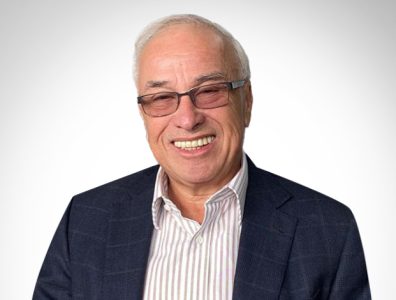
A leader in Colombia’s renewable energy market
September 16, 2024


Alvaro Torres Macias, CEO of Electryon Power, talks to The Energy Year about the opportunities that greenfield development represent in Colombia's renewables market and the company's competitive advantages in the market. Electryon Power is a renewable energy investor and developer.
What opportunity do greenfield projects represent in Colombia’s current renewables market?
Colombia has very important goals in terms of decarbonisation and shifting its energy matrix towards nonconventional renewable energies. Around 70% of our energy comes from hydro, 25% from thermal and 3% from renewable energy – solar and wind.
The country needs to start building and operating more solar energy projects. The reality is that Colombia has a strategic location, on the equator, which means that solar projects can be done anywhere due to high irradiation levels. This country has very high solar potential. It has the potential for wind power too, but this is more centred in La Guajira, which is where we have a globally competitive resource.
Seeing this market need, we wanted to specialise in developing ready-to-build projects in the solar spectrum, which is where new projects are most needed, and eventually build these projects to become an IPP. The scene is dominated by large companies, such as Enel, EPM, Celsia and AES, which own most hydroelectric plants in the country.
They have also boldly entered the solar and wind space, as they have capital muscle. However, the best use of their capital is not in greenfield development but in the construction and operation of these major projects. In that context, there are few players that have the experience and track record to take greenfield projects to a ready-to-build stage.
What we see is that the buyers of these projects, who are foreign and local investors, want someone to bring the project to the point of being ready to build. This is the stage where the project has all the permits, licences, analysis and land and is ready to be built. At this point, banks can come in to provide financing, and large equity providers can come in for construction and operation.
There is a very big opportunity, and we want to be leaders in the early development of these projects to cover the forecasted renewables requirements of the country. There are small and medium-sized developers in Colombia but not enough.
What makes Electryon Power unique in this emerging greenfield renewables market?
We are unique because we have a deep understanding of the sector. The development of a project has social, environmental and technical-electrical components, as well as a management component, which is very important for solar.
The experience and market knowledge we have helps us to identify the best service providers to cover the different aspects of these projects. We can be very efficient in developing projects because we can bring in different companies to work in a more cost-effective way towards ready-to-build.
A large company would have to do it with an internal team that needs more time and has more processes in making decisions. Greenfield development has more risks than construction, where you have already covered the permitting and technical risk, and to be able to mitigate those risks, you need a team that has a comprehensive view of everything involved in the development.
You also need to be able to make decisions efficiently. We have successfully developed greenfield projects in the past, and we know the business inside out.
In the development phase per se, we make the designs and layouts based on the land we have. This first layout we make is based on what we see in the field – the environmental restrictions of the terrain, the topographical conditions and so on. The investor can use that initial layout to make his final design.
Moreover, we provide support to our clients up to the date of commissioning, but it is a support that is limited to our scope. As developers, we are not the final designers or builders, so we don’t take those risks.
What are the main obstacles slowing down the development of renewable energy projects?
The main challenge in developing greenfield projects of this nature is environmental licensing. Other obstacles can be the communities and the location, depending on the size of the project. We try to locate our projects in areas without ethnic communities so we don’t have to carry out prior consultations.
However, when we do have to establish a relationship with communities, trust and mutual collaboration are essential. Nevertheless, if the environmental licensing process has bottlenecks, it is a difficult matter to solve.
In Colombia, projects less than 50 MW must be analysed by the environmental regulatory bodies in each of the departments. Since these are autonomous, they don’t answer to the central government. Each one of these bodies has different criteria in terms of requirements, which causes a lot of uncertainty among investors. These are some of the fundamental challenges when it comes to projects less than 50 MW.
By contrast, projects over 50 MW are supervised by ANLA [National Environmental Licensing Agency], which uses a more unified set of criteria.
In any case, there is still a lot of work to be done in Colombia in terms of environmental requirements. There needs to be a more precise dialogue between the central government and the different regional regulatory bodies so that there is a unitary and clear regulatory roadmap.
How strong is Electryon Power’s bet on solar technology in Colombia?
By 2035, the government plans to have 30% of the country’s energy matrix coming from solar and wind energy. There is a huge growth forecast, and that is why Colombia is our main priority. In addition to this, energy demand is growing 4-5% per year, which means that the pool of opportunities is huge.
As a country, we are lagging behind in renewables compared to other regional nations, such as Brazil and Chile, which have developed renewable energy projects for many years.
Other countries we are interested in entering are Panama, Peru and Ecuador. However, we have to take a good look at the political environment. In the case of Colombia, we have a system where every year the UPME [Mining and Energy Planning Unit] opens rounds for the development of projects.
We have already done these twice, and in each call, we have presented seven or eight projects with a success rate of around 30%. In 2023, we submitted eight new projects to the UPME, totalling 570 MW.
Currently, we are developing two solar projects, each with a capacity of 19.9 MW.
Tell us about the Amon green ammonia project Electryon Power is currently developing.
We started working on the Amon-H2 project two years ago. This project pivots around an onshore wind farm with an estimated capacity of around 545 MW. As it is located in La Guajira – where wind blows at 10 metres per second – we saw that one of the most pressing issues is that this wind farm may not be connected to the grid, as Colectora has limited capacity to take in all the power generated by the region’s different renewable energy projects.
For this reason, we envisioned the option of using the energy produced by wind to generate green hydrogen or ammonia. The prefeasibility and feasibility studies have been done by a reputable international consultant, and the decision was taken to make green ammonia the end product. The estimated production is 50,000 tonnes of green H2 per year or 360,000 tonnes of green ammonia per year.
This opened another front, as we are now looking to establish different mechanisms to export ammonia. We will use a buoy system that our consultant has implemented in other projects, which is normally used for loading and unloading ammonia.
Now we are in the process of looking for offtakers and consolidating the SPV that would carry out all the more specific development activities. The total investment stipulated for this project (including the wind farm) is around USD 1.5 billion, and the project will be up and running by 2029.
What other green ammonia plants do you envision developing in the Caribbean region?
Cartagena and Barranquilla are two very similar potential cities for hydrogen-based projects. Firstly, they have very attractive solar radiation all year round – around 5.5 kW per hour per square metre on average.
Secondly, they have adequate topography and availability of land. For instance, between Mamonal and Barranquilla, there is a lot of land that is currently dedicated to livestock farming. The area is very flat, and there is access to water. In Cartagena, one finds marshes, while Barranquilla is on the bank of the Magdalena River.
Lastly, some of the most important ports are found in this part of the country, among which the Cartagena and Barranquilla ports are critical. Both of these have the potential to export ammonia. We are thinking about developing these two cities to develop two projects in parallel.
We already have land in Cartagena and did a prefeasibility study to establish a project there. We have already started a feasibility study with support from the Inter-American Development Bank, focusing on the regulatory, commercial and offtake aspects.
The Cartagena and Barranquilla projects will each have a capacity of around 25,000 tonnes of green H2 per year or 120,000 tonnes of green ammonia per year and will each rely on solar farms of 275 MW. Both projects could start producing and exporting ammonia in 2028.
We did an analysis that included a specific focus on regulatory issues in markets we are targeting: Europe, Japan and Korea. We try to make sure that the green hydrogen and ammonia that we will produce complies with European, Japanese and Korean regulations for low-emissions hydrogen. So far the results have been positive.
Colombia is very well positioned and essential for developing these projects because our energy matrix is very clean. Grid power has to meet European low-emissions standards, and when you look at the energy required to produce ammonia, for example, Colombia has a single interconnected system that is considered green.
The majority of our power is produced with clean resources, whereas Europe, the US and China rely on thermal energy. This makes Colombia a very interesting place to develop these types of projects. There is also port infrastructure in the area, which could be essential for exporting our product.
What type of investors or partners are you seeking to develop these green ammonia projects?
We are looking for two types of investors. Firstly, we are looking for ones that are interested in becoming a shareholder in Electryon Power, which would allow them to have access and benefit from our whole project portfolio. However, we are also looking for investors and partners on a project-by-project basis to support the development of our project pipeline.
For these types of projects, having an offtaker from an early stage is essential. In comparison with solar projects that are connected to the grid, where one knows it is easy to sell the power on the wholesale market, hydrogen projects depend on financial viability, the price of the hydrogen sold, the volumes produced and above all, the buyer or offtaker. Therefore, we are also interested in partnering with potential offtakers from the onset of a project.
Read our latest insights on:
-
-

-

O&M leadership in mining and energy
INTERVIEW
More content from Colombia
Latest news and features








Latest Reports


The Energy Year Oman 2026
The Energy Year Kuwait 2025
The Energy Year Angola 2025
The Energy Year Nigeria 2025
The Energy Year Saudi Arabia 2025
The Energy Year UAE 2025


