

Navigating Colombia’s complex institutional framework
February 4, 2025 Colombia


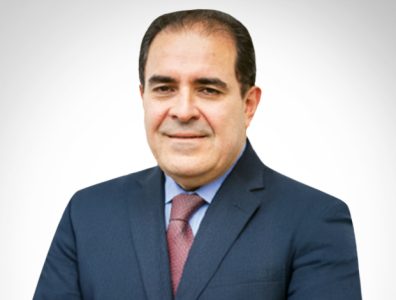
Luis Fernando Macías, legal partner at Philippi Prietocarrizosa Ferrero Du & Uría (PPU), talks to The Energy Year about the environmental laws and regulations governing energy and mining projects in Colombia and how it guides clients through Colombia’s legal landscape. PPU is a full-service Ibero-American law firm.
What environmental laws and regulations govern energy and mining projects in Colombia?
In Colombia, environmental legislation is general and applies to all activities, unlike sector-specific regulations in other countries. For the hydrocarbons and mining sectors, the main requirement is obtaining an environmental licence, known elsewhere as an environmental impact assessment, mandated by law since 1993.
Additionally, the use of renewable natural resources such as sun, wind and water, is regulated by several historical decrees and regulations. Water concessions date back to regulations from 1940-1941, which were updated in 1978. Discharge regulations began in 1984 and were updated in 2010. Atmospheric emissions were first regulated in 1982, updated in 1995 and also incorporated into Decree 1076.
Colombia’s legal framework for the industry is guided by the constitution, Law 99/93, the 1974 Code of Renewable Natural Resources and Decree 1076 of 2015. Additionally, there are resolutions setting standards for emissions and discharges, contributing to a comprehensive but sometimes complex environmental regulatory system.
How does PPU guide its clients in Colombia’s legal landscape?
Our consultancy at PPU is focused on day-to-day operations. We have an environmental practice that advises clients in the petrochemical, mining and oil and gas sectors. Our services include general environmental consultancy, sanctioning processes, mergers and acquisitions, and conflict resolution, ensuring all agreements comply with the law.
We have worked with major industry players, such as Isagen, Cemex, Argos, Mansarovar Energy and ProDeco. Companies, both local and international, choose PPU for our extensive experience and client engagement. Additionally, we have maintained a top-tier position in Legal League 100 for years.
How do you assist extractive industry clients in navigating environmental licensing and community relations?
The first step is to convince companies to overcome their fear of environmental and community issues. It’s not easy, but with proper legal guidance from the beginning, not just technical advice, companies can navigate Colombia’s complex institutional framework.
Problems arise when companies start the process without consulting knowledgeable experts. It’s important to seek advice from experienced lawyers who understand the complexities of environmental and corporate legislation. With more than three decades of experience, we see the importance of compliance and understanding the law from the start to avoid conflicts.
How do you handle legal challenges related to environmental compliance in the mining and hydrocarbons sectors?
Although companies often have strong environmental policies, they sometimes have legal weaknesses that lead to conflicts and sanctioning processes. We deal with complex cases, even criminal ones, in the mining and hydrocarbons sectors. Colombians are good at showcasing compliance, but deeper scrutiny often reveals issues.
For example, we handled a case where an oil spill occurred, and although the operators followed the contingency plan, the community observed improper disposal of contaminated soil and filed a criminal complaint. The company manager had to negotiate to avoid prosecution.
In such situations, proving that the firm had conducted proper training and that the fault lies with the individual operator, rather than the company itself, can be crucial.
What knowledge transfer do you apply from your international experience to the Colombian market?
It takes time to build extensive know-how. In the environmental area, practices vary by country. For instance, in Peru, water issues are handled separately from environmental ones, whereas in Chile, transactional and environmental issues are more integrated. Here, environmental matters are treated independently.
Our environmental team is completely separate from the natural resources team. Our environmental clients span various sectors, including infrastructure, roads, ports, agrochemicals and the financial sector. In fact, there is often more work in these areas than in traditional natural resources sectors.
Our regional experience is invaluable, as it allows us to leverage our international knowledge and insights gained from other markets. By learning from these diverse experiences, we can apply proven strategies and best practices to our projects here in Colombia, improving efficiency and outcomes.
How important will the environmental sector of the law firm be in the next two to five years?
The environmental sector of our law firm will undoubtedly play a critical role in the near future. European directives on due diligence and environmental standards are becoming mandatory, and potential changes in US environmental regulations depend on upcoming governmental shifts.
Communities are increasingly taking legal action internationally; for instance, a European lawsuit against a bank financing projects allegedly violating human rights in Latin America highlights global scrutiny.
The UN’s exploration of whether environmental rights, including those related to climate change, should be legally binding adds complexity. These dynamics are reshaping liability frameworks and intensifying socioenvironmental conflicts, which will likely lead to more litigation in the coming years.
Governments come and go, but environmental legislation remains a constant, with both left-wing and right-wing administrations using environmental policies for legitimacy. This trend includes issues such as carbon credits, indigenous community rights and water management, underscoring the growing demand for legal expertise in environmental law.
Read our latest insights on:
-

-

-

O&M leadership in mining and energy
INTERVIEW
More content from Colombia


Quality seismic decisions for Angola
INTERVIEW

Latest news and features




Latest Reports



The Energy Year Oman 2026

The Energy Year Kuwait 2025

The Energy Year Angola 2025

The Energy Year Nigeria 2025

The Energy Year Saudi Arabia 2025

The Energy Year UAE 2025

