

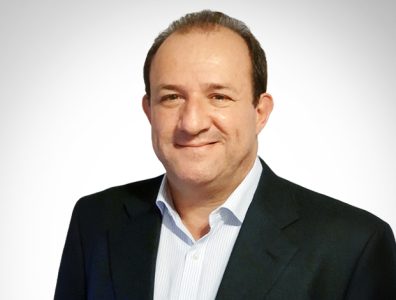
Prepared for new opportunities in Angola
July 23, 2025


Ricardo Do Amaral, Octomar’s general manager for Angola, talks to The Energy Year about the company’s plans to form a JV with Cabship. Octomar is an Angolan diving and marine services company offering a variety of offshore tanker terminal and FPSO support services, as well as marine and subsea services and vessels.
Could you elaborate on Octomar’s plans to form a joint venture with Cabship?
In June 2023, Octomar signed an MoU with Cabship for the creation of a diving and offshore marine support company in the Cabinda Special Economic Zone. The MoU establishes that both parties should work together to secure contracts in Cabinda. The objective is for us to add value to the business operations in Cabinda.
The core business will be logistics support and offshore services. Octomar will draw on its experience to provide the offshore, subsea inspections, maintenance, installations and marine support services, while Cabship will provide the onshore logistics support services. The objective is to continue to support Chevron’s Block 0 and Block 14 operations.
We have been operating in Cabinda from our base in Luanda, and our objective was to find a solid partner to further expand our operations. With the creation of the Cabinda Special Economic Zone, we were further incentivised.
When do you expect the JV with Cabship to be officially formed?
The MoU is already in place. Now, the objective is to secure solid contracts before establishing the joint venture company to execute said contracts. At this point in time, the strategy is to focus on the joint market to secure contracts in Cabinda. It is a challenging environment, but we are confident in our capabilities to continue to expand our footprint across Angola and to attract new clients.
We have been supporting Chevron’s operations already. Last year, we had a fast crew vessel transporting crew offshore, from the base to offshore facilities. However, this was on an ad-hoc basis. We strive for a more sustainable and long-term commitment, and that’s what we’re working towards together with Cabship.
What has been Octomar’s strategy for expanding its footprint around Southern Africa?
In the region, we have established two new companies in Ivory Coast and Namibia. Our activity in Ivory Coast was our first international project. We provided diving services including a dive support vessel to support the installation operations of the first FPSO in Ivory Coast for Eni. It was a successful project for growing our business in the country. Since then, we’ve established an entity there.
Simultaneously, we are in the process of finalising the registration of a company in Namibia. That’s also a joint venture with an existing company that operates out of Walvis Bay. We are in the process of transferring one of our operations managers to Namibia and working towards growing the business in the country.
As of now, there isn’t much activity for our core business. However, it’s important to establish our footing today and start building relationships with potential clients.
Part of the company’s strategy is to expand beyond the borders of Angola. The shareholders of Octomar are prudent and careful in managing their financial resources. Consequently, opening these companies in Ivory Coast and Namibia, with our own financial resources, has been done with a lot of thought behind it.
We have grown to the point we can take on some of the emerging opportunities around the region. We can use the resources available in Angola to support Namibia, but we can also use the resources in Namibia to support our operations in Angola.
How is Octomar positioning itself for growth as mature field developments take priority?
We are seeing new opportunities in mature field operations. With these mature fields, we are talking about the government’s challenge and the oil industry’s challenge, which is to maintain current production levels. You already see small Angolan companies such as Etu Energias, for example, investing in new drilling campaigns.
We already have an operation going on in a very mature field, where we are doing subsea inspections on two existing fixed platforms to ensure their integrity and to ultimately support a potential increase in production. There’s new demand for our services, and we are well positioned to capitalise on operators investing in mature fields.
What is Octomar’s investment strategy for expanding its footprint in the energy sector?
Our objective is to invest in new equipment, especially vessels and other subsea equipment required to provide our services for long-term contracts. We only invest on the back of securing long-term contracts.
At Octomar, all our investments and new ventures are done with our own financial resources. For the ROVs, we also have a working relationship with a Norway-based company that has the assets and experience in operating ROVs, especially in deepwater. We are looking at investing in acquiring small ROVs, or mini-ROVs, to execute very-shallow-water inspections on offshore structures, whether FPSOs or FSOs.
We have also heavily invested in the training and certification of our employees. We are the first company to train Angolan divers. Angola today has about 32 commercial divers with international certification, and I would say 95% of them were trained by Octomar. What we are doing now is investing in our own personnel. They are qualified and they have experience, but we want to further develop the scope of their capabilities.
Read our latest insights on:
-

-

Quality acquisitions over acreage
INTERVIEW -

More content from Angola
Latest news and features





Latest Reports


The Energy Year Oman 2026
The Energy Year Kuwait 2025
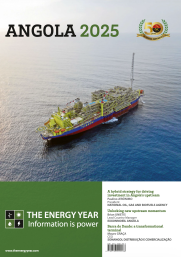
The Energy Year Angola 2025
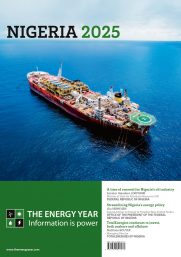
The Energy Year Nigeria 2025
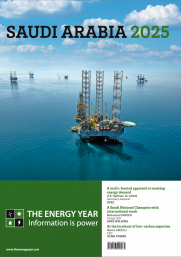
The Energy Year Saudi Arabia 2025
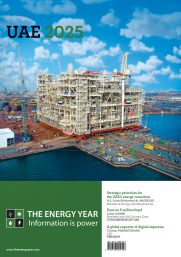
The Energy Year UAE 2025


