
Deploying AI and CCUS for Bahrain’s energy future
October 6, 2025 Bahrain


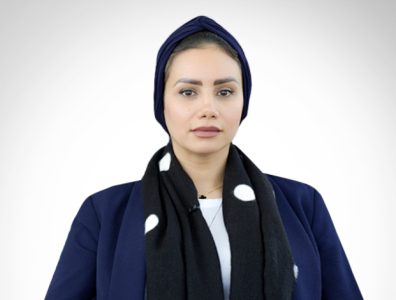
Somaya Al Radhi, Bahrain country manager for SLB, talks to The Energy Year about the company’s AI-driven digital solutions and early-stage CCUS work in partnership with Bapco Energies. SLB provides energy technology in Bahrain with a focus on methane reduction, produced water recycling and data-driven reservoir modelling.
What new technologies is SLB deploying that differentiate it from other oilfield services providers?
SLB has evolved significantly in line with global movements towards sustainability and net-zero goals. We now have a department solely dedicated to AI and digital technology. Our operations in Bahrain are closely aligned with these global trends, especially as the country sharpens its focus on the low-carbon economy and climate change adaptation.
In Bahrain, SLB is actively supporting these initiatives. We’re installing solar panels at our Awali base. We’ve transitioned to LED lighting to improve energy efficiency, and are also transitioning our car fleet to hybrid models. We’ve launched a joint initiative with Bapco Upstream to plant greenery, targeting carbon capture through agricultural means.
How is SLB helping Bahrain address climate adaptation challenges?
The Bahrain field is one of the oldest in the Gulf, and maintaining production here demands serious investment in both capital and cutting-edge technology. We work closely with Bapco Upstream on water management, especially to develop processes for recycling produced water, rather than injecting new water.
We’re also advancing digital solutions to reduce human exposure to extreme field conditions. This includes remote operations and upgrades to employee living facilities. For instance, HVAC systems with auto-shutdown and power capacitors that maximise utilisation efficiency have been installed. These tools help lower power wastage while maintaining comfort.
Tell us about SLB’s efforts in carbon capture and methane reduction in Bahrain.
We’ve signed two NDAs with Bapco Energies covering methane and CCUS. Bahrain is aiming to join the OGMP [Oil and Gas Methane Partnership] programme, which emphasises accurate methane reporting. Our SLB End-to-End Emission Solutions, or SEES, programme focuses on quantifying emissions, reducing methane leakage and monetising associated gas currently lost to flaring.
Methane from flaring is a significant issue in Bahrain, with sources like the Oil and Gas and Aluminium industries contributing. The SEES programme includes technologies for measuring emissions and offers alternatives to flaring such as monetisation and reinjection.
CCUS is a more complex initiative, as Bahrain’s densely populated environment makes it risky. We are in the study phase, exploring how to safely store CO2, possibly in the Khuff reservoir – a long-time gas-producing structure now showing signs of decline. But this involves identifying a geological formation with a secure cap rock to prevent leakage.
What is the progress and potential of CCUS in Bahrain?
The CCUS plan is in early research stages. The idea is to capture CO2, store it and inject it into reservoirs such as Khuff to enhance gas recovery. Khuff has been producing for more than 70 years and is now heavily faulted and fractured, with low pressure. The challenge lies in ensuring the injected CO2 does not leak, especially since Bahrain is a small, populated island with complex geology.
Similar projects in Abu Dhabi have placed CO2 storage facilities in remote desert locations, making their model hard to replicate here. In Bahrain, we must carefully study onshore and offshore options, including the financial and logistical requirements of offshore storage, which could involve barges and undersea transportation.
How is SLB applying AI and digitisation to enhance upstream efficiency in Bahrain?
Digitisation is central to our work with Bapco Upstream. One initiative is the On-Demand Reservoir Stimulation (ODRS) application, a cloud-based platform allowing engineers to collaborate in real time on dynamic reservoir models. Where traditional modelling might take six months to a year, ODRS reduces this to a single day, expediting exploration and development decisions.
We also use AI for surface network optimisation through a partnership with Geminus AI. By deploying sensors on ageing pipelines, we can detect leaks early and minimise product loss. Most of our devices are manufactured in the US, and this system is aimed at maximising oil production while managing associated gas more effectively.
How is the company supporting data modernisation and long-term planning?
SLB has been active in Bahrain for nearly a century, accumulating vast amounts of data – much of it still stored on paper or outdated media. We’re now working to digitise this information and create a comprehensive digital data room.
Having historical data in usable formats enables predictive modelling and better decision-making. With dynamic and static models of reservoirs, we can simulate different production scenarios and optimise planning. This is a challenging process, but it’s essential in order for Bahrain to move faster toward its objectives.
How do you address concerns around job security and adaptation in a tech-forward environment?
There is often fear that digitisation and AI will replace human roles, but that’s not our vision. AI can support more informed decisions and reduce repetitive tasks, not replace expertise. The real value lies in collaboration – getting different specialists, regardless of background or personality, to share their knowledge through platforms such as ODRS.
Change is never easy, especially when it requires stepping out of comfort zones. But in Bahrain’s case, time is critical. The quicker we adapt and implement advanced technologies, the faster we can secure production and meet climate commitments.
Read our latest insights on:
More content from Bahrain





Quality seismic decisions for Angola
INTERVIEW
Latest news and features



Latest Reports



The Energy Year Oman 2026
The Energy Year Kuwait 2025

The Energy Year Angola 2025

The Energy Year Nigeria 2025

The Energy Year Saudi Arabia 2025

The Energy Year UAE 2025

