
Investments to meet Oman’s growing energy demand
December 3, 2025 Oman
Oman 


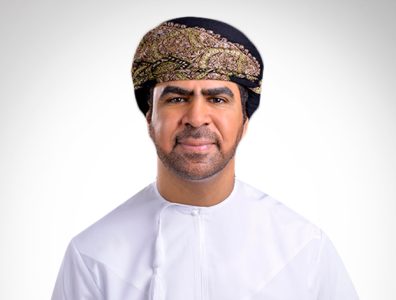
Abdul Rahman Al Yahyaei, CEO of the Integrated Gas Company (IGC), talks to The Energy Year about increasing the efficiency of domestic gas supply through new allocation mechanisms and the company’s role in fuelling Oman’s energy transition. IGC manages assets and allocations for Oman’s natural gas exports, imports and domestic distribution.
Can you provide an overview of salient recent developments in Oman’s natural gas market and the Integrated Gas Company’s role in them?
IGC manages the entire gas value chain in Oman, including purchases, volume allocations, network expansion and distribution to industrial end users. We handle between 130-140 mcm (4.6-5.8 bcf) of natural gas per day for a total value of about USD 8-9 billion per year, which represents approximately 17-19% of total government revenues derived from gas.
Our mandate is to maximise government revenue, support economic diversification, introduce efficiency and decarbonisation measures into the gas value chain, and generate in-country value (ICV). Since 2024, we have launched several reforms, with one of the key developments being a new gas allocation framework aligned with the national criteria set by Invest Oman, including GDP contribution, Omanisation, job creation, ICV, decarbonisation and market development.
IGC launched Oman’s first gas spot market in 2024, and new terms have now been embedded into the natural gas sales agreements (NGSAs), including take-or-pay clauses, excess gas prices and other revenue-protection measures. Alongside this, the company completed a comprehensive price indexation study targeting the fertiliser, methanol, cement and steel industries to identify minimum and cap pricing levels for each, in addition to digitalisation projects.
How has the private sector responded to these new frameworks?
The response from the private sector has been very positive. For the first time, IGC has established a transparent and rational basis for gas pricing, which has improved confidence among industrial end users and investors.
A significant innovation has been the use of tenders to allocate gas volumes. Any allocation exceeding 1 mcm (35.3 mcf) per day over five years must now go through a competitive tendering and bidding process.
IGC has already conducted two tenders. The first was for green steel production, with conditional allocation to Jindal Steel Duqm, Mitsui, Kobe Steel and Meranti Green Steel, a consortium that is producing DRI [direct reduced iron] in Duqm. The second tender was for fertilisers and resulted in a conditional allocation to Al Shaafi Holding. These tenders have yielded valuable insights about price points and term preferences across applicants.
By Q4 2025, IGC is set to sign 19 agreements in total, comprising three gas purchase agreements with producers, 14 NGSAs with industrial end users, and two MoUs associated with these key stakeholders, collectively accounting for around 27 mcm (953 mcf) per day.
These agreements cover allocations to the fertiliser, petrochemical, pharmaceutical, food processing and mining sectors, effectively doubling the volume of gas dedicated to Oman’s industrial development. This milestone underscores IGC’s broader mission to support economic diversification and sustainable growth in line with Oman Vision 2040.
How does IGC balance gas supply between traditional consumers and new industrial clusters at Duqm, Sohar and Salalah?
IGC prioritises supplying to existing businesses to ensure production continuity. For example, we have recently renewed the NGSA with OMIFCO [Oman India Fertiliser Company] and are in the process of extending agreements with several other long-standing users.
Nonetheless, IGC evaluates and supports new industries based on gas efficiency and alignment with energy transition goals. The objective is to attract and enable industries that consume less gas, maintain lower emissions and can transition to alternative energy such as green hydrogen and other cleaner fuels.
The 193-kilometre pipeline being constructed by OQGN between Fahud and Sohar is a key facilitating project. The Sohar area can currently receive up to 32 mcm (1.13 bcf) of gas per day, and that must increase to 46 mcm (1.62 bcf) per day to meet growing demand from power plants and projects such as Marsa LNG. The new pipeline will ensure that this demand is reliably met without disruptions, allowing Oman’s expanding industrial base to be supplied without compromising the needs of existing consumers.
In what ways does IGC support the integration of gas and renewables in the energy mix?
All new NGSAs contain clauses mandating commitments toward decarbonisation and energy transition. For example, companies in the green steel sector are required to transition to green hydrogen by specific deadlines. These terms reflect industry-specific energy transition plans developed by the Ministry of Energy and Minerals and the Oman Net Zero Centre.
These agreements include enforcement mechanisms, such as penalties for non-compliance and provisions allowing IGC the right to gradually reduce gas supply after a certain year if certain conditions are not met. In cases where a legacy player cannot transition directly, IGC can negotiate contributions to energy transition funds as part of commercial deals. This allows companies to support Oman’s shift towards renewables indirectly.
IGC also plays a role in enabling the growth of the green hydrogen economy. Our gas allocations to green steel projects aim to create a baseline demand for green hydrogen within the country, and where renewable energy cannot guarantee a baseload power supply, IGC steps in to provide gas backup. An example is the Marsa LNG project, which has procured 100 MW of solar energy from OQ Alternative Energy and gas from IGC at night.
Today, approximately 25% of IGC’s total gas allocations support power generation, ensuring that the integration of gas and renewables remains balanced, reliable and economically efficient across Oman’s evolving energy landscape.
Are there reforms or incentives that could increase the role of gas in domestic power generation?
Ensuring the continued role of natural gas in domestic power generation requires a balanced framework that encourages investment across the value chain while promoting efficiency and sustainability.
From the supply side, creating an enabling environment that supports cost recovery and long-term resource development is essential to maintain reliable and competitive gas availability. On the demand side, the power sector must continue adopting advanced, high-efficiency technologies and energy management systems that reduce consumption and enhance overall system performance.
IGC plays a pivotal role in supporting this dual transition by offering long-term gas supply contracts that improve the bankability and financial viability of power and industrial projects. Unlike many international markets where contract durations are typically short, IGC provides terms of up to 15 years, giving investors stability and confidence to plan for the long term.
Our foremost priority remains meeting domestic energy demand, while LNG exports serve as a complementary mechanism to optimise national value. For certain high-cost or technically challenging gas resources, integration with LNG or industrial projects may be necessary to achieve commercial viability. In such cases, IGC acts as the national aggregator and principal shipper, ensuring that all gas produced in Oman – regardless of source or specification – is evaluated and allocated to its most strategic and value-accretive end use.
Read our latest insights on:
More content from Oman





Quality seismic decisions for Angola
INTERVIEW
Latest news and features




Latest Reports


The Energy Year Oman 2026
The Energy Year Kuwait 2025
The Energy Year Angola 2025
The Energy Year Nigeria 2025
The Energy Year Saudi Arabia 2025
The Energy Year UAE 2025

