
From empty blocks to significant production value in Oman
December 16, 2025 Oman
Oman 


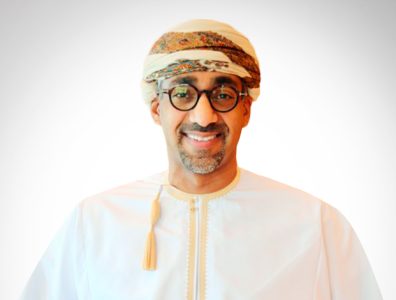
Moutaz Al Riyami, managing director of CC Energy Development (CCED), talks to The Energy Year about plans to drill 17 exploration wells in the next five years and the company’s growing emphasis on efficient reservoir management. CCED is an upstream oil and gas company involved in exploration, development and production.
What sets CC Energy Development apart in Oman’s upstream sector?
We started in 2007 with two empty blocks, reached first oil in 2010 and have produced 150 million barrels of oil since then. Going from zero to a peak of nearly 50,000 bopd is an achievement that we are proud of.
Unlike big international players, we have more freedom to move with agility, which enables us to act quickly and make bold decisions when it matters most. This has made a tangible difference in our culture and in the results we deliver.
Can you comment on the recent developments that are driving CCED’s evolution?
Reaching 150 million barrels was only the first chapter. Now that our fields are more mature, the challenges have evolved and require a very different skillset. While agility is still essential, the emphasis today is on operational and technical excellence.
One of the most exciting prospects is our exploration programme. We are Oman’s largest independent operator, with around 29,000 square kilometres under operatorship, and in 2025 alone, we drilled five exploration wells, of which three were successful. That is a strong result. We have also agreed with the ministry to drill a minimum of 17 exploration wells over the next five years, which is a major commitment.
We have invested in cutting-edge 3D seismic acquisition and have 100% coverage of our acreage, which is rare for a company of our size. Accurate data means more precise targeting of exploration wells, which reduces risks and increases the success rate. That puts us in a very strong position as we plan this next chapter of growth with an emphasis on smart reservoir management.
Are you incorporating AI or digital tools in any of your operations?
We are deploying AI across several areas of the business, but particularly in well and reservoir management. One of the biggest impacts so far has been on waterflood operations, where AI has enabled us to reduce decline rates to approximately 10% within a very short timeframe. That efficiency gain speaks volumes about what AI can do in our sector.
We are also applying AI to seismic interpretation and using fully digital dashboards to make decisions faster and more accurately with real-time data at our fingertips. The empowerment this brings to our teams cannot be overstated.
On the corporate side, our biggest transformation has been an ERP overhaul in partnership with Omantel and Oracle. The new system is fully cloud-based and went live recently. It is already improving cross-departmental decisions, and we will soon add layers to support anything from procurement to asset management.
What steps are you taking towards decarbonisation?
I am passionate about decarbonisation as I believe it is a natural consequence of running efficient operations. We have launched a gas-to-power project for our flare gas in partnership with Aggreko, the largest of its kind in Oman. That alone is helping us abate around 70,000 tonnes per year of carbon dioxide, and by capturing and utilising flare gas, we are replacing diesel use and lowering unit operating costs.
Today, 60% of our wells are powered by this system, and we are generating 12 MW from the project. We are planning to scale up, as there is clear potential to reduce our environmental footprint while maintaining efficient operations. It is a great example of how sustainability can align with business goals.
Do you have plans to expand your acreage in Oman or abroad?
Our focus remains on Oman, and we recently acquired two new blocks, 38 and 74. They are considered frontier exploration areas, with minimal previous activity, and we have completed our initial geological studies and are now launching seismic operations.
This is an exciting new chapter. We have shown before that we can take empty blocks and create significant value. Now, with our seismic capability and exploration expertise, we hope to do the same with blocks 38 and 74. It is a reaffirmation of our commitment to Oman’s energy future.
How are your partnerships evolving with the other stakeholders in your blocks?
We have worked with Mitsui E&P in blocks 3 and 4 since the beginning, and they have proved to be a solid partner. In 2024, our other partner in those blocks, Tethys Oil, was acquired by Roc Oil. This will bring new perspectives and expertise, as Roc Oil has assets around the world, and we can learn from their experience.
In this industry, collaboration is not just a buzzword. The scale of our projects requires co-operation, and we welcome it. Our goal is to unlock opportunities together with our partners. Whether in operations or simply sharing knowledge, they bring value to the table.
What are your strategic priorities going into 2026?
Our top priorities are to maximise recovery from our blocks and become the lowest-cost operator of choice in Oman. That will mean driving efficiency by leveraging technology such as AI across our operations and investing in our people. We want to ensure our workforce is skilled in the digital tools that will define the future of energy operations. AI and analytical skills will be key differentiators.
On the investment side, we have a very busy exploration programme coming up. Our target of 17 wells over the next five years demonstrates our growth vision, and the scale of activities reflects our ambition and long-term commitment to the sector.
Read our latest insights on:
More content from Oman





Quality seismic decisions for Angola
INTERVIEW
Latest news and features



Latest Reports


The Energy Year Oman 2026
The Energy Year Kuwait 2025
The Energy Year Angola 2025
The Energy Year Nigeria 2025
The Energy Year Saudi Arabia 2025
The Energy Year UAE 2025

