

Strong economic incentives for renewables growth in India
February 17, 2026


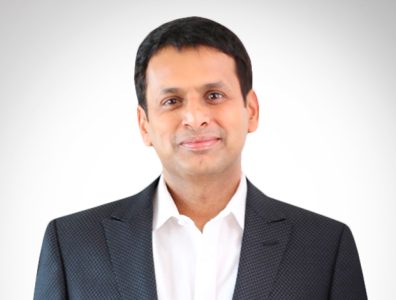
Vineet Mittal, founder and chairman of the Avaada Group, talks about the fundamentals of India's renewables space and the group’s track record of fast execution in solar projects.
The Avaada Group engages in renewable generation, integrated solar manufacturing, green hydrogen and derivatives, data centres and energy storage.
- While thermal power tariffs remain exposed to fuel price swings, renewable tariffs in India are locked in for long periods under power purchase agreements backed by robust entities, giving revenue visibility that greatly benefits project economics for energy investors.
- India imports approximately 85% of its crude oil, which exposes the country to price volatility and puts pressure on the current account deficit. In addition to bringing environmental benefits, the development of renewable sources is an investment in energy security and macroeconomic stability.
- As green ammonia becomes cheaper to produce with technology improvements, adequate policy support can bring it to displace a greater portion of the 6 million tonnes per year of grey ammonia that India imports for fertiliser.
What is your assessment of the potential for renewable energies to grow within India’s energy mix?
India is undergoing a major energy transformation, aiming for 500 GW of non-fossil generation capacity by 2030. As of November 2025, around 263 GW has already been installed. In this context, we see three key opportunities.
First, by moving from fossil-based energy to electricity-based systems, the country can become more self-reliant. Today, electricity addresses only 19% of India’s energy needs, and most fossil fuels are imported.
Second, green energy is now more economical. The tariff for thermal power starts at INR 5 -7 per kWh but can grow over time depending on fuel prices and inflation. In contrast, renewable power offers long-term price certainty, with tariffs locked in for 25 years, making green energy materially cheaper over the life of an asset.
Third, importing more than 85% of its crude oil consumption costs India more than USD 240 billion per year, which worsens the current account deficit and weakens the rupee. There are strong economic incentives for India to push renewables and become energy independent, which aligns with the government’s vision of Atmanirbhar Bharat [Self-Reliant India].
At Avaada, we are targeting 30 GW of solar and wind capacity by 2030. Alongside that, we are developing 16 GWh of battery energy storage solutions along with pumped hydro storage projects. Our goal is not only to generate power, but to provide affordable, reliable, around-the-clock green electricity.
How does Avaada compete against other operators in the market and secure capital contributions for its projects?
Policy consistency is a key strength of the Indian energy sector. Investors in energy and other regulated industries value long-term visibility, and the Indian government has had clear regulatory frameworks for more than a decade.
Avaada has a strong investment track record. I first raised funds from the ADB [Asian Development Bank], DEG [German Investment and Development Corporation] and GE Capital in 2014-15. They exited profitably and reinvested in 2019, exiting again successfully in 2021. Consistency builds investor confidence.
Power purchase agreements in India are valid for 25 years and are mostly backed by sovereign entities, offering long-term revenue security that is extremely attractive in a world of volatile energy prices.
Execution speed differentiates us from competitors. For instance, we have built a 7-GW integrated solar manufacturing facility from start to finish in seven months
We manage every part of the process: securing land, obtaining finance, building the projects and operating the assets. This allows us to execute at speed and generate value at every stage. In manufacturing, we co-locate our glass, wafers, frames and other components under one facility, saving millions on logistics alone. We also have the advantage of India’s talent pool. Hiring 2,000 workers in India takes a few months; the same effort could take three years in more tightly constrained labour markets.
Are you integrating AI into your operations in any way?
Our AI strategy is built around two themes: AI for energy and energy for AI.
We use AI to optimise the scheduling and dispatching of green power so it is delivered predictably. At the same time, we are preparing to meet the huge energy demand growth that is being driven by AI and data infrastructure.
India has more than 480 million Instagram users, hundreds of millions of Gmail users and 500 million YouTube users as of October 2025. These users generate massive amounts of data, and much of it is stored outside India. With the new digital policies and the data localisation requirements that are expected, India will see a huge increase in the demand for data centres and the electricity required to operate them.
Countries such as Malaysia and Ireland are placing restrictions on the power consumed by data centres or pricing it at a premium. India must meet its growing power demand through green sources, not fossil fuels, if it hopes to limit the cost and environmental impact of data centres.
What role does Avaada intend to play in the green hydrogen space?
Green hydrogen is the new oil. Previously, green hydrogen cost around USD 6-8 per kilogram, but prices are falling as technology improves. In Europe, with carbon prices approaching USD 100 per tonne, green ammonia is becoming competitive with grey alternatives. India imports 6 million tonnes per year (tpy) of grey ammonia for fertiliser that could be replaced with green ammonia with the right policies and economic support.
We are building a green ammonia project in Gopalpur, Odisha, with a capacity of 500,000 tpy. Detailed engineering is under way. All we need are long-term offtake agreements, which are essential for banks to finance projects.
Read our latest insights on:
More content from India



Latest news and features






Latest Reports


The Energy Year Oman 2026

The Energy Year Kuwait 2025

The Energy Year Angola 2025

The Energy Year Nigeria 2025

The Energy Year Saudi Arabia 2025

The Energy Year UAE 2025


