
Meeting data demands across GCC market segments
February 25, 2026 Oman
Oman 


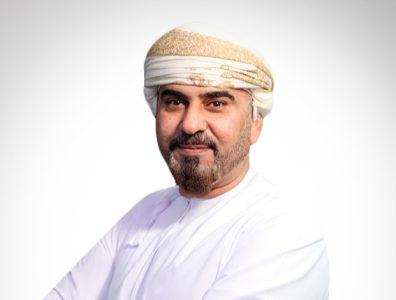
Nasser Al Balushi, CEO of data2cloud, talks to The Energy Year about developing services tailored to the needs of regulated and unregulated industries, and the company’s strategy in the design of frameworks for Oman's AI infrastructure.
data2cloud is an Oman-based data centre and cloud services provider.
- Data sovereignty regulations in Oman are reshaping the data strategies of companies in the energy industry, pushing them towards local cloud providers.
- The rollout of Tier 3+ data centres in Barka, Salalah and Sohar is strengthening the data security and disaster recovery capabilities that are critical for business continuity in the oil and gas sector.
- As AI adoption accelerates, advanced GPU infrastructure, large language models and future shifts toward renewable-powered, liquid-cooled data centres will significantly increase the energy intensity and strategic importance of digital infrastructure across the sector.
How has the demand for data management services been evolving in Oman’s energy industry?
Energy companies traditionally used on-premise systems or opted for international hyperscalers. However, there is now a shift driven by regulations that require certain data to be stored domestically. As a result, energy clients are increasingly considering local cloud providers.
While data derived from energy sectors remains largely unregulated, there is growing interest in locally hosted services that comply with evolving data governance frameworks. This creates a significant opportunity for providers like data2cloud that can deliver both compliance and performance.
We maintain a customer-centric strategy that begins with understanding the industry-specific problems our clients face so we can offer our best capabilities and expertise to improve their overall results. This has meant adapting continuously, scaling up existing solutions and ensuring our services evolve alongside technology.
We have seen strong indicators that this approach is effective. Over the past few years, clients have not only stayed but also expanded their setups with us. Business performance metrics across the board are stronger. We are committed to sustaining this development pace by aligning our talent and tools with client expectations and ensuring that our skillsets are constantly upgraded to support advanced technologies, including AI, multi-cloud architecture and next-generation digital platforms.
Does data2cloud collaborate with global hyperscalers?
We have partnerships with both AWS and Microsoft. With AWS, we provide professional and managed services and help extend their offerings to the local market. With Microsoft, we are a Cloud Solution Provider Partner and offer managed and unmanaged Azure services to clients in Oman.
We support hybrid and multi-cloud models that allow clients to integrate local hosting with global infrastructure. This approach addresses challenges in data sovereignty while providing cost-effective, scalable solutions.
What is data2cloud’s footprint in Oman and in regional markets?
We serve all market segments – government, enterprise and SMEs – and we do not see any vertical or geographical boundaries. While our home base is Oman, we have expanded our customer base across the GCC and Africa over the past two years.
The GCC contains regulated and unregulated environments. Regulated markets have strict data residency policies, while unregulated markets allow cross-border service delivery. We have positioned ourselves to serve clients in both areas. In unregulated markets, where data sovereignty requirements are more flexible, we can offer tailored SaaS [software as a service] and digital services across borders. This has allowed us to grow internationally while strengthening our presence in the country.
What is your involvement with the new Tier 3+ data centres launched by Ooredoo in Barka, Salalah and Sohar?
Our objective is to capitalise on these assets. We are not involved in construction or operational management, but we introduce digital services that make use of the infrastructure. The Sohar data centre is operational, and we have launched our cloud stack there, which will soon be publicly announced.
All three data centres allow us to deliver colocation and disaster recovery services, and the planned interconnectivity between the sites further enables geographic redundancy and business continuity.
Are you planning to deploy any new AI infrastructure or AI-driven services?
AI is a major strategic focus, and we have already embedded the technology into many of our solutions. For example, we provide AI-powered sentiment analysis as part of our chatbot platform. It allows clients to assess the tone and emotion of their customer interactions, monitor feedback and score conversations in real-time. The tool has proven particularly useful for large enterprises, such as telecoms companies.
The growing demand for large language models and AI applications means we must also support advanced infrastructure. The company will launch advanced GPUs [graphics processing units] and MaaS [modelling as a service] capabilities geared towards key industries such as energy and financial services. We began our AI journey earlier than others and are now expanding to support more advanced infrastructure and complex workloads.
Are you considering green energy to power your future workloads?
Yes. The current data centres are connected to multiple in-country grids, which are sufficient for today’s workloads. However, advanced AI workloads will require significantly more energy and cooling, so we anticipate shifting toward alternative energy sources and liquid cooling.
Oman has a clear opportunity to align with global sustainability trends by incorporating renewable energy into future data centre planning. In early 2025, we participated in a panel organised by the MTCIT to contribute to the development of a national AI framework.
Our input focused on the challenges presented by infrastructure and energy requirements, and the importance of attracting investment. The objective is to build a flexible and dynamic regulatory foundation that enables innovation and protects market potential.
Read our latest insights on:
More content from Oman





A new opening for African gas
INTERVIEW

Latest news and features



Latest Reports


The Energy Year Oman 2026
The Energy Year Kuwait 2025
The Energy Year Angola 2025

The Energy Year Nigeria 2025
The Energy Year Saudi Arabia 2025
The Energy Year UAE 2025


