

How gas can become India’s transition fuel
March 3, 2026


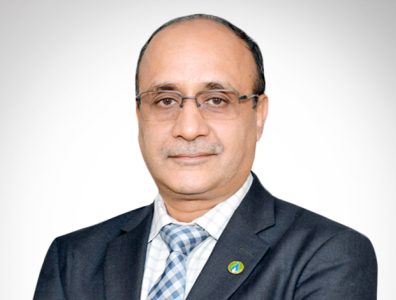
Ashu Shinghal, managing director of Mahanagar Gas, talks to The Energy Year about the strong growth of its urban piped natural gas (PNG) network and the medium-term potential of compressed natural gas (CNG) to replace diesel in transportation.
Mahanagar Gas distributes piped and compressed natural gas to household, commercial and industrial customers.
- In India, electric vehicles rely on a grid that remains about 70% fossil-fuel based, which limits the total carbon benefit of this mobility option, even though it reduces local emissions.
- Diesel trucks account for more than 30% of India’s road emissions despite being a small share of vehicles, making CNG an attractive substitute as a cleaner, cost-effective transition fuel.
- Government policies are incentivising PNG uptake in urban zones, but infrastructure rollout is time-consuming and costly, and since gas is mainly used for cooking, the consumption per connection is relatively low.
How has your footprint in the natural gas market changed over the past few years?
Our focus has been on achieving sustainable growth. We have strengthened our core business and nearly tripled the rate of growth of our CNG [compressed natural gas] station network, going from about 25 new stations per year to approximately 70. This scale-up ensures wider access to our fuel for our expanding customer base. On the household side, we have increased new PNG [piped natural gas] connections from around 150,000 per year to 350,000 in 2025, the highest in India. This was made possible by simplifying processes, reaching decisions more quickly and accelerating execution.
What is your view of the role CNG will play in India’s transportation sector?
CNG will remain relevant in the medium term. As polluting fuels are phased out, diesel will go first, followed by petrol and eventually CNG. In India, heavy-duty diesel trucks are a small portion of the vehicles on the roads, but they generate more than 30% of the emissions. CNG is well-suited as an interim alternative until hydrogen becomes scalable.
Hydrogen still faces infrastructure and cost challenges, as it requires large amounts of green electricity and water to produce. Meanwhile, electric vehicles rely on a grid that remains about 70% fossil-fuel based. This limits the total carbon benefit of these options, even though they reduce local emissions.
Blending compressed biogas into natural gas pipeline networks offers another impactful and cost-effective decarbonisation pathway, but our analysis suggests all fuel types will coexist during the transition. CNG will continue to play a major role, particularly in commercial transport. We currently serve approximately 1.2 million CNG vehicles across our license areas, and the segment saw 12% growth in 2025.
Have you seen similar growth in other segments of your business?
Growth has been broad. Our industrial and commercial segments grew by 24%, and CNG by about 11% overall. Domestic PNG grew by 8%, largely thanks to network expansion. The demand exists; our task is to build the capacity to meet it, and to do so, we are helping consumers build the necessary infrastructure by offering financial support and relaxing requirements for bank guarantees.
Another factor is that we have redesigned our industrial and commercial contracts to make gas more attractive. We offer prices that are indexed to fuels such as furnace oil, assuming the commodity risk ourselves. A customer-centric approach, paired with smart capital deployment, has enabled us to grow our market share while remaining competitive.
In what areas have you been investing?
Most of our capital expenditure, approximately INR 13 billion [USD 143.5 million] per year, is allocated to infrastructure: new CNG stations, pipeline networks and equipment upgrades. A smaller portion goes toward equity investments in transition ventures such as batteries, EVs [electric vehicles] and compressed biogas.
All investments are currently funded through internal accruals. Our balance sheet is debt-free, with total equity of INR 50 billion [USD 551.9 million]. We do not foresee the need for external investment in the immediate future. However, should attractive large-scale projects materialise, we may consider external funding to pursue them.
What are some of your investments in energy transition ventures?
In 2024, we took a 44% stake in a venture with International Battery Company in Bangalore to build a manufacturing plant for battery cells. We have also signed an MoU with the Municipal Corporation of Greater Mumbai to build what may become one of India’s largest plants to turn municipal solid waste into compressed biogas.
What is your outlook for PNG uptake among households in India’s urban markets?
Government policy directs LPG toward rural areas and PNG to urban zones, so PNG uptake is growing in cities. However, infrastructure rollout is a challenge. In Mumbai, the monsoon season interrupts infrastructure work, and reinstatement costs due to damage are high, so deployment is slow. And once the infrastructure is constructed, gas is mainly used for cooking, not heating, so the consumption per connection is relatively low.
Despite these hurdles, we added 350,000 new connections in 2025 and aim to continue expanding, because even though customer onboarding requires a sustained effort, customer retention in the PNG segment is high. We currently have about 70% penetration in the areas where our network is established. As we expand our footprint in new license regions, we expect our customer base to grow sustainably.
What potential do you see in the industrial and commercial segments?
Wherever liquid fuels are in use, we see strong potential for substitution. Coal is more difficult to displace due to its cost advantages. However, as environmental regulations tighten, the calculus should shift.
I am currently part of a committee appointed by the High Court of Bombay that is developing strategies to transition small commercial establishments such as bakeries and restaurants from diesel to gas or electricity. The same committee is also seeking to phase out diesel vehicles in favour of CNG and EVs.
If these initiatives gain traction and if there is a broader public consensus on pollution as a critical issue, we could see a significant increase in uptake in the industrial and commercial segments.
Read our latest insights on:
More content from India



Latest news and features








Latest Reports


The Energy Year Oman 2026

The Energy Year Kuwait 2025

The Energy Year Angola 2025

The Energy Year Nigeria 2025

The Energy Year Saudi Arabia 2025

The Energy Year UAE 2025


