

Leading the way in India’s most challenging basins
March 19, 2026


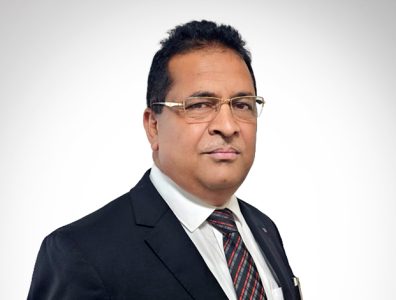
Iqrar Husain, CEO of Quippo Oil and Gas, talks to The Energy Year about delivering projects in India’s most challenging terrains and the impact of the company’s acquisition by Hazoor Multi Projects on investment capabilities and priorities.
Quippo Oil and Gas is an onshore drilling contractor with operations across India.
- Many Indian oil and gas companies are aggressively ramping up production targets, driving a surge in demand for drilling assets and services and accelerating rig deployments across key basins and frontier areas.
- A significant portion of India’s new upstream activity is taking place in challenging terrains and infrastructure-poor areas with limited logistics capabilities and grid access, where drilling is complex and costly.
- The standard tendering system followed by many operators can limit the adoption of advanced equipment and technical innovations because technologies must be specified in the tender documentation to be deployed.
What have been the key milestones for Quippo Oil and Gas over the past years?
We have experienced a remarkable transformation in the past two years, moving from a relatively modest footprint to operating 14 rigs. That was driven by the aggressive production expansion targets of our clients, many of whom are aiming to double their oil and gas output.
Significant strategic wins have contributed to our growth. We secured a project worth INR 280 crores [USD 30.9 million] in Agartala with Oil India, for which we will be using a 2,000-hp rig. It is noteworthy because the region’s mountainous terrain makes logistics and execution with a rig of that size extremely challenging, and the contract reflects our capability to deliver in some of India’s most remote areas.
What capabilities do you leverage in such complex environments, and how do you manage logistics?
Our edge is a combination of experience, adaptability and execution. In Mizoram, a location no other drilling contractor was willing to touch, we sent one rig, then a second, and successfully delivered four wells for Oil India. Very few companies can mobilise and operate in such locations effectively.
The credit goes in large part to my experience working in Iran and Libya, and the understanding I have gained of logistically thin and often volatile locations. This is now embedded in Quippo’s DNA and reflected by our teams, who are trained and motivated to deliver under tough conditions.
We handle part of the logistics internally through a dedicated team, and for the rest, we rely on local partners who are carefully selected based on their past performance and thoroughly vetted. This dual strategy allows us to maintain control while allowing for local participation.
Which regions are your main focus at the moment?
Our strongest presence is in northeastern India: Arunachal Pradesh, Assam, and parts of Tripura. These terrains are not only logistically difficult but also lacking in infrastructure, yet despite the challenges, we have consistently succeeded where others have hesitated. At one point, we had nearly 1,500 people deployed in the northeast alone, across various rigs and operations.
We are also active in the Krishna-Godavari Basin – we deployed a rig there for ONGC in June 2025 – and in Rajasthan, Gujarat and Madhya Pradesh.
Currently, we have eight contracts in progress and two in the pipeline for a total execution value of around INR 1,100 crores [USD 121.4 million]. We are targeting revenues of INR 425 crores [USD 46.9 million] for fiscal year 2025/26.
Who are your main clients, and what kind of service model do you offer them?
We work with top-tier clients such as Oil India, ONGC and Vedanta. We are also in discussions with Reliance Industries Limited, which is developing blocks in regions where we already have a presence.
Our service model is charter hire, meaning we don’t just provide the rig but offer a complete package that includes drill strings, catering, laundry, security, housekeeping, logistics for our own and the client’s service providers – everything is included.
We currently operate seven 2,000-hp rigs and have another 2,000-hp rig being built. Ours is the largest 2,000-hp fleet available in India, and it also includes 650-hp, 950-hp, 1,000-hp and 1,300-hp rigs. This asset range gives us the flexibility to serve different types of projects, though we tend to avoid smaller ones as mobilisation costs are disproportionately high for short-term programmes.
Do you plan to expand your rig fleet or carry out upgrades?
We are in talks with suppliers in China to bring in at least three new rigs by the end of the 2025/26 fiscal year, and we are considering the acquisition of a 3,000-hp land rig, which would be a first for any Indian company.
Market demand remains high, especially after the recent spike in crude prices, providing a favourable environment for capacity expansion. And with deeper financial backing following our acquisition in August 2025 by Hazoor Multi Projects, we are in a good position to capitalise on the momentum. We will have deeper pockets going forward, allowing us to procure more rigs and upgrade technologies. We are urging PSUs [Public Sector Undertakings] to issue tenders for new equipment rather than recycled older rigs, and to extend the duration of contracts, to support new investments.
Are there barriers to technological innovation in the current tendering system?
India’s tendering structure is quite restrictive. PSUs such as ONGC and Oil India issue tenders with very specific requirements. When we propose innovative solutions, they are often not accepted because the evaluation must compare apples to apples across all bidders.
Unless the innovation is written into the tender itself, we can’t implement it, so even though we are capable of offering advanced, efficient solutions, we are often constrained by the system. Change must come from the top, through operator-driven demand for innovation.
How are you adapting to decarbonisation trends in upstream operations?
We take sustainability seriously and view it as a competitive advantage. The biggest challenge is that, because of the lack of grid access in remote drilling areas, we must rely on diesel generators. Nonetheless, we are aiming for a 15% reduction in emissions by 2027.
Five of our rigs have already been retrofitted with Cummins engines, improving their fuel efficiency by 10%. Additionally, we are piloting technologies we observed during a recent visit to China that could further reduce fuel consumption by 10–25%.
What are Quippo’s top priorities going forward?
Besides increasing our fleet to support the push for more wells and greater production, we are diversifying into 2D and 3D seismic data acquisition. We just completed 100-square-kilometre and 60-square-kilometre campaigns in one of the most challenging regions in Assam. Our goal is to be the partner of choice not just in drilling, but also in exploration.
Read our latest insights on:
More content from India



Latest news and features








Latest Reports



The Energy Year Oman 2026
The Energy Year Kuwait 2025

The Energy Year Angola 2025

The Energy Year Nigeria 2025

The Energy Year Saudi Arabia 2025

The Energy Year UAE 2025


