

Quality acquisitions over acreage
June 23, 2026


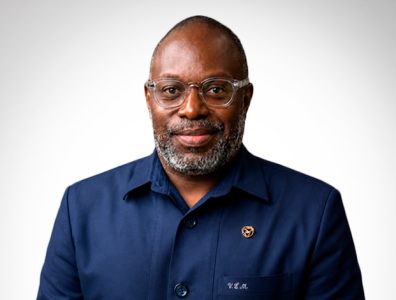
Ulanga Gaspar Martins, CEO of Poliedro, talks to The Energy Year about navigating the increasingly competitive dynamics of Angola’s upstream sector and reassessing the company’s priorities on the path to becoming a full-blown oil and gas operator.
Poliedro is an energy company with activities in oil and gas, mining, fuel retail and logistics sectors.
- Angola’s incremental production legislation is improving the country’s appeal among international independents, but this is also intensifying competition for mature and marginal assets.
- Domestic oil and gas companies remain structurally constrained by limited access to capital, making it harder to compete with international players that can mobilise capital more quickly.
- Mature producing fields are more suitable for companies with limited equity bases because they offer predictable cashflow and operational learning without the risk profile of exploration-heavy assets.
How is Poliedro progressing towards its ambition of becoming an upstream operator?
We continue to focus on increasing our footprint in the upstream segment and becoming an operator. What has evolved is our understanding of how long these processes take. The experience of 2025 and 2026 has shown us that even when opportunities exist, transactions are rarely straightforward or immediate. There are delays, changes in priorities and reassessments within the companies that are divesting assets.
Initially, we aimed to enter at least five blocks, but we now recognise that this target may need to be adjusted. It is simply a reality of the market that not all deals are competitively priced. However, the essence of our strategy has not changed, and we remain committed to pursuing any viable opportunity that aligns with our objectives.
What is becoming clearer is that success should not be measured purely by acreage. Even if we do not obtain five blocks, achieving two solid, well-structured acquisitions by 2030 would still represent meaningful progress. The focus is on quality and long-term value creation with a realistic view of execution timelines and market dynamics.
Why is Poliedro focused on mature and marginal fields rather than exploration assets?
Our focus on mature fields is very deliberate and closely tied to our financial structure. We are targeting assets that can essentially finance themselves through production, rather than requiring upfront capital for exploration. Given our current equity base, entering exploration-heavy projects would expose us more than our strategy contemplates at this stage.
Mature producing fields offer a different value proposition, as they generate more predictable cashflow and allow us to develop operational experience without the uncertainties associated with early-stage exploration. The same idea explains why onshore exploration is not a priority for us at the moment. While there are opportunities, many of them require extensive exploration work before reaching production, and that does not fit our current capabilities or risk appetite. Instead, we are concentrating on assets that are already producing and where we can optimise performance without taking on excessive risk.
How has Angola’s incremental production legislation affected Poliedro and its peers?
The impact has been mixed. On the one hand, the legislation has clearly made Angola more attractive. There is increased interest from international independents, which is a positive signal for the sector as a whole. It demonstrates confidence in the country and its regulatory framework.
However, that greater appeal brings challenges for domestic companies. The assets we are targeting are now attracting a larger pool of competitors, many of whom are international players with better access to international capital markets and capable of mobilising funding more easily to move quickly in transactions. For Poliedro, this can make it more difficult to secure assets, even when we can demonstrate a strong strategic fit.
Therefore, the legislation, while beneficial at a macro level, has introduced complexity at the market level. By increasing competition, it reinforces the importance of improving our access to capital. Ultimately, it pushes domestic companies to evolve, but it also highlights the structural challenges we continue to face when competing with international players.
Do you feel that your access to capital is improving, and what challenges remain?
The progress is gradual. We are seeing encouraging developments in BODIVA, which has had some successful listings that have helped to build confidence in the market and create precedents for future transactions. However, these transactions are small relative to the capital that is required in the oil and gas business, so we don’t see Angola’s capital markets as capable of meeting the needs of our sector yet.
The Etu Energias private placement is a good example. It was a successful transaction, but still quite niche and modest. What we need is for deals of this type to gradually increase in number, size and complexity, so that the market becomes more familiar with oil and gas risk.
Over time, this will allow domestic financial institutions to develop the required expertise and confidence, and that will be a process of repetition, learning and market maturation. In the meantime, companies like ours must continue to explore alternative financing mechanisms.
Can international expansion improve your access to capital?
Indeed, our international expansion is about visibility and access to a large extent. Our subsidiary in Mauritius brings us closer to global financial markets and creates a platform to attract international capital, and we are taking other, complementary steps to reinforce our credibility and integration into the global ecosystem.
For example, we have signed a contract with Trafigura for lifting our volumes, which increases our exposure to international trading networks, and internally, we are enhancing our governance and compliance standards to meet the expectations of international partners and financial institutions. It is all about building trust and becoming a viable counterpart for global investors. The immediate goal is not expansion beyond Angola, but rather to support what we are trying to achieve domestically.
Read our latest insights on:
More content from Angola



Latest news and features





Latest Reports


The Energy Year Oman 2026
The Energy Year Kuwait 2025
The Energy Year Angola 2025
The Energy Year Nigeria 2025
The Energy Year Saudi Arabia 2025
The Energy Year UAE 2025


