

A crucial juncture for Colombia’s hydrocarbons sector
December 13, 2024 Colombia


Oscar Ferney Rincon, executive director of the Colombian Association of Petroleum, Energy and Related Technology Engineers (ACIPET), talks to The Energy Year about the state of Colombia’s hydrocarbons sector and the impact of the energy transition. ACIPET represents the interests of petroleum engineers and related professionals and acts as a technical advisory body for the hydrocarbons sector.
What is the state of Colombia’s hydrocarbons sector and what key challenges does it face?
The hydrocarbons sector in Colombia is at a crucial juncture. It is facing significant challenges in maintaining and increasing production to reach the government’s ambitious goal of 1 million bopd by 2030.
Key issues include social and public order problems affecting certain regions, which hinder operations and exploration. There’s a pressing need to convert the growing contingent resources into reserves, a process complicated by various factors. Environmental licensing, prior consultation with communities and security concerns pose substantial obstacles to new projects and exploration efforts.
The sector requires the convergence of many actors, including operators, various ministries (e.g., the Ministry of Mines and Energy, Ministry of the Environment and Sustainable Development and Ministry of the Interior) and regulatory bodies such as the ANH [National Hydrocarbons Agency] and ANLA [National Environmental Licensing Authority] to overcome these challenges. Economic viability is a particular concern for offshore projects, where 95% of contingent resources are contingent on economic factors.
Looking forward, the sector needs to focus on both the short-term conversion of contingent resources to reserves and long-term exploration to ensure future reserves. This implies unlocking exploration projects in existing areas and potentially opening new areas for exploration, all while navigating the complex landscape of environmental, social and security challenges.
What are the current technical challenges in EOR, and how can these be addressed?
EOR has been a part of Colombia’s oil industry for over 40 years, but it still faces significant challenges. The primary task is implementing pilot projects to determine feasibility in different fields, as each field has unique characteristics that affect the success of EOR.
Technical challenges include optimising the EOR techniques for each specific field, which requires significant research and pilot testing. Additionally, there’s a need for continuous innovation in EOR technologies to improve efficiency and reduce costs. Addressing these challenges requires a collaborative effort between oil companies, government agencies and research institutions.
Economic viability is a major concern, as EOR methods are inherently more costly than primary production. They require careful economic analysis and government incentives to make projects attractive. Creating such incentives – whether through streamlined processes or financial mechanisms such as royalty reductions – is crucial.
How is the energy transition impacting the hydrocarbons sector, and what is ACIPET’s stance on it?
The hydrocarbons sector in Colombia has made a significant contribution to the energy transition. In fact, this sector has invested over USD 110 million in transition-related initiatives over the past five years.
However, we emphasise that this transition should not compete with or replace hydrocarbons but rather complement them. The hydrocarbons sector has been working on sustainability and environmental challenges for over a decade, making it one of the pioneers in Colombia’s energy transition efforts.
We see our sector as a potential lever to achieve the transition, given its experience and resources. However, the transition faces several challenges, particularly in areas such as regulation, energy transmission and social licensing. For instance, there are significant hurdles in connecting renewable energy sources to the national grid, as exemplified by the delayed environmental licence granted for the Línea Colectora to bring wind energy from La Guajira to the interior.
Social licensing, especially concerning prior consultations with indigenous communities, remains a critical challenge, as seen in the case of Enel’s suspended wind power project in La Guajira. Colombia still depends heavily on hydrocarbons for both energy consumption and economic growth, with the sector contributing significantly to GDP and royalties.
What role does the association play in promoting knowledge and technology in the energy industry?
ACIPET plays a crucial role in promoting knowledge and technology transfer within Colombia’s energy industry. As an association of individuals rather than companies, ACIPET’s fundamental pillar is knowledge dissemination. We organise various training courses and webinars on energy topics. We initially focused on hydrocarbons, but we’re increasingly expanding to cover sustainability and renewable energies.
Among our initiatives, a key one is the Colombian Petroleum Congress, which ACIPET has been organising since 1984. The congress has evolved over time to include papers on sustainability and renewable energies, alongside traditional oil and gas topics, reflecting the changing landscape of the energy sector. With this, we are transmitting knowledge and technology, motivating people to explore new topics in the sector.
Furthermore, we are working towards internationalising our reach, collaborating with petroleum engineering associations from other Latin American countries to exchange knowledge and experience. This approach not only benefits our members but also positions ACIPET as a key player in driving technological advancement and knowledge sharing in the broader Latin American energy sector.
What are ACIPET’s main objectives for the next two to three years?
ACIPET has outlined six fundamental pillars for its strategy over the next two to three years. Firstly, we aim to increase knowledge among members and the public about hydrocarbons and the energy transition, working to break down barriers and myths surrounding these topics. This includes educating people on the broader implications of the energy transition beyond just the shift from petrol to electric vehicles.
Secondly, we are focused on supporting job opportunities for our members, recognising the changing landscape of the energy sector and helping members navigate these changes.
Thirdly, we aim to strengthen our position as a technical reference for the government and other institutions, leveraging our status as an advisory body to the national government, which was established by Law 20 of 1984.
The fourth pillar involves internationalising the industry through collaboration with other Latin American petroleum engineering associations, reviving a previous initiative for regional integration and knowledge exchange.
The fifth objective centres on providing benefits to members, such as access to health plans, insurance and co-operatives, as well as creating networking opportunities. Lastly, we are working towards growing our membership base, which currently stands at 450 affiliates. This growth is crucial for expanding our influence and ability to serve the industry.
Read our latest insights on:
-

-

-

O&M leadership in mining and energy
INTERVIEW
More content from Colombia


Quality seismic decisions for Angola
INTERVIEW
Latest news and features




Latest Reports


The Energy Year Oman 2026
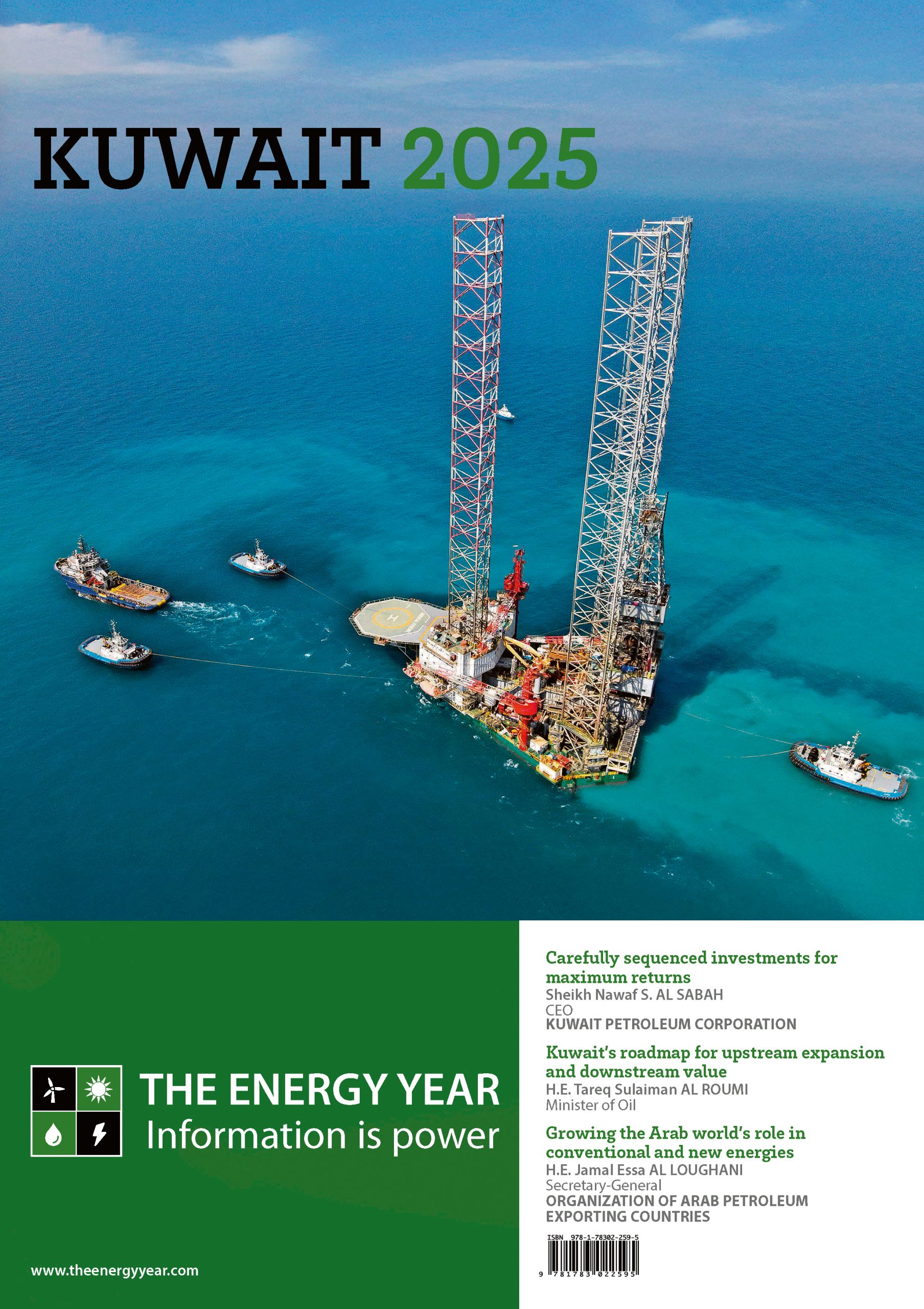
The Energy Year Kuwait 2025
The Energy Year Angola 2025
The Energy Year Nigeria 2025

The Energy Year Saudi Arabia 2025
The Energy Year UAE 2025

