
A downstream strategy centred on high-margin products
November 4, 2025 Kuwait


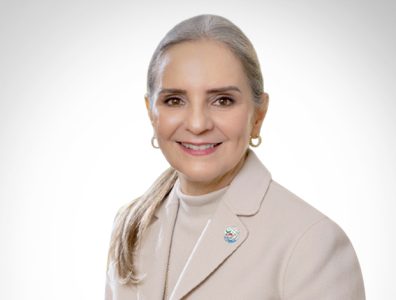
Nadia Bader Alhajji, CEO of Petrochemical Industries Company (PIC), talks to The Energy Year about the company’s recent acquisition of production assets in China and its role in diversifying Kuwait’s hydrocarbons income streams. PIC is a KPC subsidiary that manufactures and markets petrochemicals and fertilisers in Kuwait and internationally.
This interview is featured in The Energy Year Kuwait 2025
How would you summarise the evolution of PIC’s business in 2024 and so far in 2025?
2024 and 2025 have been transformative and challenging years, not just for PIC but for the industry overall. We often talk about the cyclical nature of petrochemicals, but this year felt fundamentally different. The global economic uncertainty we are facing might not be part of a typical cycle – it could very well be the new normal. That means we must reframe how we approach planning and decision making.
In the past, even in downturns, we had a degree of clarity in our outlook. In 2025, however, we have been forced to be more creative and conservative in our approach.
Despite global instability, we identified and pursued select opportunities, and our 50% profit increase over fiscal year 2023/24 underscores the validity of our strategy and our resilience. The key was to stay grounded and focus on value creation for Kuwait. The future of Kuwait’s downstream will be driven by chemicals, not fuels, and we are transitioning deliberately.
What does the China acquisition bring to PIC’s portfolio?
The acquisition of a 25% equity stake in Wanhua Chemical (Yantai) Petrochemicals was a carve-out from Wanhua Chemical’s operations. We had been in talks with the company for some time. The acquired assets add capabilities in a broad mix of products in the C3 value chain, such as Wanhua Chemical’s Phase I PDH industrial chain assets and their POCHP, maleic anhydride and other plants. Adding diversity is key for us, as moving into speciality markets is central to our long-term strategy.
More significantly, the deal deepens our integration with existing KPC relationships. KPC Marketing had a long-standing supply arrangement with Wanhua Chemical. That partnership is not just about supplying feedstock anymore; it is now about downstream integration and extracting more value from Kuwaiti hydrocarbons abroad, and demonstrating a shared commitment to promoting the development of the global petrochemical industry.
Will PIC be involved in the day-to-day operations of the assets?
Yes, absolutely. Our business model is not built around passive investments; we are never just financial participants. We will second people into the facility and play a role in operations. There will be challenges, particularly around language and culture, but we are already working closely with our Chinese partner to prepare our team.
We are investing in training and adaptation to ensure that our presence adds value. This is not just an investment in infrastructure, but also in people and relationships. We see this as the beginning of a long-term partnership that is not limited to one project. We will jointly explore opportunities for growth.
In our pursuit of collaborations, we place great weight on the spirit of partnership. We seek growth relationships based on shared values and mutual benefit. That mindset can make all the difference when the market becomes volatile. We believe that through our complementary strengths and industrial advantages, PIC and Wanhua Chemical will bring fruitful results and create benefits for both parties.
Is PIC planning any further acquisitions for regional or global expansion?
The Wanhua Chemical deal confirms the direction we had already been pursuing. We are looking at regions globally where there is a feedstock advantage and access to markets. Asia and the Americas remain of high interest, while Europe is less of a priority.
We also wish to further regional co-operation. Kuwait has longstanding relationships in the Gulf, demonstrated by some of our existing regional partnerships and joint ventures, with whom we have cultural alignment and solid business ties. Our strategy is global, but it remains deeply connected to regional collaboration.
Does PIC have any standing plans to support private-sector ventures in Kuwait’s petrochemical sector?
Our primary focus for advancing petrochemical growth in Kuwait is the Olefins IV project. This initiative represents a key component of Kuwait’s petrochemical strategy and is anticipated to strengthen the nation’s downstream sector.
We remain committed to fostering the development of local projects. Our approach prioritises opportunities that are viable within the Kuwaiti market. By identifying models aligned with domestic consumption patterns, we can establish robust business cases. The objective is to build integrated value chains that are economically sensible for Kuwait’s market size and promote long-term sustainability.
Has PIC set any production targets for specific products, and how do you see your output evolving in the coming years?
We have stepped away from hard targets and fixed portfolio percentages. The world is evolving too quickly. Rather than chasing numbers, we are establishing strategic directions and focusing on flexibility. That said, our core remains in the C2 and C3 value chains, which allow flexibility to evaluate which products make the most commercial sense, while being anchored in areas where we have deep expertise.
Our strategy is centred on profitability. Domestically, our next major project is Olefins IV, a pure ethane-based project. We have completed the feasibility study and are now working on refining market assumptions and product demand before starting FEED.
PIC is the KPC arm that derives value from hydrocarbons beyond fuels, and the role we play in diversifying the income from oil barrels is vital. Global industries are becoming increasingly petrochemical-based, and petrochemicals are also the building blocks for many energy transition materials. So, the importance of our operations is only going to grow.
PIC has collaborations to encourage greater participation of women in petrochemicals. What can you tell us about these initiatives and their significance?
At KPC and PIC, we believe that diversity and inclusion are key drivers of innovation and sustainable growth. Through our collaboration with McKinsey and the Gulf Petrochemicals and Chemicals Association, we have launched the Women in Chemicals initiative that highlights the role of women in the petrochemical industry, provides platforms for dialogue and creates opportunities for professional development. These efforts not only empower women to take on leadership roles but also enrich the sector with diverse perspectives, helping it remain resilient and competitive in an ever-changing global market.
We also have a very strong focus on the youth within our organisation, as we believe that the challenges that face our industry can only be met with the diverse thinking of an engaged and empowered new generation to help carry our industry into a more sustainable future.
Read our latest insights on:
More content from Kuwait





Quality seismic decisions for Angola
INTERVIEW
Latest news and features



Latest Reports


The Energy Year Oman 2026
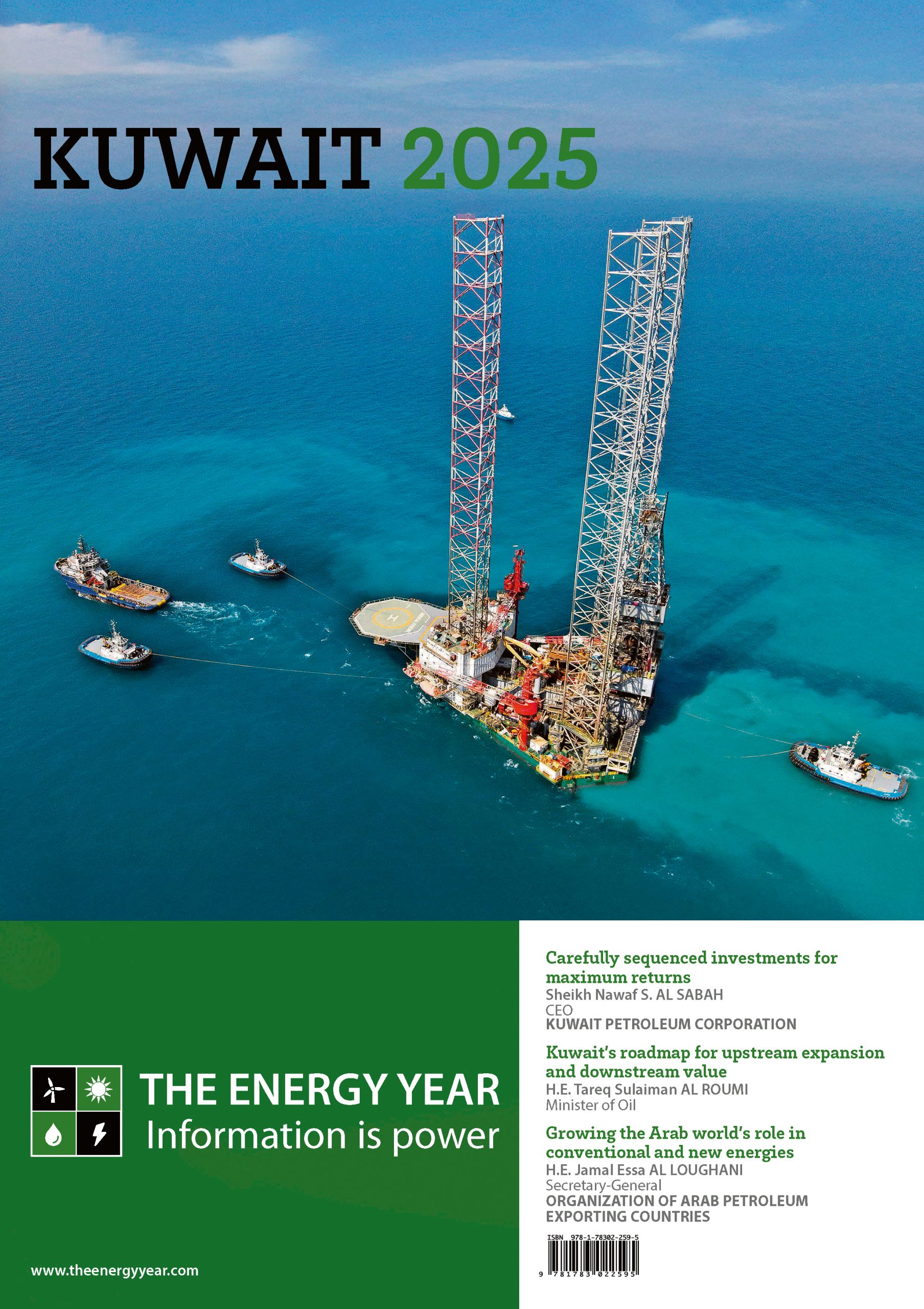
The Energy Year Kuwait 2025
The Energy Year Angola 2025
The Energy Year Nigeria 2025
The Energy Year Saudi Arabia 2025
The Energy Year UAE 2025

