

A one-stop shop for global shipping needs
September 17, 2025 Oman
Oman 


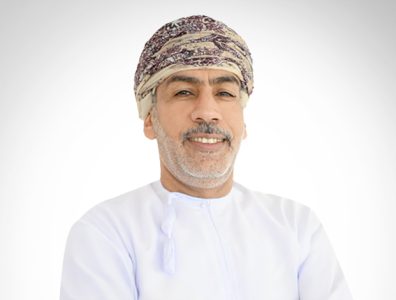
Salim Al Hashmi, managing director of Oman Tank Terminal Company (OTTCO), talks to The Energy Year about how the company fits into the broader strategy of OQ and the strategic importance of the Ras Markaz storage terminal. A subsidiary of OQ, OTTCO owns, operates and maintains a network of storage and pipelines assets in Oman.
How does OTTCO fit into the broader OQ strategy?
OTTCO is part of OQ’s fully integrated energy portfolio. OQ’s portfolio covers the whole spectrum of the energy sector, including exploration and production, refining, petrochemicals and alternative energy. OTTCO mainly focuses on energy storage. With a focus on Duqm, OTTCO operates storage facilities, aligned with OQ’s vision in Duqm. Currently, OTTCO operates the crude storage terminal in Ras Markaz and the liquid export terminal in Port of Duqm, mainly for OQ8’s refinery, with many growth projects in the pipeline.
How does Duqm stand out as a global logistics and energy hub, and how does it complement Ras Markaz?
Duqm offers unmatched geographical advantages. We’re close to the main shipping lanes to and from the Strait of Hormuz. This makes us ideal for ship refuelling and repair. Without such services, ships would have to detour, costing time and money. We aim to offer all services in one location.
The Duqm Oman Drydock is a major asset. We’re working to integrate it with our storage and bunkering to offer a seamless solution. It’s about making Duqm the most efficient stop for vessels in the region.
Duqm and Ras Markaz are complementary. Duqm is more product focused, tied to the refinery and green energy exports. Ras Markaz is more suited for large-scale crude storage and strategic reserves. However, both benefit from the same logistics ecosystem. Adding bunkering, repair and trade support services at Duqm strengthens the value proposition for Ras Markaz. We’re not developing isolated projects. We’re building a network that amplifies value across the system. That’s OTTCO’s vision.
What is the strategic importance of Ras Markaz, and how does it compare to Fujairah?
Ras Markaz represents a new concept for Oman. It is a dedicated oil storage hub in a region close to production zones. Its coastal location in Al Wusta reduces transportation inefficiencies and provides direct access to shipping routes.
Ras Markaz sits on virgin land with no spatial constraints. We developed it not to compete with Fujairah but to complement it by providing available land and flexibility.
How much of Phase 1 at Ras Markaz is currently operational, and how will capacity evolve?
We’re currently utilising about 5.2 million barrels, which represents roughly 20% of the infrastructure that is currently built within Phase 1. The full Phase 1 target is 26 million barrels, and we expect that to be fully committed in the near future. Depending on how product versus crude demand evolves, we can adjust allocations accordingly.
We’re already seeing interest from other countries in the region for strategic storage capacity, which would go beyond our Phase 1 capacity in the near future.
How are you building client trust and positioning Ras Markaz on the global map?
We’ve been deliberate in building trust. Initially, our infrastructure was for government captive use, primarily for our refinery.
The key was proving reliability. Once clients saw that we could deliver, momentum followed. They see the geopolitical tensions in the region, and Ras Markaz provides a safe, convenient option.
Is there a specific client profile you are targeting?
We are interested in large energy players, governments and NOCs. However, we’re also open to working with new entrants and niche markets. For example, our new partnership with Vopak has a focus on green energy developments. That opens doors to companies looking beyond fossil fuels.
How does OTTCO plan to diversify its service offerings?
We are building more than tanks. We are creating an ecosystem. We’re aiming to build a one-stop shop for global shipping needs. In Duqm, we already have a drydock, which is key for attracting vessels requiring repairs.
Combining storage, refuelling and repair in one location adds significant value. We aim to replicate successful models from places such as Singapore and Fujairah but with the added advantage of space, scalability and location.
How are market trends affecting your growth strategy?
Global storage demand is surging, and geopolitical tensions are high. Everyone wants to store rather than sell.
However, available capacity is limited. That leaves Oman in a powerful position to offer an alternative. The storage business is extremely resilient. Our long-term bet is that this momentum will sustain and even grow, particularly as more clients look for flexible, scalable solutions.
How open is OTTCO to partnerships, and what models are you offering investors?
We’re very flexible. That’s our pitch to investors. You can come in with 100% ownership, or you can partner with us. You can build your own facility, or we can build it for you. Everything – access to water, corridors and port handling – is under one roof. Our model gives you full control of your business flow. Whether it’s throughput, a JV or a tailored investment structure, we accommodate your needs.
What’s your final message to potential investors looking at Oman?
Oman is a blank canvas in terms of energy logistics. We have the space, the infrastructure and a government mandate to attract and support strategic energy storage. OTTCO’s one-stop-shop model, combined with flexible investment structures, makes us unique. We’ve removed the barriers that exist elsewhere. If you want to shape your business around your operational needs and avoid rigid frameworks, OTTCO is the place to do it.
Read our latest insights on:
More content from Oman




Quality seismic decisions for Angola
INTERVIEW
Latest news and features



Latest Reports


The Energy Year Oman 2026
The Energy Year Kuwait 2025
The Energy Year Angola 2025
The Energy Year Nigeria 2025
The Energy Year Saudi Arabia 2025
The Energy Year UAE 2025

