
A one-stop shop for logistics services
September 3, 2024 Trinidad and Tobago


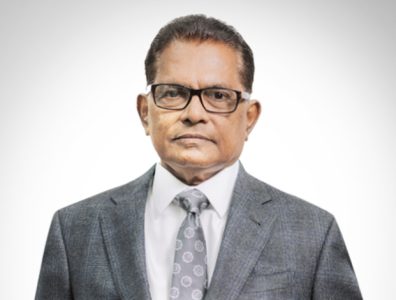
Sieunarine Rambhajan, executive chairman of Titan Logistics and Support Services (Titan), talks to The Energy Year about the company’s work supporting international players in the Trinidad and Tobago energy industry efficiently and effectively and key technologies that have helped to evolve its operations. Titan provides a broad range of services to energy companies in Trinidad and Tobago, Suriname and Guyana.
How would you describe the main contribution of your services in the energy industry?
Our core service is acting as an agent for the international companies who operate in the energy industry in Trinidad. From personnel logistics to port logistics, Titan provides our expertise on navigating related local compliances and co-ordination with local third-party companies.
With respect to personnel, incoming persons will require certain regulatory documents such as work permits and visas. Onshore personnel/crew also require support such as accommodation/housing, transport etc. Titan covers the full suite of services for foreign nationals.
Titan also provides the total complement of quayside support including the Customs and immigration representation that is necessary when companies undergo regulatory procedures such as clearance for vessels, co-ordination, handling, transport and/or storage of cargo.
Our array of services supports these companies. We handle these tasks, so that they can concentrate their attention and efforts on running their operations hassle-free.
With all our other services combined, we are able to function as a “one-stop shop” for logistics services.
What is a major factor that has contributed to Titan’s development and success?
Titan is fully incorporated in Trinidad and Tobago where there is a wealth of expertise. Our board of directors comprises very knowledgeable and experienced people in different fields. We have directors who are doctors, attorneys, communications specialists and certified professionals who have years of experience in the energy and logistics industries. Our multi-skilled board of directors is a major contributor to the success of our company as each director is able to draw on their area of expertise in the various services we provide.
Additionally, we forged close relationships with excellent subcontractors that are equipped to provide the standard of service for which Titan is known. For example, we strategically work with various companies in the transportation sector who own fleets of vehicles. We work with a company that owns a fleet of more than 100 cars, another located close to the airport and one in the southern part of the island. We work with a company that owns a fleet of trucks to move the heavy equipment and cargo we handle for clients.
What key technologies have helped to evolve or optimise your operations?
Due to the nature of our service, the most helpful advancement in technology for us has been tracking software. This encompasses tracking two aspects of our operations: the internal and the external operations. Externally, there is software to help us track the materials coming into the country for our clients so that we always know where they are at any given time. This helps us to avoid delays where possible and allows our clients to stay updated with their shipments.
Internally, we also need to ensure we can track our expenses and our work hours for any given project. This is also used in the calculations of the bill presented to the client.
Technology is constantly evolving and we use it to help us accomplish our operational goals. We are in the developmental stage of adapting a new system, tailored to our operations to improve the speed and efficiency of providing data to our clients. We have our own consultant working with a local software developer on this. We utilise local content for most of what we do because Trinidad has plenty of expertise and knowledge.
How would you compare the approaches to local content between Trinidad and Tobago and Guyana?
In Guyana, the local content policy is that the shareholding must be 51%, the workforce is 90% and the directorship is 75%. If a country wants to develop very quickly, they need to rely on foreign experts, but if they want the profit of the businesses to remain in the country, then they must impose restrictions and limitations. For example, if you take a rig into a developing energy market – a piece of equipment worth millions of dollars – it may not be wise to put it in less experienced hands right away.
Trinidad and Tobago took a different approach to local content from Guyana’s because the Trinidadian government took the opportunity to allow foreign expertise to come into the country to work, sharing their knowledge with our local population and developing our energy industry.
In Trinidad, the workforce is trained in every aspect of the energy industry. You can find workers with multiple skills. This has developed through learning from those foreign experts.
Read our latest insights on:
More content from Trinidad and Tobago





Quality seismic decisions for Angola
INTERVIEW

Latest news and features




Latest Reports


The Energy Year Oman 2026
The Energy Year Kuwait 2025
The Energy Year Angola 2025
The Energy Year Nigeria 2025
The Energy Year Saudi Arabia 2025
The Energy Year UAE 2025

