
A winning blend of EPC discipline and Omani R&D
October 30, 2025 Oman
Oman 


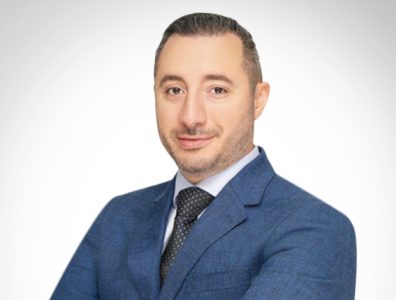
Ziad El Helou, CEO of Synergy, talks to The Energy Year about the company’s journey from its oil and gas foundations to a wider role in Oman’s economic diversification and energy transition. Synergy is an EPC company that delivers assets across power transmission and distribution, digital infrastructure, green mobility, renewables and hydrogen.
How has Synergy evolved in recent years, and what new directions are you exploring?
The past few years forced everyone to focus on what truly matters. We stayed lean, protected quality, and put energy into capabilities that would carry us into the next cycle. Our path today grows directly out of oil and gas. That is where we learned HSEQ leadership, schedule certainty and full accountability. Those habits now power a broader platform.
We extended our core into power transmission and distribution, green mobility and AI-ready digital infrastructure. The move felt natural because our EPC, E&I [electrical and instrumentation], mechanical engineering and build-own-operate-transfer (BOOT) experience already lined up with those needs. We accelerated by bringing in targeted senior talent and by acquiring companies and factories that lift capacity, proximity and specialised know-how.
In parallel, we invested in Oman-based R&D, testing and commissioning capabilities, as well as digital quality systems. The goal is simple. When customers move, we are ready, and we deliver with the standards that built our reputation.
Why do you focus on power transmission and distribution, and what results have you seen so far?
Electrification sits at the centre of growth in Oman. New industrial sites, renewable integration and data-driven operations all depend on reliable connections, strong power quality and fast time to energisation. That is why transmission and distribution are so important.
Our turnkey and EPC model puts design, procurement, construction, testing and handover on one track with one owner. It cuts interface risk and gives clearer timelines. The mindset comes from our DBOOM [design-build-own-operate-maintain] and BOOT work. We look at the whole life of the asset from day one, so we plan for buildability, operability and maintainability before boots are on the ground. We front-load engineering definition, vendor qualification and site readiness so surprises are limited and commissioning is shorter.
This approach has built trust with private developers and national enterprises who want speed and quality with no compromise on safety.
What are the greatest challenges in scaling power infrastructure in Oman?
Three areas need constant attention. The first is access to specialist talent. The second is a dependable supply chain for critical equipment and materials. The third is keeping up with higher performance expectations from end users, especially for digital infrastructure and mobility.
We respond in practical ways. We invest in training and coaching, and we recruit selectively for roles that raise our ceiling. We qualify multiple supply options and deepen local partnerships to reduce single-point exposure. We also standardise where it helps and use modular construction where it shortens delivery. Early planning for access, logistics, HSE controls and commissioning is part of our routine. It keeps projects moving, reduces rework and improves day-one performance.
How are you leveraging your core capabilities in Oman’s energy transition journey?
Our oil and gas background gives us a culture that delivers under pressure. We add to that with sustained R&D in Oman and with the infrastructure to take ideas from lab to scale. We can prototype, run field trials and deploy at the commercial level within one system of work. That is where outside-the-box thinking meets disciplined delivery.
In practice, we build grid connections and power systems for renewables, high-availability electrical infrastructure for data centres and hydrogen-ready assets as demand develops. Our DBOOM and BOOT experience keeps the whole life cycle in view, so design choices reflect long-term performance and cost. That perspective helps us spot likely constraints early and solve them before they slow a schedule or add avoidable cost.
How are you structuring your expansion?
We are placing capabilities where they help customers the most. Duqm gives us reach across the country, better access to industrial zones and ports, and faster mobilisation to sites. Salalah strengthens our presence in the south and connects us to key supply routes. Together with Samail, this creates real national coverage and short response times.
Expansion is also about depth. We are scaling testing and commissioning capacity, building service infrastructure and running vendor development programmes that lift both quality and speed. Where it makes a clear difference, we acquire companies and factories that bring specialised know-how or strategic locations into our ecosystem. For clients, that translates into cleaner execution paths from engineering to energisation and reliable support across the life of the asset.
Read our latest insights on:
More content from Oman




Quality seismic decisions for Angola
INTERVIEW
Latest news and features



Latest Reports



The Energy Year Oman 2026
The Energy Year Kuwait 2025

The Energy Year Angola 2025

The Energy Year Nigeria 2025

The Energy Year Saudi Arabia 2025

The Energy Year UAE 2025

