
An innovator in Colombia’s energy transition
January 15, 2025 Colombia


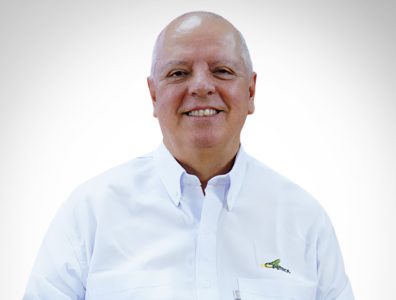
Jose Vicente Villamizar, director of the Colombian Petroleum and Energy Transition Institute (ICPET), talks to The Energy Year about the institute’s key objectives regarding the energy transition and its role in the development of new technology and training. ICPET is the centre for innovation, research and technological development for Ecopetrol Group.
What are the fundamental pillars of ICPET?
ICPET is the centre for innovation, research and technological development of the Ecopetrol Group. It has the capacity to guide its production processes based on the generation, adaptation and incorporation of new business technologies. It is a technical and scientific institute aimed at adding value to the company and enriching its production processes with a sustainable approach.
Our scope is based on numerous pillars.
We impact the oil and gas value chain – exploration, production, transportation, refining and commercialisation – through research, technological development and innovation.
We ensure that the results obtained by Ecopetrol Group have a positive impact on the sustainability of the business and the fulfilment of its environmental commitment to the nation.
We identify, evaluate and adapt technologies to meet the needs of the production processes of the Group.
We find monetisation opportunities for the technological solutions developed by building intellectual property assets and generating business models.
We ensure that investment decisions are efficiently focused on the points of greatest projected profitability for the company.
We evaluate different energy-generation schemes to advance the implementation of new sources that reduce greenhouse gas (GHG) emissions and their impact on the environment.
We incorporate cutting-edge technological innovation in carbon-transformation processes to reduce their impact on the environment and leverage the company’s decarbonisation goals.
We promote and ensure the social appropriation of knowledge to preserve biodiversity and strengthen local communities through nature-based climate solutions, driving sustainable and equitable economic development.
We develop alternatives to transform and optimise the use of critical natural resources (water, biodiversity, soil and air), turning them into value drivers that enable Ecopetrol to operate sustainably, create new business models and ensure long-term viability.
We harness waste coming from the entire business value chain to mitigate environmental damage and optimise its economic benefit.
Through science, technology and innovation, we help the company obtain the environmental and social licences it requires.
We educate, prepare and train Ecopetrol’s work teams, ensuring technology transfer and applied knowledge management.
We establish, with our technical experience, parameters that can support the regulatory process of official entities, regulatory commissions and legislative bodies.
What are the key objectives of the institute in Colombia’s new landscape, where energy transition has become a priority?
In line with ICPET’s new vision, alternative energies have become a priority as humanity moves towards the development and use of clean, low-emission and environmentally friendly energy sources.
Although this issue has gained relevance in recent years, Ecopetrol’s clean production policies have further demanded that ICPET develop new processes aligned with this purpose. These efforts, implemented several years ago, are now generating important benefits.
ICPET orchestrates the energy transition via its CT+I [science, technology and innovation] efforts. This will not only contribute to the transformation of the Ecopetrol Group and the achievement of its strategy but will also contribute to the sustainable development of the country through science, technology and innovation.
The institute is working on several fundamental elements: knowledge to build prospective scenarios for the energy transition and a gradual building up of the required technological capabilities that will service the Group and the country in its rapidly advancing energy transition.
What modernisation plans does ICPET have that will increase the efficiency of its research processes with respect to new energy solutions?
ICPET has world-class technological and scientific capabilities, which it will continue to strengthen through projects that promote the automation and robotisation of experimental activities, as well as the implementation of solutions based on AI. These innovations will optimise research processes by increasing the capacity to analyse experimental data and develop predictive models that improve efficiency in energy generation and storage.
Another way in which we are expanding our scope through new solutions is by simulating complex hydrogen, geothermal-energy and biofuel-production scenarios to drive the development of these energies without relying entirely on physical testing.
Furthermore, we are also implementing predictive maintenance in plants, where AI anticipates failures in critical equipment by analysing historical data, thus improving reliability and reducing operational downtime.
Regarding the development of new advanced and sustainable materials, the analysis of data from multiple experiments will fundamentally support the design of new materials with improved properties, which will be used for the production and storage of hydrogen, the optimal conversion of biofuels, and the adsorption and storage of CO2.
Our experiments also seek to transform the resources and waste from the oil and gas industry into high-value raw materials for low-emission projects.
The use of augmented reality and virtual reality in our maintenance activities for technologically advanced equipment and in the operation of hydrogen and geothermal plants will allow us to provide remote support in real time, without the need for physical travel.
Similarly, the visual inspection of infrastructure and real-time monitoring, which combines sensor data with visual information, will enable quick and accurate decisions to be made regarding the status of technological assets.
Moreover, the incorporation of new infrastructure for CT+I is now a reality at ICPET. This infrastructure includes an isotopic characterisation system – which provides cross-cutting support to both hydrocarbons and low-emission businesses – and equipment using other state-of-the-art technology and low-emission designs.
Finally, ICPET will continue to promote collaboration and new, open innovation platforms to strengthen research and technology development between institutions, universities and companies. This will serve as an accelerator in the development of technology that will have a positive global impact on the different sectors of industry, academia and society.
What pilot projects and flagship initiatives does ICPET have in the area of energy transition and the search for efficiencies in hydrocarbon production in the country?
For the energy transition, ICPET is developing various initiatives.
In the search for alternative energy sources to leverage Ecopetrol’s energy transition, a study was developed to evaluate the ocean as a potential source of renewable energy. Potential energy sources such as those produced by wind over the sea, tides, waves, and changes in the salinity and temperature of the ocean were reviewed for Colombia, as well as the available technologies to take advantage of these sources.
Additionally, in the area of renewable energy, a study is being carried out to analyse the potential of high-enthalpy geothermal energy, a renewable energy source with a much higher capacity factor than solar and wind energy.
We also have a pilot project for decarbonisation, carbon-footprint reduction and CO2 valorisation at the Cartagena Refinery that uses aqueous mineralisation technology, which is a process that requires little energy to capture, convert and permanently fix CO2 in the form of carbonates obtained directly from combustion gas. This is a scalable technology and thus a decarbonisation strategy with high potential for Ecopetrol’s operations.
Another technology in the line of CO2 utilisation, which is being implemented as a pilot project at the Cartagena Refinery, is bioconversion. This process involves the fixation of CO2 in microorganisms, such as microalgae, through photosynthesis.
These microorganisms convert sunlight and CO2 into oxygen and biomass, a renewable resource that can be transformed into valuable products, such as biofertilisers, biofuels and bioplastics. This technology is considered promising because of its ability to harness industrial effluents and extract CO2 directly from flue gases.
An industrial co-processing trial was scheduled for the fourth quarter of 2024 at the Cartagena Refinery’s hydrocracking plant. This evaluation will use renewable feedstocks, such as vegetable oil and used cooking oils, with the aim of producing renewable aviation fuel (SAF) and renewable diesel, thereby reducing Scope 3 emissions.
What details can you give us about your new hydrogen and natural-gas-blending laboratory?
This project is a mobile laboratory that can be transported to any region of the country. This laboratory produces safe and homogeneous mixtures of hydrogen and natural gas. These mixtures are used to evaluate the performance of gas equipment and also to study the reduction of GHG emissions.
The laboratory is equipped with systems to monitor and measure gases, as well as visual and audible alarms to detect leaks and variables that exceed safety limits. With this laboratory, we can evaluate the combustion and operation of any gas appliance at different altitudes above sea level and analyse how atmospheric pressure affects the performance of the systems and generated emissions.
Initial tests were conducted in Puerto Wilches, Sogamoso and Piedecuesta. In general, most domestic appliances can operate with up to 30% hydrogen in the mix. Replacing natural gas with hydrogen helps to decarbonise domestic combustion and could free up natural gas to address shortages. Globally, work is underway to make hydrogen production cost competitive with other energy sources, such as natural gas.
How does ICPET collaborate with universities, international research centres and private-sector companies to foster innovation in the Colombian energy sector?
ICPET will seek to work with national and international actors to help strengthen the energy transition ecosystem and leverage the creation of regional nodes to accelerate the development of capacities that complement ICPET in the areas of knowledge, technological infrastructure, technological co-development and the national industry necessary for the energy transition.
The partnerships with key actors and how they will make different aspects of the energy transition feasible include the following:
- Knowledge development centres and national and international leaders to materialise the joint energy transition roadmap;
- Universities to develop talent with key competencies for transition energies and stronger curriculums;
- Trade unions and the private sector to mobilise actors to strengthen and create new markets, as well as promote reindustrialisation;
- Ministries and regulatory bodies to ensure public policies and roadmaps that make the energy transition viable;
- Regional communities to solve regional challenges linked to the energy transition and the sosTECnible agenda;
- The entrepreneurship ecosystem to accelerate the maturation of entrepreneurship in the energy transition market; and
- Multilateral agencies to attract resources for the development of CT+I projects in the framework of the energy transition.
To achieve the proposed strategic objectives, it is essential to continue developing and strengthening collaboration with various ecosystems to access innovation and knowledge. In this context, the Econova innovation network is positioned as a strategic and complementary extension of ICPET, integrating multiple science, technology and innovation actors.
Its mission is to consolidate a network focused on the sosTECnible transformation of the country’s energy industry, promoting solutions that drive the sustainability and modernisation of the sector.
Over the next three years, some of the actions we will be developing to achieve the national consolidation of the Econova network and the connection with international innovation energy transition ecosystems include the following:
- The consolidation of the operations of the network’s five centres, with the opening of three additional centres (Guajira, Valle del Cauca and the Amazon);
- The development of an international innovation hub strategy to complement the network;
- An increase in the number of pilots and projects under implementation in the network to more than 100 projects aimed at solving the challenges of the Ecopetrol Group, the energy industry and the environment through the consolidation of the network, with ICPET central to the strategy as the vehicle accelerating the energy transition; and
- The acceleration of the capture of benefits from the network’s different programmes at a national and international level by mobilising COP 50 billion [USD 12.87 million] in investments in 2024.
What details can you give us about ICPET’s new pilot plants for CCUS technology, synthetic fuels and biomass, and how does the institute view hydrogen’s potential?
Our multifunctional area is an industrial facility that has the capacity for 14 pilot plants, with a focus on processes for energy transition. The initial plan includes three pilot plants and transformation initiatives for carbon capture, synthetic fuel production and biomass thermal energy, which will be promoted to foster the research and development of sustainable solutions in alignment with the 2040 corporate strategy.
The CO2 CCUS plant focuses on the capture and possible reuse of CO2 to reduce carbon dioxide emissions. We seek to implement viable alternatives to capture CO2 released by industrial and energy processes for storage and reuse in applications such as the production of synthetic materials and fuels.
The synthetic fuels plant aims to research and develop processes to generate synthetic fuels made from carbon recycling and renewable sources. Synthetic fuels are key in the decarbonisation of hard-to-electrify sectors, such as aviation and shipping. Therefore, one of the main focuses of this plant is SAF.
The biomass thermal conversion plant will focus on the transformation of biomass into energy and other useful products. Through the pyrolysis process, biomass can be transformed into clean fuels and valuable chemicals for the energy industry, reducing dependence on fossil fuels.
Finally, with regard to hydrogen, ICPET is focusing its efforts on green hydrogen, taking into account Colombia’s great potential in this field. The country has renewable resources such as wind and solar energy that can be harnessed for the production of clean hydrogen. ICPET is dedicated to determining the technical, environmental and financial viability of the hydrogen value chain by evaluating different sources, technologies and industrial applications.
How will ICPET become a national and regional reference in the promotion of a just, safe and orderly energy transition?
With its recent name change (from the Colombian Institute of Petroleum), ICPET will become the technological arm of Ecopetrol and its business group, focusing on two fundamental axes for a just and safe energy transition.
The first axis is based on the technological capabilities of its professionals in areas such as energy efficiency, renewable energies, decarbonisation, hydrogen, electrification and synthetic fuels to introduce new technological alternatives and explore new sectors.
The second axis focuses on the infrastructure of pilot plants and multifunctional laboratories for the research and development of low-emission technological solutions.
In the coming years, we are building a multifunctional area for the three abovementioned pilot plants. This infrastructure will allow for the development of projects with both a national and regional impact.
How will ICPET accelerate carbon-footprint reduction in the energy industry and help Ecopetrol reach net zero?
ICPET is working mainly on three fronts. The first front is in energy efficiency, with an emphasis on the energy optimisation of combustion systems – which today account for approximately two-thirds of total energy consumption – with oxy-combustion and hydrogen fuel, and in electrified operations that increasingly achieve greater coverage by migrating combustion systems towards electrification when technologically feasible.
The second front is in the study and evaluation of self-generated low-emission energy, with an emphasis on non-conventional renewables: offshore wind, floating solar, biomass, geothermal and others.
The third front is in the capture, storage and use of carbon from conventional processes in the oil and gas industry, in addition to the identification and monitoring of GHG emissions through cutting-edge technology in the areas where Ecopetrol sustains its operations.
Read our latest insights on:
-

-

-

O&M leadership in mining and energy
INTERVIEW
More content from Colombia


Quality seismic decisions for Angola
INTERVIEW

Latest news and features




Latest Reports


The Energy Year Oman 2026
The Energy Year Kuwait 2025
The Energy Year Angola 2025
The Energy Year Nigeria 2025
The Energy Year Saudi Arabia 2025
The Energy Year UAE 2025

