

Catalyst trends and dynamics
October 20, 2024 Trinidad and Tobago


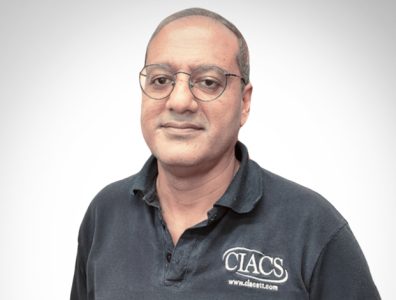
Jody Ali, managing director of Caribbean Industrial and Agricultural Chemical Services (CIACS), talks to The Energy Year about trends in demand for the company’s catalyst changeout services and factors which should be considered when handling and disposing of spent catalyst. CIACS is a Trinidad-based supplier of industrial-type equipment and services tailored towards clients in the energy sector.
What level of activity have you experienced in the past year as downstream facilities carry out plant turnarounds?
We experienced an uptick in our activity for 2023 as the majority of our downstream clients had scheduled maintenance at their respective facilities. We provide services to majors such as Proman, which operates 11-12 plants in Trinidad. We routinely work with them, as well as other downstream companies such as Atlantic LNG and Yara.
We are frequently engaged to provide our speciality services, which involve the changing of catalyst which is used in the plant’s chemical processes to facilitate the reactions. Catalyst generally has an operating life of about four years on average.
What considerations need to be made when handling catalyst, such as during turnarounds or when performing a changeout?
Catalyst is one of the most expensive components for the plants and the manufacturers are continuously performing R&D to develop newer types which function more efficiently and have better longevity. During plant turnarounds, engineers have a procedure in which they blanket catalyst with nitrogen gas, which is unreactive, in order to preserve it.
There are quite innovative catalyst removal techniques internationally. There are expensive, robotic devices which reduce the amount of time a human would have to spend within the containing vessel. This is especially beneficial because, as mentioned, changeouts occur under a nitrogen blanket, so it reduces safety risks. Nitrogen blankets are dangerous because nitrogen gas can quickly render someone unconscious if inhaled and can lead to death with prolonged exposure.
The handling of catalysts varies depending on the type of catalyst and reactor. For example, there are pyrophoric catalysts, which are self-heating when exposed to the atmosphere. In such a case, we have to remove them via vacuuming under the nitrogen atmosphere. Our personnel use a special breathing apparatus to enter the reactor vessel and the catalyst is completely removed with the use of special industrial-type vacuum units. A similar procedure is done to reload the new catalyst into the reactor.
On the reforming side of a plant, those catalysts are contained in tubes, so we change the reformer catalyst by simply vacuuming and reloading using what we call dense loading technology. We are licensed for providing such a service through a German company called Unidense.
What generally is the procedure underlying catalyst disposal and can any of them be recycled?
The procedure for catalyst disposal has changed a lot in recent years. It is now a more detailed and meticulous process whereby we have to declare and itemise all the catalyst on an MSDS [material safety data sheet] for hazardous shipping. Certain types of catalyst cannot be disposed of locally, so they must be exported. Precious metal catalyst – that with nickel, copper and zinc – have a reclaimable income, which inspires international disposal companies to intervene in their disposal and bid for them as required.
Read our latest insights on:
More content from Trinidad and Tobago





Quality seismic decisions for Angola
INTERVIEW
Latest news and features




Latest Reports



The Energy Year Oman 2026
The Energy Year Kuwait 2025

The Energy Year Angola 2025

The Energy Year Nigeria 2025

The Energy Year Saudi Arabia 2025

The Energy Year UAE 2025

