
Colombia’s Ecopetrol sees great opportunities in gas
January 8, 2025 Colombia


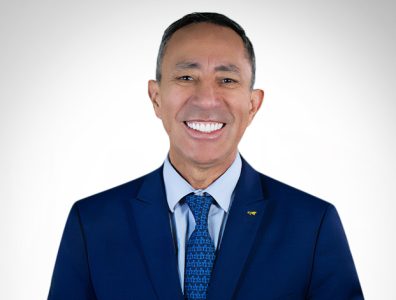
Ricardo Roa Barragán, president and CEO of Ecopetrol Group, talks to The Energy Year about how the company is ramping up E&P activities in Colombia, kick-starting offshore gas production and fostering an energy transition. Ecopetrol is an integrated energy group active throughout the hydrocarbons value chain.
This interview is featured in The Energy Year Colombia 2025
How is the Ecopetrol Group ramping up E&P activities?
We have continued to make progress on current exploration contracts. The year 2023 was historic in terms of successful exploration activity. From the 22 wells that we drilled, we made significant discoveries in 11 of them.
Moreover, in 2024 we planned to drill 10 exploration wells, of which four were successfully drilled in H1 and another six were due in H2. Investments in exploratory activity in H1 2024 stood at USD 195 million, which represents a 28% increase when compared to H1 of 2023. Total investments for 2024 in exploration activities stood at USD 600 million.
What’s more, for the 2024-2026 period, we are aiming to invest around USD 20 billion in our overall activities, of which around 10-12% is dedicated to maintaining exploration activity in the areas where Ecopetrol has a presence. Exploration work is essential for future production, and there is a need to invest in exploration to guarantee future energy security.
In terms of production, we have made important efforts in EOR. On average, Ecopetrol has a recovery factor of around 19-20%. These efforts, however, are focused on assets with very low recovery rates but high growth potential. Others, by contrast, have very high recovery factors, and squeezing the wells further would therefore be very costly.
We are currently applying EOR techniques in key fields, such as Rubiales, Caño Sur, Chichimene and Castilla, which have been experiencing declines in output. These fields are also being monitored and analysed on a daily basis. The fact that we have increased oil production in the country above the benchmark of 750,000 bopd shows that EOR is now a major contributor to oil production in Colombia.
Our production target for 2024 was established at 730,000-735,000 bopd, yet by mid-year, we managed to hit 758,000 bopd. An important part of our E&P success has been achieved through our US branch Ecopetrol Permian, which works in the Permian Basin with Oxy. We have had excellent results, at times reaching production of around 100,000 bopd, which is equivalent to approximately 12-14% of the Group’s total production.
What steps is the Group taking in the Caribbean to kick-start offshore gas production?
The country’s 1P proven gas reserves amount to slightly over 2 tcf [56.6 bcm], while its reserves-to-production ratio stands at 6.1 years. We are betting heavily on potential, prospective and contingent reserves, and we’re focusing especially on four large blocks we have in the Caribbean Sea. In some of them, we work alongside major IOCs such as Petrobras, Shell and Oxy.
For example, in August 2024 we confirmed the discovery of gas offshore in the Uchuva-2 well (now named Sirius-2), located in the Tayrona block (now the Gua-Off-0 block). We worked hand in hand with Petrobras in this discovery, which was found 804 metres underwater. Other exploration activities involve the Komodo-1 well with Oxy and the Buena Suerte-1 well with Petrobras.
With these activities, our first aim is to determine the actual volumes of gas in the subsea. We have already detected the presence of gas. Now we are drilling to determine the exact volumes held in these basins. In the worst-case scenario, we would expect to find 2.5-4 tcf [70.8-113.2 bcm] of new gas reserves, and in the best-case scenario, 10-12.5 tcf [283.3-353.8 bcm]. We expect to start producing and commercialising gas between 2029 and 2031.
In parallel to this, we have worked with the corresponding authorities on how to accelerate licensing processes. This is essential to commercialise the volumes of gas and turn these reserves into proven ones as soon as possible.
Historically, Ecopetrol takes about 10-12 years from the time a discovery is made until it is declared commercial, meaning the reserves become 1P [proven]. This time around, we have defined a timeframe of no more than five to seven years to incorporate that gas into our system. At a later stage, if the volumes are economically viable and significant, we would be able to not only cover our national demand but also export gas. Natural gas represents a huge opportunity for Ecopetrol and for Colombia.
What goals and hurdles is Ecopetrol looking at as it unlocks Colombia’s gas potential?
The first fundamental goal we have for the coming years is to ensure the supply of gas for the country. There might be shortfalls of gas for the next five years while the reserves we are finding in the Caribbean Sea develop and mature. This is a challenge we are facing, and we are already looking into different solutions, which mostly revolve around the installation of new regasification assets in different locations in the country.
In addition to this, we will start importing around 50 mcf [1.42 mcm] of gas per day from our asset in the Permian Basin in the US. We will use the SPEC LNG regasification terminal to do so.
Secondly, a percentage of this gas deficit could be resolved by importing gas from Venezuela through the Antonio Ricaurte pipeline in collaboration with PDVSA. There is a 20-year contract in place from 2007-2027 under which we can use this infrastructure. This is a vehicle that would allow us to import natural gas from our neighbour.
Another immediate goal is to efficiently mature drilling activities we are now carrying out in the Caribbean Sea. We see natural gas as the hinge of the energy transition in this country, but we need to accelerate the development of these offshore assets to start producing as soon as possible. Natural gas is a clean, economical and efficient energy solution for Colombia.
What elements is the Group focusing on to advance its energy transition business?
Ecopetrol’s investment plan for the 2024-2026 period involves the allocation of around USD 20 billion. From this amount, approximately 50% will be channelled towards the traditional business of producing, treating, refining and transporting crude oil.
Another 40% will be focused on our energy transition business line, which also includes natural gas. Natural gas is considered the axis of the energy transition and the lever that will transform our industry into a more sustainable one.
Our energy transition business is focused on four elements. The first is the decarbonisation of our processes via different technologies that will reduce our carbon footprint. The second is energy efficiency, as we want to obtain greater energy use with less energy input, including electricity, gas and diesel.
Third, we are also incorporating the conversion of our own energy matrix. Ecopetrol has more than 1.3 GW of installed capacity, of which 70-80% is powered by liquid fuels while the rest is powered by natural gas. This means that we need to carry out a technological conversion.
In the last few years, we have made efforts to incorporate clean energy projects such as solar and small hydroelectric plants. We are also evaluating the viability of wind energy projects in the Caribbean, specifically in La Guajira. We are willing to make long-term investments in renewable energy projects that will eventually guarantee this technological reconversion and a swift energy transition. Initially we had a goal of 1,000 MW of renewable energy projects in operation or construction by 2030 but we want to realise 900 of those megawatts by 2025.
Fourthly, we want to be a major player in the Americas in the production of low-emissions hydrogen. These comprise the four elements of our new business lines, which we call our energy transition businesses.
Tell us about Ecopetrol’s renewable energy targets for the coming five years.
By 2025, we will have 900 MW of renewable power generation in our portfolio, and by 2030 we aim to have 2.2 GW. We are currently evaluating four or five renewable energy projects, mostly solar and wind projects.
We have looked at Colombia’s market dynamics, and we have observed a plethora of projects at different stages of development. While some are still obtaining their environmental licences, others are in a ready-to-build stage, and others already have their connection approved by UPME [Mining and Energy Planning Unit].
We have received proposals for more than 11 GW of renewable energy generation projects, of which we have selected a portfolio of 7.5 GW to develop by 2030. From this portfolio, we are prioritising 2.2 GW. In total, this pipeline of projects represents an investment of around USD 3.4 billion.
What efforts is Ecopetrol making to become a local and regional hydrogen player?
Ecopetrol aims to be an important regional player in the area of hydrogen. Our refineries demand around 130,000 tonnes of hydrogen per year, both grey and blue. We already have two projects in motion, one for each refinery, with the expectation of producing these first prototypes on a trial basis.
Eventually, we aim to develop real projects, making the transition from grey and blue hydrogen to green hydrogen. The production of green hydrogen in Colombia is a great opportunity for us given the country’s potential for sun, wind, biomass and geothermal energy.
In order to kick-start our hydrogen quest, we would first need clean energy at below 3 cents per kWh. The problem is that almost 40-50% of the cost of green hydrogen production comes from the actual process of electrolysis, in other words, energy costs.
Secondly, we are looking at final consumption destinations and potential offtakers. In the local market, demand for hydrogen is coming from the refineries and the petrochemicals industry. We would have a good portion of the demand coming from our own refineries. Additionally, one of our businesses is Esenttia, which would also be a large offtaker.
However, we can go beyond the local market and become a key exporter of hydrogen in the region. This entails the challenge of developing logistics from the different ports in the Caribbean region. Where is the most suitable location? Which port would be most suitable as a player in hydrogen? We are looking at these elements now.
In any case, Europe would be one of our targeted offtake markets. We have been studying all these elements, as they may become enablers or restrictions in developing these projects in the foreseeable future.
What new technological solutions are you bringing to the market to enhance performance in a sustainable way?
Our new R&D centre, ICPET [Colombian Institute of Petroleum and Transition Energies], will receive USD 280 million in investment in the next three years. This is a true example of Ecopetrol’s commitment to research and new technologies essential to advancing our industry.
Areas of importance include geothermal, white hydrogen and decarbonisation solutions such as CCUS. We are looking at a variety of possible solutions, such as a pilot project for households that allows a mixture of natural gas with 30% hydrogen. This has benefits in terms of consumption efficiency and reduced CO2 emissions.
We are also implementing other technological innovations, such as Quark, a next-generation system that optimises the performance of our wells by compiling and analysing data, statistics and information we extract from our operations. Each well is therefore monitored, and with the implementation of the latest AI, we will eventually be able to better use our resources – that is, drills, tools and equipment.
We have already applied Quark at some of our most important wells, and we have achieved better performance in terms of cost reduction and resource optimisation. Solutions such as these bring us closer to the goals we have set ourselves for reducing energy consumption and decarbonising our operations.
How important is transmission player Interconexión Eléctrica S.A. (ISA) in the Group’s strategy for becoming a diversified energy company?
Ecopetrol aims to become an energy company rather than a mere oil company. It has already started this journey by diversifying within the energy industry. In 2021, we acquired 51.4% of ISA, which today is a major player within our portfolio, contributing 16% of EBITDA and 5% of the Ecopetrol Group’s total profits. We estimate that by 2040, ISA will contribute 20-25% of the Group’s EBITDA.
Within our Group, ISA is and will become a critical transmitter of energy in the national context, interconnecting all of the clean energy projects we are trying to incorporate in our energy matrix moving forward. The energy transition is not possible without transmission, and ISA is the lever enabling this transition.
Beyond this, we aim for ISA to act as the bridge between energy surpluses we might generate and the region, strengthening the interconnection between Ecuador, Venezuela and Panama with, for example, the Colombia-Panama interconnection project that we have been trying to develop for many years. ISA already has a presence in seven countries and is a key regional player. Our overarching goal is to interconnect North, Central and South America via ISA.
A few years back, the Group started its quest to diversify its portfolio and seek diverse ways to generate income beyond its traditional oil and gas business. For this reason, we have tried to diversify our portfolio in other energy businesses, venturing into the power business with ISA and betting on renewable energy ventures.
Read our latest insights on:
-

-

-

O&M leadership in mining and energy
INTERVIEW
More content from Colombia


Quality seismic decisions for Angola
INTERVIEW

Latest news and features




Latest Reports


The Energy Year Oman 2026
The Energy Year Kuwait 2025
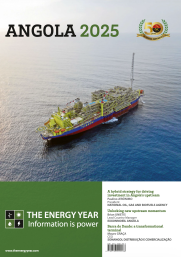
The Energy Year Angola 2025
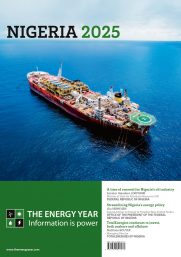
The Energy Year Nigeria 2025
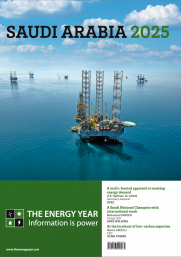
The Energy Year Saudi Arabia 2025

The Energy Year UAE 2025

