
Colombia’s recycled steel producer
February 4, 2025 Colombia


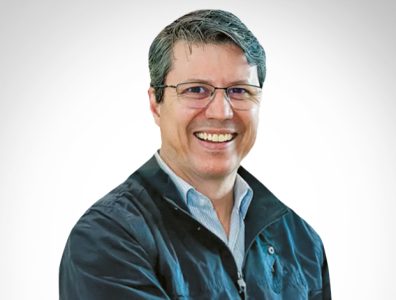
Mauro de Castro, country director of Diaco, talks to The Energy Year about how the company’s acquisition by INICIA led it to consolidate its market presence and how the company is contributing to the circular economy and recycling chains. Diaco is a steel manufacturer.
In what ways has the acquisition by INICIA led to Diaco consolidating its market presence?
In January 2024, we were acquired by INICIA, which was an essential move to consolidate our market presence and create value for our customers. Since 2005, Diaco has been a key actor developing and advancing the steel industry in Colombia.
This new acquisition strengthens our brand, reaffirming certain commitments in the long term, such as product quality and innovation, which we consider keys to being competitive. We have also consolidated our stance on sustainability at large, which includes environmental issues, social matters and gender equality.
We are a circular economy company, so when it comes to sustainability, it is our will to promote the circularity of our business. We produce steel from scrap, and we are now the largest scrap recycler in Colombia. We recycle around 360,000 tonnes of scrap per year, and this is converted into steel of the highest quality. Scrap is infinitely recyclable, and we can achieve qualities that match the highest Colombian steel standards.
Lastly, in 2023, we managed to make the EPD [Environmental Product Declaration] available to our customers. The declaration certifies our entire steel production process and certifies that 98% of our steel rods come from recycled materials.
This is very important when we consider that the construction industry needs clear drivers for sustainable construction. With it, we contribute to overall construction with sustainable materials and the building of a more sustainable Colombia.
How are you contributing to the circular economy and promoting recycling chains?
Our operations in Colombia are geographically diversified. We have a main plant in Tuta, Boyacá, where we carry out steelwork, a rod mill near Bogotá, and a plant in Tocancipá that is turned off waiting for growth in demand before it returns to operation.
We also have eight steel cutting and bending plants, which supply construction companies, and nine recycling centres situated in the main cities of Colombia. In these recycling centres we industrialise scrap, which is our main raw material. In addition, we have 20 steel distribution branches belonging to our group.
We consider ourselves “vehicle digesters” in Colombia. We have three vehicle disintegration operations. In other words, we disintegrate old vehicles (i.e., buses, trucks, etc.) and then reuse 92-98% of the materials.
We have created a whole chain of recyclers that make use of glass, plastics, fuel and rubber. This chain is articulated in the sense that, when vehicles come our way, we and the recyclers work together to separate the materials and dispose of them correctly. We are also promoting a culture of recycling with our programme Gestionando y Reciclando with Central University.
We have recently recycled 130 TransMilenio buses. We do this under certain rules, following all environmental requirements. We are also one of the most important buyers of scrap metal from large industries in Colombia.
Moreover, in Colombia, 65% of scrap is obsolete. This implies that all kinds of material, including medical and other equipment, may contain radioactive sources. We are the only company that offers a system with four different levels of radioactivity detection in all our recycling centres and our plant. We guarantee a product free of radioactive contamination for the construction of houses.
What initiatives is Diaco implementing to be more efficient and sustainable?
CO2 emissions, energy efficiency and water consumption are our main socioenvironmental drivers.
We were the first steel company to implement a reactive energy compensation system. Today our plant in Tuta, which is an energy-intensive operation, consumes about 20 MWh. Just by offsetting energy, we saved USD 22 million last year. As we are large consumers, these figures are relevant.
On the environmental side, we made investments to reduce water consumption in our facility, and this year we have obtained zero discharge at our plant. We have achieved this with an investment of more than USD 2.5 million.
Moreover, our last water consumption measurement showed our water consumption per tonne of steel to be 1.1 cubic metres of water, while the global average is 1.6 cubic metres. We aim to go below 1 cubic metre. This also reflects our high efficiency rate.
In terms of technologies, we are developing a special automation system. This system connects all other systems and generates enough data to then implement AI or digital twins. We are looking to implement digital decision-making models in our processes by 2025, mainly to increase energy efficiency. We are already operating with some models and structuring our database as necessary.
With all the geographical complexity in Colombia, we are working on digital analytical models to improve logistics and distribution. Namely, we are looking to get to the customer in less time in the best way. We are looking for efficiency in all our operations. With technology and innovation, we will have a more efficient model to provide better services to our customers.
What direction and needs does the steel industry require moving forwards?
We produce steel in Colombia, and we deliver all our production in Colombia. As an industry, we have to think about how to collect scrap and have more materials for internal production. The country has the capacity to produce and deliver more steel, having a very robust steel industry, which is essential for the country’s economy.
One of the most pressing points for the coming years is to formulate regulations that support and protect the national steel industry. We are working hand in hand with the government to see how to protect our investments and the employment generated by this sector while looking at ways to grow the national steel industry.
Globally speaking, we have a very critical situation marked by oversupply and harsh competition coming from China, which offers much lower prices. Imported steel has created a complicated situation for companies here.
What goals does the company have in the following years?
Our goals are to influence other actors involved in the construction sector to adopt a more sustainable model of growth considering all stages of the product lifecycle, increase the perception of quality of our product, which is already well recognised in the country, and add more value to our customers and to society through increasingly better services, with better technology and competitiveness.
Read our latest insights on:
-
-

-

O&M leadership in mining and energy
INTERVIEW
More content from Colombia


Quality seismic decisions for Angola
INTERVIEW
Latest news and features



Latest Reports



The Energy Year Oman 2026
The Energy Year Kuwait 2025

The Energy Year Angola 2025

The Energy Year Nigeria 2025

The Energy Year Saudi Arabia 2025

The Energy Year UAE 2025

