
Confidence in the long-term value of Oman’s mature fields
November 6, 2025 Oman
Oman 


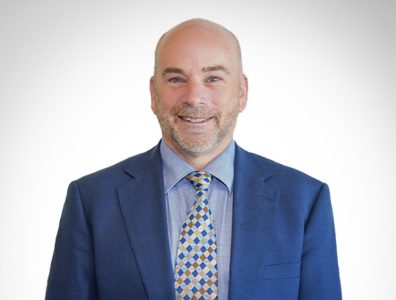
Steven Lauver, president and general manager of Oxy Oman, talks to The Energy Year about how the company achieved its production milestones in Oman through state-of-the-art techniques. Oxy is a US-based international energy company with upstream and midstream operations across the United States, the Middle East and North Africa.
What are some of Oxy Oman’s recent production milestones?
What we’ve achieved is what most people pay attention to, a production record, but it starts with our team and our historic Block 9 asset in northern Oman, where Oxy began operating 41 years ago. In 2024, we set a liquid production record of 134,000 boepd in our northern operations, which is a significant increase from approximately 1,000 boepd when Oxy began production in 1984. Typically, fields peak early and then naturally decline, but we’ve continually grown through innovation, collaboration and commitment.
Our successful exploration relies on state-of-the-art 3D seismic acquisition and advanced seismic interpretation techniques. We continually identify difficult traps that are near-field opportunities and are able to get successful exploration wells on line quickly. We exploit the reservoirs using horizontal multi-lateral wells and offset decline using EOR methods such as waterflooding, and are currently implementing a CO2 injection pilot that is providing critical data for potential expansion. Our approach ensures we leave no barrel behind.
In addition, we made a substantial discovery in Block 62, which is located close to existing infrastructure, including a gas plant with available capacity. The discovery of this previously unseen play has significantly transformed the potential development opportunities of Block 62.
Finally, we continue to operate one of the largest steamflood facilities globally in our heavy oilfield in Block 53. The Mukhaizna field has been central to our success story, and in May 2025, the Ministry of Energy and Minerals signed an agreement with Oxy Oman and partners, extending the term of the concession until 2050. The extension underscores our confidence in the long-term value of mature fields when combined with advanced recovery techniques and digital optimisation.
The Block 53 concession extension reflects the legacy of Mukhaizna as one of Oman’s most successful hydrocarbon developments, and highlights Oxy Oman’s role as a trusted operator with a strong production track record, world-class facilities, and a long history of maximising value from complex, mature assets. Additionally, it highlights the positive economic landscape in Oman and the vital role that the Ministry of Energy and Minerals plays in attracting foreign investment.
What role do seismic and EOR technologies play in maximising the potential of Oman’s mature fields?
They play a massive role. Our geophysicists in Oman and Houston are experts in interpreting seismic data, allowing us to identify reservoirs that previously went unnoticed. The traps in Oman are subtle due to the complex geology, unlike other basins in the MENA region.
Success requires combining advanced seismic interpretation with local geological understanding. Some of our Omani geoscientists and engineers go hiking on weekends in Oman’s beautiful landscape and observe geological systems firsthand. This knowledge is applied back in the office with subsurface data interpretation. This combination of geological know-how and technology is vital for maximising mature fields.
We also employ EOR extensively, such as waterflooding and are currently piloting CO2 injection. We are the industry leader in using CO2 for EOR and explore opportunities to apply our 50 years of experience in our Oman operations.
How are you supporting localisation and SME development?
It’s all part of our commitment to being more than just an operator; we strive to be the partner of choice. Our in-country value programme continues to enhance the capabilities of local supply chains and maximise value within the country.
Our long-running Tasharuk programme, now in its seventh phase, focuses on strengthening Omani SMEs and upskilling the local workforce through specialised training and certification. We also work with local stakeholders such as OPAL [Oman Energy Association] on the Is’haam Program to support the development of Omanis within our contractor community for employment within the industry.
Under our CSR programme, we invest in youth-focused programmes such as the Dotnxt JADEER and GIG platforms to equip young Omanis with digital and entrepreneurial skills essential for the future economy. Our CSR framework is built around high-impact, long-term initiatives that address the needs and priorities of communities, both in our concession areas and across Oman, while aligning with Oman Vision 2040.
Our initiatives range from supporting recreational parks and hospitals to housing for families with children undergoing cancer treatment. We aim to maximise impact per dollar spent on our various CSR initiatives.
Could you elaborate on your decarbonisation strategy?
Our pathway to net zero is integral to how we operate in Oman, and we play a key role in the national CCUS steering committee, bringing our global expertise in carbon management to the table.
We are leading the way with the first CO2 EOR pilot in Oman, initiated in Block 9, which could pave the way to wide-scale deployment of this technology across other fields. This project demonstrates how we could integrate CCUS with existing operations to deliver carbon-neutral oil, lowering emissions while enhancing oil recovery.
In 2024, we signed an MoU with OQ Gas Networks to explore the development of an integrated carbon management platform for Oman. This collaboration aims to support the design and implementation of CCUS hubs, leveraging Oxy’s global experience in large-scale CO2 management.
The MoU represents an important step in advancing national decarbonisation goals while also creating opportunities for technological innovation and economic diversification. Additionally, we are exploring renewable energy integration, including a solar project with OQ Alternative Energy in blocks 9 and 27.
What are your strategic priorities and investment focus?
Our 2025 goals are framed around three main pillars: Zero Harm, Zero In and Leave No Barrel Behind.
Zero Harm is always the starting point. The most important outcome is to ensure that every individual returns home to their family each day without injury. We are relentless towards driving the culture, processes and actions that lead to zero harm. This is not a journey nor a dream, but an absolute expectation from all of us. We have taken many steps to reinforce our culture of caring, and as an example, we worked with all service providers to ensure wellbeing across the board.
Zero In focuses on reducing methane emissions through leak detection and repair and advanced monitoring systems, intending to eliminate routine flaring by 2027. An 80% reduction has already been achieved. We are also advancing the use of AI across our operations to enhance asset performance, optimise value and further enhance efficiency and sustainability.
Leave No Barrel Behind is about maximising recovery from reservoirs and leveraging our exploration programme to continue finding new opportunities. In Block 53, we are focused on increased activities leading to more production and further demonstrating our long-term commitment in Oman. In Block 62, we continue to evaluate our discovery’s potential to increase production.
We will continue our Block 9 CO2 pilot, which can be used to further assess EOR potential in our Oman north blocks. Throughout our operations, exploration wells are planned, and seismic data is continuously re-evaluated to discern and de-risk future potential.
How is Oxy Oman using AI to drive operational excellence?
Oxy is deploying AI across its business units and has recently established the AI Center of Excellence in our head office in Houston, which aims to combine global expertise with local talent to drive operational efficiency, safety and innovation.
In Oman, we’re using AI in areas such as seismic interpretation, drilling optimisation, steam management, supply chain automation and plant control. In safety, AI-powered cameras flag PPE violations and restricted access, while humans monitor and intervene as needed. This is just the beginning. AI will continue to be a key enabler that enhances human capability, transforming the way we do our business.
Where do you see Oxy Oman in 2050?
Our vision for Oxy Oman is to remain a key partner in the sultanate’s energy future by delivering reliable production while advancing the transformation to a lower-carbon economy. We are committed to expanding our CCUS capabilities, exploring the potential of direct air capture and point source capture, while optimising our core oil and gas business.
We will also continue to lead in Omanisation, HSE excellence, and community engagement, ensuring that our growth continues to support economic diversification and social development. Technology will continue to be a key enabler. We plan to drive AI initiatives across our global and local operations to enhance asset performance, improve reservoir understanding, and optimise value.
Oxy Oman is proud of the deep roots, strong relationships and mutually beneficial partnerships we have built in Oman for more than 40 years. These enduring ties reflect our long-standing commitment to the Sultanate’s progress and prosperity.
Looking ahead, we believe that the future of energy will require balancing energy security with affordability and environmental responsibility. Oxy Oman is proud to help drive this balance forward hand in hand with the Omani government and other stakeholders to achieve a sustainable, resilient and prosperous energy sector for generations to come.
Read our latest insights on:
More content from Oman





Quality seismic decisions for Angola
INTERVIEW
Latest news and features



Latest Reports


The Energy Year Oman 2026
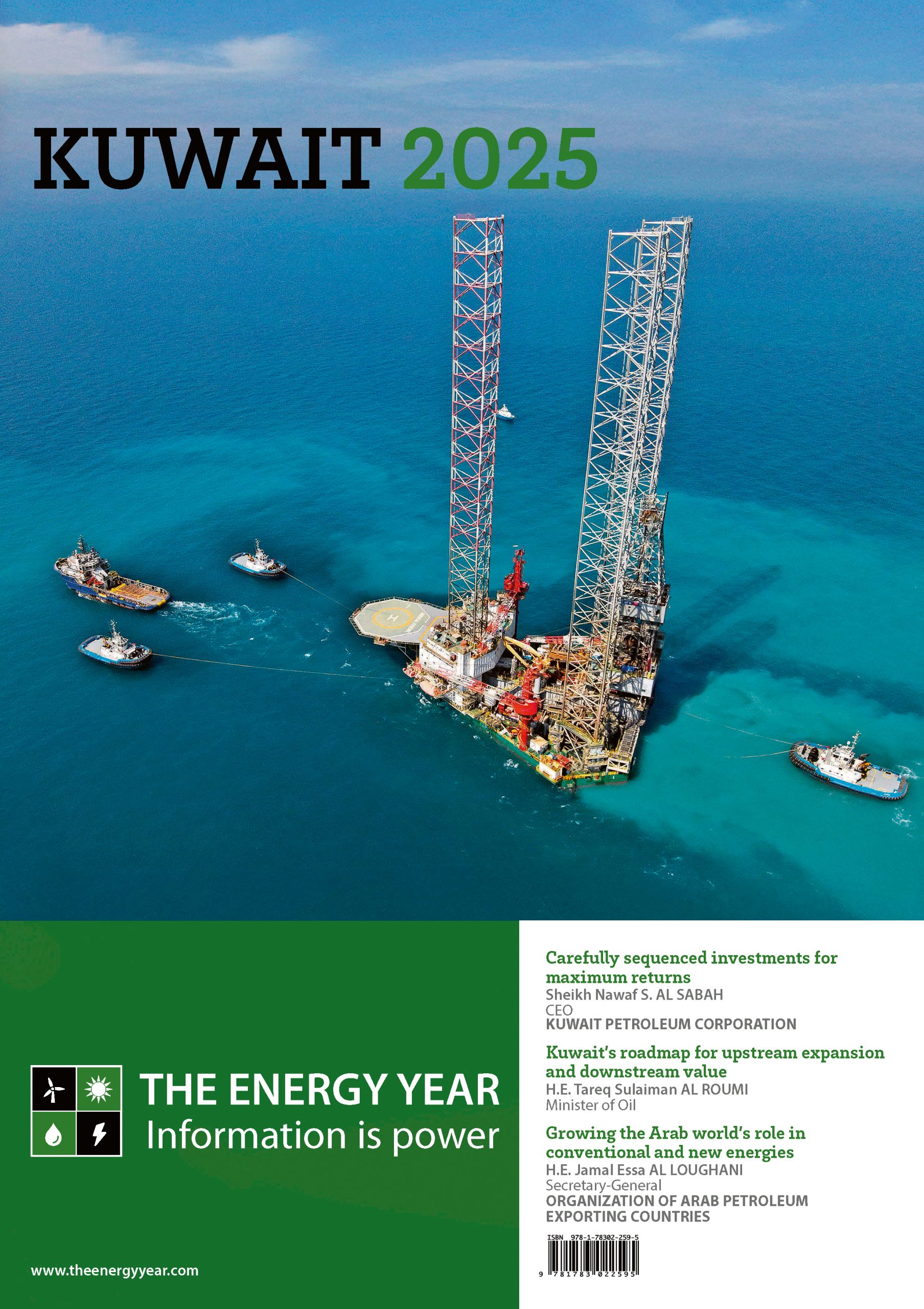
The Energy Year Kuwait 2025
The Energy Year Angola 2025
The Energy Year Nigeria 2025
The Energy Year Saudi Arabia 2025
The Energy Year UAE 2025

