
Ecopetrol sees a bright future in Colombia’s offshore
November 27, 2024 Colombia


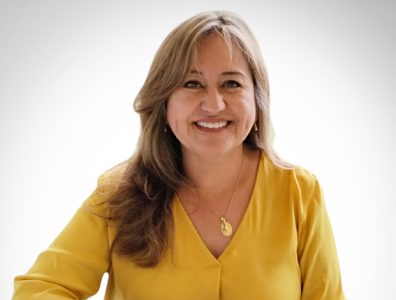
Elsa Jeanneth Jaimes Romero, vice-president of Ecopetrol Offshore, talks to The Energy Year about Colombia’s offshore gas potential, the significance of the Sirius-2 and the Orca Norte-1 wells and the importance of working with Petrobras. Ecopetrol Offshore is the offshore E&P branch of Ecopetrol.
What gas potential and opportunities does Ecopetrol see offshore Colombia?
Although we have not yet developed gas offshore – other than in the shallow-water Chuchupa and Ballena fields – Ecopetrol has been working in the offshore scene for more than two decades. During these years, we have learned about the subsurface geology of the Caribbean. In this scenario, we have decided to work in some blocks alone and in others with international partners.
We are in practically every block that has been assigned by the ANH [National Hydrocarbons Agency] in the Caribbean for the development of hydrocarbons exploration and production activities. This means that we are currently present in 11 exploration blocks, which have an estimated potential of 75 tcf [2.12 tcm]. These are located in three different clusters: the Northern Caribbean cluster, the Southern Caribbean cluster and the Ultra-Deepwater cluster.
Our exploration campaigns have been very successful, with a 50% success rate. Moreover, we have discovered between 4 tcf and 12 tcf [113.2 bcm and 339.6 bcm] of gas coming from the exploratory and appraisal wells we have drilled so far. These gas volumes are very significant considering the current total gas reserves our country has, which stand at 2.37 tcf [67.1 bcm].
The challenge we are now facing is how to extract that gas, commercialise it and connect it to the National Transportation System. If we manage to extract the gas we have in the Caribbean Sea successfully, Colombia could become a key gas player in the region.
Tell us about the significance of the Sirius-2 well and your collaboration with Petrobras.
Departing from the successful discovery well Sirius-1, which was drilled in 2022, Sirius-2 was drilled to delimit this discovery and reduce uncertainties about the reservoir to ultimately determine its commercial potential. Located in the Northern Caribbean cluster of the Gua-Off-0 block (formerly the Tayrona block), 31 kilometres from the coast, the Sirius-2 well is a delineation well drilled at a water depth of 804 metres.
This well will confirm the geological and technical conditions found in the subsurface of the reservoir, confirming the volumes that we interpreted with the information from the Sirius-1 discovery well. We still need to acquire additional electrical logging information and do different tests, which were planned for the end of 2024.
In the same Gua-Off-0 block, we have planned to drill another exploratory well called Buena Suerte-1. It will be drilled with the same equipment that is currently deployed for Sirius-2. Once the authorities give us the necessary approval and we finish working on Sirius-2, we will move on to Buena Suerte-1. This, however, will depend on the advancements we make at Sirius-2.
Petrobras has broad experience in offshore operations in several regions of the world, and they are putting it all in the service of this project. Given the relevance of Sirius, Petrobras has expanded its presence in Colombia.
We have created a suitable synergy with them. While they bring the experience in offshore activities, knowledge of marine depositional systems and technology, we contribute with the technical knowledge regarding the Caribbean’s geology. Moreover, we also bring local expertise regarding how to operate in Colombia, such as understanding environmental licences, prior consultations, the ANH requirements and so on.
What does Orca Norte-1 represent in terms of operational and safety performance?
Orca Norte-1 is the appraisal well of the Orca-1 discovery made by Petrobras in 2014. In Q4 2023, we started drilling the Orca Norte-1 well, and we concluded in Q1 2024. Orca Norte-1 is a benchmark for Ecopetrol, as it is the first deepwater well drilled 100% by Ecopetrol under the highest industry standards, with one of the best operational performances and zero HSE incidents.
The well was drilled in record time, 38 days, which was four days less than our projection. Our performance was 3.7 days per 1,000 feet drilled. We have the record for the fastest-drilled well in the Caribbean. The project was done not only on time but under budget as well. Moreover, while NPT [non-productive time] in the industry averages 24%, we managed to have NPT account for only 7% of total time. These are world-class indicators in offshore operations.
However, most importantly, during the 270,000 man-hours needed to drill that well, we didn’t have a single recordable HSE incident. This reflects our commitment to safety, which comes before technical and economic objectives. Environmentally, the project also met all the stipulated requirements.
This performance is due to the detailed two-year planning we did before drilling the actual well. We reviewed the contractual part. We inspected the equipment we were going to use, and we checked that companies made required adjustments following any issues we found.
With respect to the subsoil, results were different from those initially established by the Orca-1 discovery.
Despite this, we found that there are two additional gas reservoirs a few feet deeper than the original reservoir. As a consequence, we have put our conceptual development plan on hold to incorporate the new information obtained by Orca Norte-1.
What work have Ecopetrol and Shell done in the Southern Caribbean cluster?
In our Southern Caribbean cluster, we have made important discoveries with our partners. While the Kronos-1 well was drilled in 2015, Gorgon-1 was a discovery well made in 2017. Gorgon-2 was drilled in 2022, delineated Gorgon-1 and confirmed the potential of this first discovery. The Glaucus-1 exploration well was also drilled in this very region and was a success.
We have a cluster with quite significant volumes, and we have to see how we can connect it to the onshore National Transport System. That is what we are looking at now with our partner Shell.
Shell is a world-class company with the expertise and technology to connect that gas to land. We are currently carrying out meta-oceanic studies and all the engineering studies, evaluating all the alternatives for evacuating the gas, which will allow us to connect it in the shortest amount of time and at a good price.
What pioneering projects do you have planned for the ultra-deepwater cluster?
The first exploratory well to be drilled within the ultra-deepwater cluster is Komodo-1. Once we get the environmental licence approval, we have to carry out all pre-drilling activities that will allow us to complete the planning of the well drilling.
How does Ecopetrol plan to take the first gas to market?
Ecopetrol Offshore is doing everything it can to start commercialising natural gas from the offshore. We have the right synergies with our partners, and we are looking at 2029 as a possible date. However, the timing of first gas does not solely depend on the operating companies.
The big challenge for us is the permits and environmental licences. The environmental licences imply prior consultation and its protocolisation, which is the required permission from or agreement with the communities impacted by the project. We are looking to establish first gas three years after we obtain all the required environmental and community permits and licences.
We have been focused on the viability of development, in both the Northern Caribbean cluster, Sirius, and the Southern Caribbean cluster, Gorgon.
For the latter, we are working on the structuring of this land, while for the former, we are optimistic about the authorities making a favourable decision for us to continue with all the required arrangements related to the project’s socio-ethnic-environmental viability, which we need in order to establish a land entry point at Ballena. This is an important entry node to the National Transport System.
Moreover, we already have the layout of the submarine line in Sirius. We submitted it to the ANLA [National Environmental Licensing Authority], which approved it. That means that we have grounds for making the application for community certification, which is in progress.
So, while ANLA has endorsed the layout of the submarine line, the DANCP [Directorate of the National Authority for Prior Consultation] has told us with which communities we should carry out prior consultations, and that is what we are doing now. We are preparing to begin the process of prior consultation, which is the first step in obtaining the environmental licence for the submarine pipeline.
In the Southern Caribbean cluster, with our partner Shell, we are focusing on finding an alternative to connect the cluster and corresponding wells to the National Transport System, considering that the cluster does not have a direct node connection to this system.
We will bring the gas to land, and from there, we will have to build the missing connection to the system. At the moment, we are focused on finding the form of evacuation that will allow us to connect in the shortest possible time.
What short- and long-term plans does Ecopetrol Offshore have?
In the short term (2025-2028), our main aim is to finish our drilling activities in Sirius. Once we solve certain community-related dynamics, this will be possible. We aim to drill the Buenasuerte-1 well in 2025, and after that, we have planned a drilling campaign involving other structures in the same block. Exploratory drilling in the Gua-Off-0 block is a priority.
We will advance on all fronts while ensuring compliance with environmental and technical regulations, with drilling in all three of our clusters. We will focus on exploratory and delimitation wells that will confirm the potential we have in the offshore regions we cover. In parallel to this, we are focusing on the development of our discoveries.
For the mid-term and long term, we will focus on the production of natural gas and connecting the gas to the National Transport System. Given the country’s offshore potential, we are not only looking at supplying gas to cover national demand but also looking to export. When the time comes, assuming all goes well, we will have to set up our export business.
Read our latest insights on:
-
-

-

O&M leadership in mining and energy
INTERVIEW
More content from Colombia


Quality seismic decisions for Angola
INTERVIEW
Latest news and features


Latest Reports


The Energy Year Oman 2026
The Energy Year Kuwait 2025
The Energy Year Angola 2025
The Energy Year Nigeria 2025
The Energy Year Saudi Arabia 2025
The Energy Year UAE 2025

