
Energy technology that evolves with the industry
June 20, 2025 UAE
UAE 


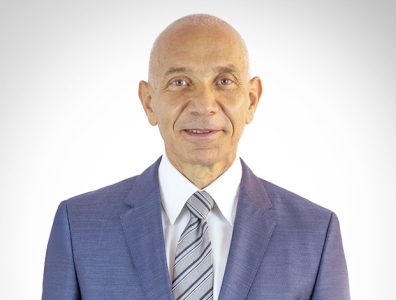
Ayman Khattab, vice-president for the Middle East and Africa at Baker Hughes, talks to The Energy Year about bringing advanced technologies into play to support the UAE’s energy goals and ADNOC’s decarbonisation objectives. Baker Hughes is an energy technology company that provides technologies and solutions for energy and industrial applications.
Baker Hughes is celebrating 60 years in the UAE. How have you contributed to the country’s energy development and modernisation in that time?
A great example of our impact in the UAE is our strategic partnership with ADNOC Drilling. In 2018, Baker Hughes became the first company in our sector to take equity in an ADNOC business – a 5% stake in ADNOC Drilling. That was unprecedented for both companies.
At the time, ADNOC Drilling was solely focused on owning and operating rigs and didn’t offer integrated drilling and well construction supporting onshore and offshore operations. We worked with them to develop that capability and, five years on, they have grown to claim a significant share of the market, drilling faster and more efficiently thanks to our technology and support.
Our contributions have evolved with the industry. In 2020, we moved the global headquarters of our surface pressure control business from Houston to Abu Dhabi – another first for the sector – and in 2022, we inaugurated a local manufacturing facility.
By manufacturing pressure control equipment locally, we are reducing the UAE’s reliance on imports and building more agile and resilient supply chains. This is not only aligned with ADNOC’s vision but also enhances the broader ecosystem by creating new jobs and nurturing the domestic supplier base. It is a long-term play. This facility is one of more than 10 Baker Hughes facilities in the UAE that focus on manufacturing, maintenance, assembly and training.
What digitisation initiatives are you working on, particularly with companies such as AIQ?
We recently partnered with AIQ to launch a digital drilling optimisation project called ROP [rate of penetration] that enables operators to drill faster, reduce emissions and costs, and ultimately bring wells into production sooner. It is our flagship initiative at the moment, but we are exploring additional opportunities.
The next logical step is to move beyond drilling optimisation into the production space. Baker Hughes has a unique advantage in that we can offer solutions across the entire energy value chain – from the molecule in the reservoir all the way to the production terminal.
Beyond this, we are deploying AI-enabled tools for predictive maintenance and digital twins that help identify potential failures to optimise interventions and extend asset lifecycles. Extending our AI collaboration into production could be a game-changer for the sector.
How are you supporting ADNOC and the UAE in their decarbonisation journey?
We are engaged on several fronts. One key area is methane pyrolysis – a process that converts methane into hydrogen and graphene without emitting carbon dioxide. We ran a pilot in the Habshan field, and the results were very encouraging. The resulting graphene is highly valuable and has potential applications in aluminium production and construction materials, for example.
Besides curbing carbon dioxide emissions, the process also produces hydrogen as a by-product, which will be critical for future energy systems. We are now assessing the economic viability of scaling this process to industrial levels.
In addition, we have completed a successful green hydrogen pilot using electrolysis at the ADRIC [ADNOC Research and Innovation Center], and we are exploring geothermal applications for the cooling of data centres, which could reduce the need for electrical cooling and lower emissions.
How do you view the UAE’s potential as an energy innovation hub?
The UAE, and ADNOC in particular, are leading the charge in balancing energy security with sustainability, deploying cutting-edge technology and venturing into unconventional reserves, especially in gas.
ADNOC is also aggressively pursuing decarbonisation through a dedicated CCUS company called Al Reyadah, rolling out solutions not only for oil and gas but for heavy industries such as steel and cement. These are complex sectors, and we are proud to support them in this effort.
Are there other recent achievements that you would like to highlight?
We are supporting the UAE’s energy industry along the entire value chain; our footprint is broad and growing. We are active across LNG and eLNG [electric LNG] and have brought our global expertise to ADNOC’s sour fields, supporting drilling and surface equipment operations in some of the most challenging environments.
The UAE has launched the region’s first eLNG facility in Ruwais, and we are proud to be its technology provider, leveraging our all-electric liquefaction train systems, electric motors and state-of-the-art compression technology. Another notable achievement is Ghasha, a complex offshore project where we are involved from drilling through to gas compression and transportation.
What are your key goals for the next five years?
We are focused on strengthening and expanding our partnership with ADNOC in the energy and industrial space. That means continuing to invest in the UAE, pushing forward with localisation, and bringing the latest technologies to the market.
Just as important will be the evolution of our partnership model. We are looking to go beyond supplying services and build more collaborative ventures with ADNOC and other energy stakeholders.
Read our latest insights on:
-

How the UAE is building its future
INTERVIEW -

-

More content from UAE


Quality seismic decisions for Angola
INTERVIEW
Latest news and features



Latest Reports


The Energy Year Oman 2026
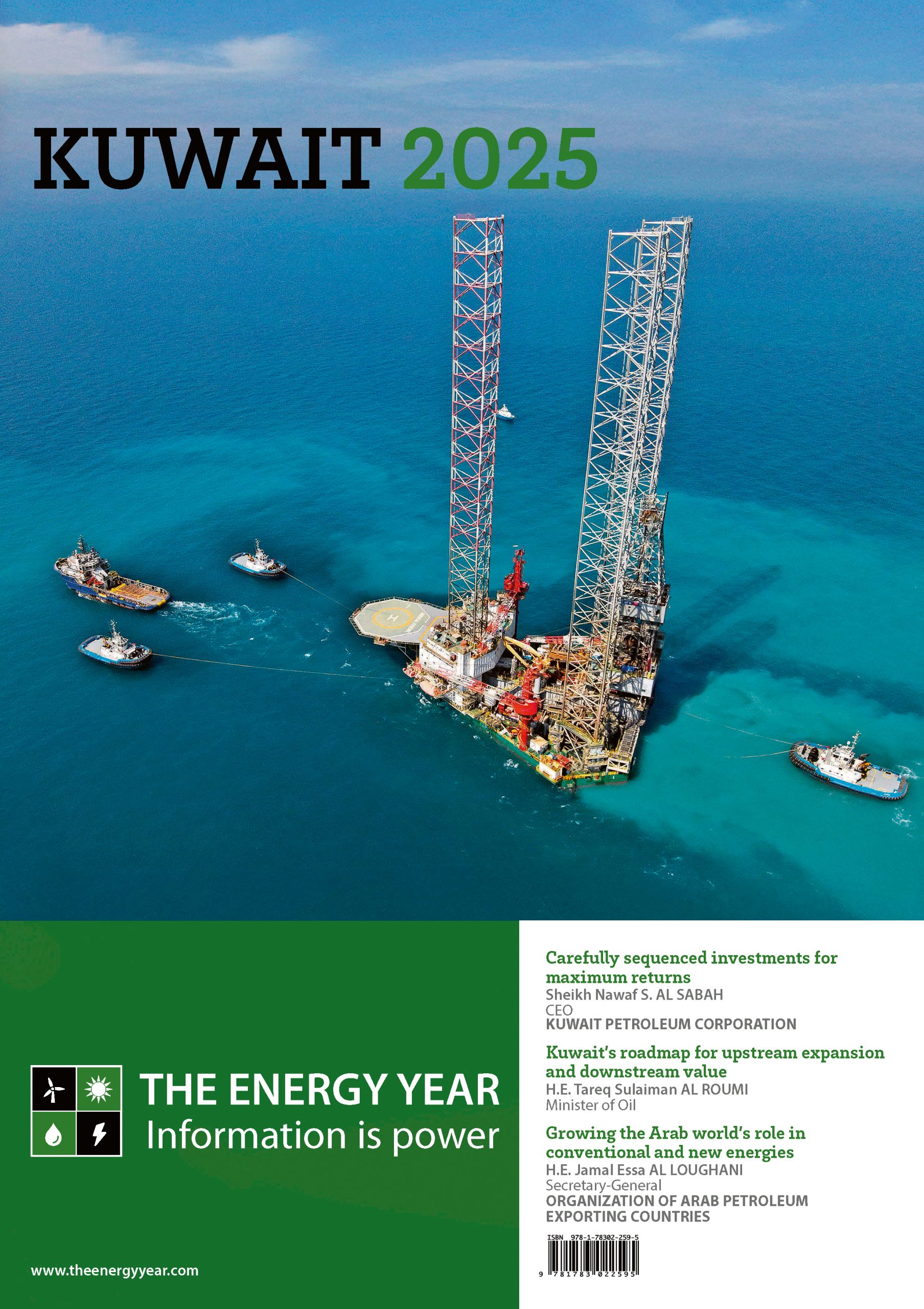
The Energy Year Kuwait 2025
The Energy Year Angola 2025
The Energy Year Nigeria 2025
The Energy Year Saudi Arabia 2025
The Energy Year UAE 2025

