
Financial strength through a resilient oil and gas production mix
December 9, 2025 Oman
Oman 


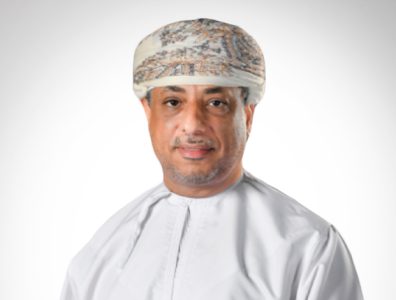
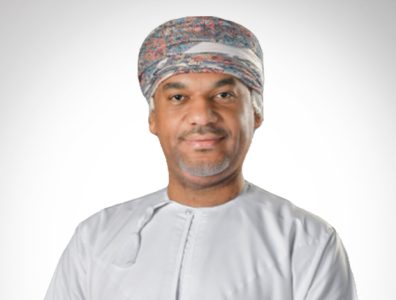
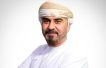
Anwar Al Kharusi, commercial chief executive of OQEP, and Jaber Al Noumani, CFO, talk to The Energy Year about the company’s involvement in Oman’s upstream landscape. OQEP holds a diverse portfolio of upstream assets in Oman and is the country’s largest pure-play oil and gas exploration and production company.
What distinguishes OQEP in Oman’s upstream landscape?
Anwar AL KHARUSI: OQEP is the upstream arm of OQ and the third-largest E&P player in Oman, after Energy Development Oman and Shell. However, while they focus exclusively on Block 6, the country’s largest hydrocarbons asset, OQEP is investing across many other blocks.
We’re a key investor in Block 61, Oman’s largest gas asset, and we partner with Oxy in blocks 9 and 53, which together produce around 150,000 bopd. We hold a diversified portfolio of 14 upstream oil and gas assets in Oman, six of which are producing, and partner with international oil companies such as Shell, BP, TotalEnergies, Oxy, Eni, MedcoEnergi, Petronas and Genel Energy. We’ve grown significantly over the past 15 years, increasing our production from just 18,000 boepd in 2009 to more than 228,000 boepd in 2024.
What is OQEP’s current offshore position?
AAK: We are one of two offshore producers in Oman, alongside Masirah Oil, which operates offshore Block 50 near Masirah Island. We are active in Block 8, with gas from the Bukha field and oil from the West Bukha field.
Currently, we’re marketing offshore blocks 18, 21, 22, 23, 8/40, 41 and 52, which span Oman’s northern to southern coastlines, looking for investment partners. Afterwards, we would go into exploration, which includes geological studies and surveys, potential seismic surveys and exploratory drilling.
The timeline to production would vary. In a success case scenario, where the first drilling leads to a discovery, we could see results within three to five years. In Block 18, for example, OQEP drilled an exploration well with our partner Reliance Energy some 15 years ago and is eager to continue such exploration efforts. We now plan a follow-up well, which could help unlock reserves more efficiently.
How has OQEP’s IPO impacted operations?
AAK: The listing hasn’t changed how we operate or our relationship with the government. We’ve always run OQEP as a financially driven company. The IPO simply enhanced our transparency and governance. Post-IPO, we have continued working with the Ministry of Energy and Minerals, for instance, in marketing 11 new concessions.
Jaber AL NOUMANI: Listing OQEP on MSX [Muscat Stock Exchange] in 2024 marked the largest IPO in Oman’s history, raising more than USD 2 billion from a 25% float. It significantly enhanced our visibility among regional and international investors and placed us among the highest market-cap companies on MSX.
Our IPO has also helped support Oman Vision 2040 by attracting FDI, deleveraging corporate and national debt, and elevating OQEP’s role in the economy, with our EBITDA reaching USD 1.6 billion in 2024. This showcases how attractive our portfolio is.
The IPO amplified investor attention significantly. For instance, we successfully signed an EPSA [exploration and production-sharing agreement] with Genel Energy on Block 54, a highly prospective block with existing wells where we are the operator with a 60% interest. We anticipate early production within three to four years. These types of collaborations are made possible by our visibility and credibility as a listed company.
What are OQEP’s financial goals and M&A plans?
JAN: We maintain a low net-debt-to-EBITDA ratio. 2024 net debt was only 0.4x of EBITDA, giving us room for M&As and tapping into growth opportunities locally or internationally while ensuring shareholder returns. Our dividend yield was 8-9% last year, among the strongest in the GCC.
Our aim for the next few years is to maintain that yield, which will be linked to our ability to keep our production growth at 6-8%, as it has been for the past 15 years. That is why scouting for good opportunities that we can tap into through M&As is critical.
Is OQEP exploring international expansion?
AAK: While Oman remains our priority and prime focus, we are evaluating opportunities outside Oman. We’re open to partnering with established international companies, and carefully assessing the financial risks, fiscal stability and operational robustness of all new opportunities.
Some key considerations for us are the ability to repatriate profits, the clarity and reliability of petroleum fiscal regimes and the ability for an asset to produce efficiently and effectively without extremely complex or highly costly operations. We’re presently engaging with local authorities in countries of interest and players to evaluate entry options.
How is OQEP supporting local service providers and advancing in-country value (ICV) initiatives?
JAN: Promoting localisation and ICV has been one of our focuses since our inception. Our Omanisation rate is 93%. In 2024, we spent around USD 85 million on SMEs, with a special emphasis on Riyada Card holders, who are local entrepreneurs.
We recently launched Tamayuz, a programme to train more than 400 graduates through placements in our operations, partner companies and subcontractors. This aligns with Oman Vision 2040, as it builds national talent pipelines.
We also shortened payment terms for SMEs to two weeks to improve their liquidity and cash flow. Supporting local suppliers, especially small businesses, is crucial for strengthening Oman’s oilfield services sector.
Omani subcontractors have matured over the past 30 years and are now competitive with international firms. Abraj, for example, handles major drilling operations for us and is expanding into Kuwait and Algeria.
What role does ESG play in your future strategy?
AAK: ESG is central. The Marsa LNG project with TotalEnergies, scheduled to start operations in 2028, is powered entirely by PV solar. The plant’s carbon intensity will be around 3 kilograms of carbon dioxide equivalent per boe, meaning that Marsa LNG will be the LNG plant with the lowest carbon intensity in the world.
We’re also deploying solar at Block 60 and have converted diesel generators to electric, which significantly cuts emissions. OQEP’s average intensity is already 15 kilograms per boe below the industry average. Additionally, we are drawing energy from the national grid, which includes both PV and efficient gas-fired sources, instead of using on-site captive power.
How do you envision OQEP by 2030?
AAK: We want to maintain our current growth trajectory, expanding profitability, cashflow, production and reserves. As a government-affiliated entity, we benefit from direct access to new concession areas in Oman. We also remain open to acquisitions domestically and are gradually assessing international investment prospects.
The priority remains financial strength. We won’t pursue projects just to boost output. Instead, we’ll focus on growing cashflow, EBITDA and shareholder value, as well as maintaining a healthy reserve replacement ratio, which is expected of any responsible oil and gas producer.
JAN: We will also focus on balancing growth and maintaining a resilient oil and gas mix to shield against price fluctuations, which is also supported by our long-term gas contracts. Our vision is to become the leading oil and gas producer in Oman while exploring promising global opportunities as both an investor and operator, while continuing to invest in developing our core asset, which is our people.
Read our latest insights on:
More content from Oman


Quality seismic decisions for Angola
INTERVIEW
Latest news and features



Latest Reports


The Energy Year Oman 2026
The Energy Year Kuwait 2025
The Energy Year Angola 2025
The Energy Year Nigeria 2025
The Energy Year Saudi Arabia 2025
The Energy Year UAE 2025

