
in figures
Renewables projects underway in La Guajira:16
Capacity of these projects: 2.32 GW
La Guajira: Colombia’s prospective renewables powerhouse
January 22, 2025 Colombia


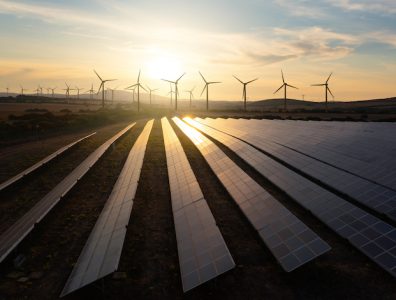
La Guajira, a region on Colombia's Caribbean coast, has great potential to lead the country's transition to renewable energy. The region currently boasts 16 new projects set to bring over 2 GW of green power to the nation. While the potential is massive, infrastructure upgrades and strong community partnerships are key to transforming La Guajira into Colombia’s renewables powerhouse.
Dubbed Colombia’s “wind capital,” La Guajira is capturing investors’ attention as a springboard to achieving a bold 2030 target: having 70% of the country’s power generation come from renewables. To meet this goal, Colombia will require an additional 4 GW of green energy. The bulk of this energy is expected to come from the La Guajira territory.
This unexploited peninsula in the country’s northeast has more than 400 kilometres of coastline, with arid land covering more than 20,000 square kilometres. Though currently one of Colombia’s least developed regions, La Guajira has the potential to be the country’s centre for renewable energy.
“One cannot talk about the energy transition without talking about La Guajira,” Federico Echavarría, general manager of green energy player AES Colombia, told The Energy Year.
In 2024, the government actively worked to unlock its substantial green resources, with the Mining and Energy Planning Unit (UPME) approving 16 upcoming solar and wind projects in La Guajira.
Moreover, Minister of Mines and Energy Andrés Camacho Morales told The Energy Year that the region is also Colombia’s entry point into value-added sectors such as hydrogen: “The maritime location of La Guajira makes the department a potential epicentre for green hydrogen projects as an export resource.”
UNLOCKING POTENTIAL: According to the Renewable Energy Association of Colombia, La Guajira has the capacity to generate an impressive 18 GW from wind power alone – excluding its offshore region.
This potential is due to the region’s winds averaging 9 metres per second at a height of just 80 metres – a rate around twice the world average. “This region has one of the greatest potentials in the world when it comes to wind resources because of the quality of its wind,” Echavarría said.
La Guajira also has the highest solar potential in the country, at 6 kWh per square metre per day, significantly higher than Colombia’s average solar irradiation of 4.5 kWh, which itself is above the world average of 3.9 kWh.
However, despite its potential, the region faces challenges, including social conflict. The indigenous Wayuu community has expressed concerns regarding the impact of renewables projects on land and livelihoods. Protests and blockades have occurred as communities demand fair compensation and meaningful consultation regarding land use.
“In La Guajira alone, we have already carried out prior consultations with 812 ethnic communities,” Minister Camacho said. “These projects generate employment and strengthen the electricity infrastructure in the region. However, energy poverty in La Guajira forces us to promote programmes such as Energy Communities which address the local populations’ energy problems.”
Currently, only 39.5% of La Guajira’s population has access to reliable electricity, with this figure dropping dramatically to just 14.4% in rural areas.
According to Echavarría, infrastructure is also one of the top challenges in tapping into the region’s potential: “There are not enough transmission lines to connect the vast energy resources in La Guajira with the rest of the country. We need to make sure that this infrastructure is built so we can take that energy to the rest of the country.”
THE ROAD TO RENEWABLES: National Hydrocarbons Agency president Orlando Velandia Sepúlveda has underlined the importance of opening the renewables market to local and international investors. “It is no secret that our geographical location gives us natural attributes, as seen in the wind and solar potential of La Guajira. But we cannot take advantage of this potential if we do not connect it to the market and invite companies to come and exploit it,” he told The Energy Year.
UPME has conducted three renewable energy auctions since 2019, awarding contracts totalling around USD 3.1 billion. These initiatives include 16 projects in La Guajira, which would collectively add 2.32 GW to the national grid.
However, many of these projects have encountered delays due to challenges associated with the Colectora transmission project, a critical component for integrating seven of these renewables developments into the national grid. “The Colectora project is the key to tapping the renewables potential in La Guajira,” Juan Ricardo Ortega López, president of Grupo Energía Bogotá, the company in charge of the venture, told The Energy Year.
The Colectora project includes two sections. One section is 228 kilometres and connects the Colectora 500-kV substation with the Cuestecitas 500-kV substation. In mid-2024, this section obtained environmental approval for its construction and commissioning.
The other section is 247 kilometres and connects the Cuestecitas 500-kV substation in La Guajira with the La Loma 500-kV substation in Cesar. This section will be completed in mid-2025.
Ortega also emphasised the company’s success in advancing the project, despite recent challenges: “In total, 235 prior consultations with ethnic communities were approved in this region. We have already started the process of compensation to communities, in addition to the rights of way to construct the lines.”
ONE VISION, 16 PROJECTS: Among the projects underway in the region, the largest are the 280-MW Beta Wind Farm in Maicao and the 212-MW Alpha Wind Farm in Uribia. The projects combined are slated to produce 2% of Colombia’s energy, when completed. Yet, in December 2024, EDP Renewables announced its departure from the country due to challenges in advancing these projects.
The second-largest project is the 250-MW Camelias Wind Farm, also in Uribia. This project is led by utility player Celsia, which is also managing the nearby 80-MW Acacia Wind Project 2.
Other significant developers include AES Colombia, with four wind projects; Italy’s Enel, with three; and local player Isagen with two. Of the 16 projects, only one is solar, the 19.9-MW Lyra project undertaken by Germany’s Viridi RE.
Read our latest insights on:
-
-

-

O&M leadership in mining and energy
INTERVIEW
More content from Colombia


Quality seismic decisions for Angola
INTERVIEW
Latest news and features



Latest Reports


The Energy Year Oman 2026
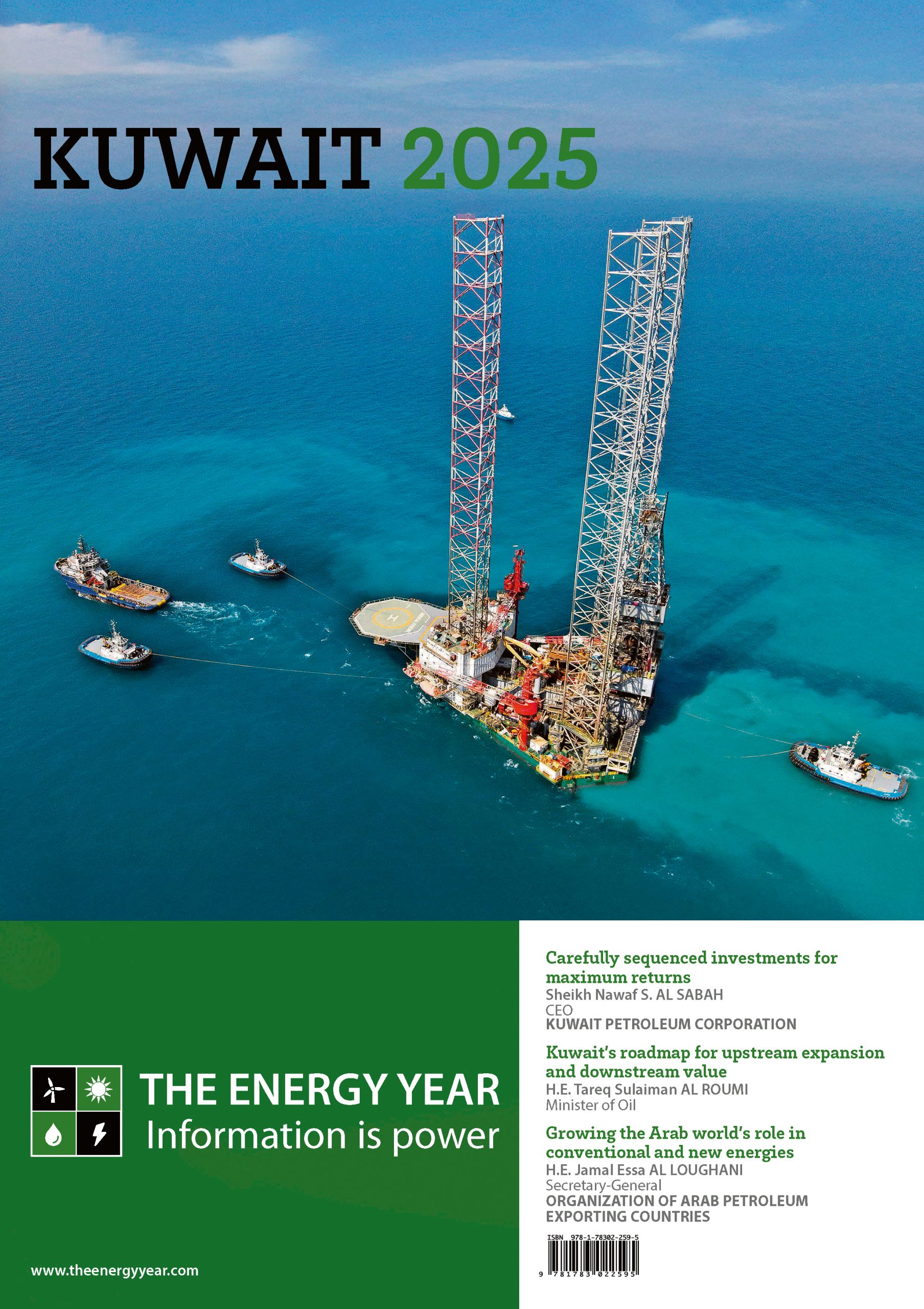
The Energy Year Kuwait 2025
The Energy Year Angola 2025

The Energy Year Nigeria 2025

The Energy Year Saudi Arabia 2025

The Energy Year UAE 2025

