
Mainstreaming biodiesel in Colombia
February 4, 2025 Colombia


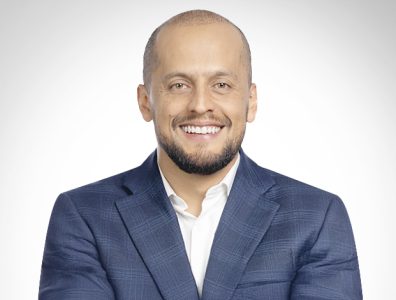
Javier Ospina, general manager of BioD, talks to The Energy Year about the company’s production capacity and market position in Colombia, how it contributes to sustainability and its plans for diversification and expansion. BioD produces and commercialises sustainable biodiesel and renewable oleochemical solutions.
What is the current state of BioD’s biodiesel production and market position in Colombia?
We are currently the largest biodiesel company in Colombia, holding 30% of the market share and operating in the central and southwestern parts of the country. Our production capacity has grown significantly since our inception in 2008. We started with a capacity of 120,000 tonnes per year in 2009 and doubled it to 240,000 tonnes per year, our current maximum capacity, by 2015 using German technology.
For 2024, we projected sales for 220,000 tonnes. To meet growing demand, we have plans to expand our capacity further by adding an additional plant with a capacity of 100,000 tonnes per year by 2027, which would bring our total annual production capacity to 340,000 tonnes. This expansion represents an investment of around USD 60 million, which we currently have the capacity to finance internally.
Our main customers include major wholesalers in the country, such as Primax, Terpel, Chevron, Biomax, Puma, Zeuss and Ecopetrol. We’re also pioneers in entering the marine sector in Latin America, having conducted pilot tests with a B22 blend (22% biodiesel) in international waters.
How does BioD’s biodiesel contribute to sustainable practices?
Our biodiesel production is making a substantial, measurable impact on Colombia’s sustainability goals. Currently we’re preventing the emission of approximately 700,000 tonnes of CO2 per year. To put this into perspective, it’s equivalent to removing all cars from Bogotá’s streets for 90 days.
Our flagship product, Premium Gold biodiesel, which now constitutes 100% of our production, achieves an impressive 89% reduction in emissions compared to conventional diesel. This significant reduction underscores the critical role our product plays in Colombia’s efforts to combat climate change and improve air quality.
We’re committed to sustainability throughout our value chain. We have RSPO [Roundtable on Sustainable Palm Oil] certifications, which are specific sustainability certifications for palm oil. We also have ISCC [International Sustainability and Carbon Certification] certifications, allowing us to deliver high-value-added products to markets such as Europe. Moreover, we’re part of an alliance ensuring zero deforestation along our value chain.
In terms of water conservation, last year we managed to recycle 90% of our wastewater and reuse it, equivalent to supplying 8,800 water tankers to our communities. We’ve also declared our intention to be carbon neutral by 2035 along our entire value chain, demonstrating our commitment to the planet, the wellbeing of people and communities, and impactful innovation for profitable and sustainable growth.
What are your future plans for diversification and expansion into new markets?
One of our main focuses is entering the sustainable aviation fuel (SAF) market. We’ve made an agreement with LATAM Airlines to develop a SAF project in Latin America. By 2028, we aim to have a plant producing about 60 million gallons of SAF. This is a separate project from our biodiesel expansion and will likely be set up as an independent company.
We’re also looking to expand in the marine sector, targeting large companies that generate high cargo movements worldwide. Additionally, we’re developing bio-based agro-supplies to replace conventional products derived from fossil fuels, and we’re exploring various oleochemical applications of palm oil across different industries.
Our goal is to achieve the same EBITDA from these new businesses over the next 10 years as we’re currently generating from biodiesel. We’re projecting an EBITDA of around 67 billion pesos (approximately USD 16 million) by 2025, and we aim to triple this result by 2035, with half coming from our core business and half from new ventures.
How do you source your raw materials, and what research and development efforts are you undertaking?
Our raw materials primarily come from 18 palm oil companies in the Eastern Plains of Colombia, who are also our partners and founders. These companies have eight extraction plants where they extract crude palm oil from palm fruit. The oil is then transported to our plant located at the Mansilla Ecopetrol complex close to Bogotá.
In addition to palm oil, we’ve also started using used cooking oil as a raw material, which allows us to produce second-generation biofuels. This diversification of feedstocks is particularly important for our target markets.
We have implemented a research and development centre to stay ahead of market requirements, particularly in terms of quality. For instance, we developed the cold soak filtration test (CSFT), which allows us to ensure there are no contaminants in our biofuels. This has put us five years ahead of market requirements, allowing us to produce biodiesel that complies with European standards.
For our more advanced projects, such as SAF, we’re working with strategic technological allies from other countries. These partnerships allow us to leverage global expertise and accelerate our development of cutting-edge biofuel technologies. Our R&D efforts extend beyond fuel production to areas such as glycerine applications, where we’ve successfully developed products for the livestock and poultry sectors.
What are the main challenges and opportunities for the biofuels market in Colombia, and how are you addressing them?
The potential for biofuels in Colombia is enormous, primarily due to the country’s large availability of biomass. We see significant opportunities in SAFs, marine transport and land transport decarbonisation.
However, the primary challenge facing the industry is the persistent price gap between conventional fossil fuels and alternative fuels. Biofuels remain more expensive to produce, which can limit their adoption without supportive policies.
To address this, we believe that government incentives, particularly in the form of tax breaks, are crucial. While regulation is being developed for SAFs, we feel it needs to be accelerated to capture the full potential of this market. The marine sector regulation is still in its early stages, representing both a challenge and a huge untapped opportunity.
We’re addressing these challenges by anticipating market needs and focusing on quality. Our Premium Gold biodiesel, with its high purity (i.e., a CSFT level of less than 100 seconds), gives us a competitive advantage.
We’re also working on voluntary blends with strategic partners, such as Primax, to offer superior blends (B20) in highly polluted cities such as Medellín and Bogotá. This initiative has already resulted in significant reductions in CO2 emissions and particulate matter. Moving forward, we’re betting on a roadmap that could project a B20 blend across the country in the next 10 years, which would trigger investments along the entire value chain.
Read our latest insights on:
-
-

-

O&M leadership in mining and energy
INTERVIEW
More content from Colombia


Quality seismic decisions for Angola
INTERVIEW

Latest news and features




Latest Reports


The Energy Year Oman 2026
The Energy Year Kuwait 2025
The Energy Year Angola 2025
The Energy Year Nigeria 2025
The Energy Year Saudi Arabia 2025

The Energy Year UAE 2025

