


Reducing emissions through biofuels in Colombia
January 29, 2025 Colombia


Carolina Rojas Hayes, executive director of the Colombian Biofuels Federation, talks to The Energy Year about the current status of the biofuel industry in Colombia and its impact on the environment. The Colombian Biofuels Federation’s mission is to produce renewable energy for mobility.
What is the current status of the biofuel industry in Colombia, and what impact is it having on the environment?
The biofuel sector has been a significant player in Colombia’s energy landscape for the past 20 years. Biofuel production in Colombia comes from two sources: biodiesel made from palm oil and bioethanol made from sugar cane. Both of these renewable energy sources are currently mixed with conventional fuels at a 10% ratio for both diesel and petrol.
The industry’s most notable contribution has been in reducing greenhouse gas emissions in the road transport sector. By 2023, it had helped reduce 3.2 million tonnes of CO2 equivalent emissions, which is comparable to removing 1 million vehicles from the roads. This reduction represents 84% of all emissions reductions in the transport sector, making biofuels the largest contributor to decarbonisation efforts in this area.
Beyond emission reductions, the biofuel industry has played a crucial role in improving air quality in Colombian cities. This is particularly significant given that poor air quality contributes to approximately 15,000 deaths annually in the country. The plant-based origin of biofuels results in lower emissions of particulate matter, directly addressing this serious health concern.
Additionally, the industry has been instrumental in leveraging Colombia’s agricultural development, particularly in the palm oil and sugar cane sectors, creating a symbiotic relationship between energy production and agricultural growth.
How does the biofuel industry impact Colombia’s economy and job market, and what are the investment prospects?
Estimates show that the industry directly creates about 90,000 jobs and indirectly supports around 450,000 jobs in related agro-industries annually, particularly in the palm oil and sugar cane sectors. This job creation is especially impactful, as it often occurs in isolated areas of the country.
The industry represents 2.8% of Colombia’s industrial GDP and accounts for 10% of all liquid fuels consumed in the country, highlighting its significant role in the national economy.
When it comes to investment, one study suggests that increasing biofuel blending could attract up to USD 1 billion in investments between now and 2030. This excludes potential investments in sustainable aviation fuels (SAF), which could be even more significant.
We envision the possibility of two or three SAF refineries in Colombia, each potentially costing between USD 500-800 million, to be developed around 2035. There’s also growing interest in marine biofuels, which could attract additional investments.
These investment prospects not only promise economic growth but also contribute to Colombia’s energy sovereignty. As biofuels are produced domestically, they reduce reliance on imported fuels and provide a secure, national source of energy for transport.
What are the future goals and strategies for the biofuel industry in Colombia, and how is it expanding into new markets?
The biofuel industry in Colombia has set an ambitious goal to contribute to a reduction of 5 million tonnes of CO2 by 2030. To achieve this, we’ve outlined three main strategies that we are encouraging with our 12 affiliates. Foremostly, we consider it essential to maintain and consolidate the current 10% blend regulations to ensure a stable base for the industry.
Second, we seek to promote voluntary higher blending, with pilot programmes allowing some freight vehicles to use blends of up to 20% or even 100% biodiesel. The industry is working to expand this programme and include more transport sector agents.
Additionally, we are looking into the possibility of increasing the amount of bioethanol in fuels from the current amount of 10%. In Brazil, for example, the amount of bioethanol can be up to 85%. This would give consumers more ways to reduce carbon emissions.
Finally, we want to expand into new markets, particularly SAF and marine biofuels. The expansion into SAF is a major focus, as we have signed an agreement with the International Civil Aviation Organization to advance SAF industries globally.
We’re working closely with the government and other stakeholders to create a roadmap and define fiscal conditions and incentives to make the SAF market viable in Colombia. The country’s tradition in biofuel production, combined with its raw material availability, positions us well for this new market.
How do biofuels compare to fossil fuels in terms of CO2 emissions, and what makes them more environmentally friendly?
Biofuels offer a significant reduction in CO2 emissions compared to fossil fuels. According to a study by the Colombian Ministry of Mines, gasoline emits 10 kilograms of CO2 equivalent per unit, while Colombian ethanol emits only 2.6 kilograms per unit. Moreover, diesel emits 12 kilograms of CO2 equivalent per unit, compared to just 2 kilograms for biodiesel. This represents a 74-83% reduction in emissions when using biofuels instead of their fossil-fuel counterparts.
The environmental advantage of biofuels stems from their plant-based origin and the biogenic cycle. Plants used for biofuel production absorb CO2 from the atmosphere as they grow, utilising the sun’s energy in the process. When the biofuel is burned, it releases this absorbed CO2 back into the atmosphere, creating a closed loop. This contrasts with fossil fuels, which release carbon that has been stored underground for millions of years, adding new CO2 to the atmospheric cycle.
Furthermore, the industry is continually improving its production processes to reduce emissions even further. Many plants have implemented circular economy practices, such as the cogeneration of energy from production waste, further reducing their carbon footprint. Advanced agricultural techniques are also being employed to reduce water consumption and increase productivity, enhancing the overall sustainability of the sector.
What is the federation’s vision for the future of the biofuel industry in Colombia?
Our main goal is to contribute 5 million tonnes of biofuels to the mobility and energy sectors by 2030, achieved through three key strategies. First, we look to consolidate traditional biodiesel and bioethanol blending, through both mandatory and voluntary higher blending levels. Second, we want to expand through new market opportunities such as sustainable aviation fuels and marine biofuels.
Finally, we seek to embed sustainability across the industry’s operations and supply chain, through initiatives regarding emissions reductions, water management, biodiversity, social impact and strong governance practices.
We are working closely with the government to develop the roadmap and policy framework to enable the industry to achieve this ambitious vision and solidify Colombia’s position as a leader in sustainable biofuels in Latin America.
Read our latest insights on:
-

-

-

O&M leadership in mining and energy
INTERVIEW
More content from Colombia


Quality seismic decisions for Angola
INTERVIEW

Latest news and features




Latest Reports



The Energy Year Oman 2026

The Energy Year Kuwait 2025
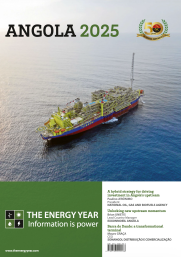
The Energy Year Angola 2025

The Energy Year Nigeria 2025

The Energy Year Saudi Arabia 2025

The Energy Year UAE 2025

