
Set apart by comprehensive services
February 4, 2025 Colombia


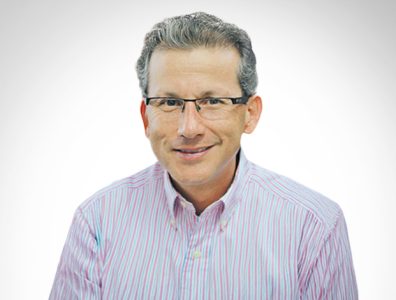
Ricardo Villarreal, president and CEO of Omia Colombia, talks to The Energy Year about the company’s operations in the oil and gas industry, its competitive advantages and the key challenges of the Colombia market. Omia is a services and construction company focused on the oil, gas, electric power and mining industries.
How does Omia operate in the oil and gas industry?
Our role in the oil and gas industry is primarily as a service provider, but we’ve evolved to take on more comprehensive responsibilities. We don’t own the assets or reserves; instead, we provide crucial operation and maintenance services to major operators in Colombia and beyond. Our client base has grown from just two when we started to 22 today and includes all operators in Colombia except for three.
Our focus is primarily on oil and gas services, covering the entire spectrum from upstream to downstream operations. Our services span the entire oil and gas value chain. For upstream operations, we provide wellhead services and handle all activities up to the delivery of crude oil.
We’ve also expanded into midstream and downstream operations. For instance, we manage 53% of the stations for Cenit, Ecopetrol’s crude oil transportation subsidiary. Some of these stations are so critical that any disruption could impact the country’s crude oil supply.
To put our growth in perspective, our sales in 2015 were no more than USD 8 million-10 million. Last year, our revenue was USD 90 million-95 million. We now have around 2,500 workers across 11 companies. Currently we have a significant market share of over 51-53%, including about 87% of Ecopetrol’s contracts.
What sets you apart from similar companies in such a competitive market?
What sets us apart is our recent move into operator roles. We’ve secured a contract with Frontera Energy where we’re responsible for everything an operator would do aside from owning the reserves. This includes managing the maintenance, exploration and reservoir programmes and even taking responsibility for environmental liabilities.
Our expertise and reliability have allowed us to handle a significant portion of Colombia’s oil production, as it’s quite unusual for a service company to take on an operator role, and we’re involved, directly or indirectly, in the production of around 400,000 bpd out of Colombia’s total 750,000 bpd – around 53% of the country’s total production.
How are you adapting to key technological and market changes?
Our approach to adaptation focuses on three main areas: technological innovation, market diversification and international expansion.
In terms of technology, we’re making significant strides in incorporating AI and machine learning into our operations.
We’ve developed in-house solutions that allow us to monitor well performance in real time and created an application that collects data from equipment in the wells and transmits it to a monitoring centre. This allows us to track well performance live, and the system provides automatic alerts when there are issues with oil production, pressure or equipment functionality.
We are also working closely with strategic partners such as SKF, a global leader in technology development, advanced solutions in remote monitoring, big data analytics and algorithm-based predictions. The level of investment in these technologies varies depending on the specific needs of each project, ranging from relatively modest sums of USD 50,000-100,000 for simpler applications to USD 1 million-2 million for more complex systems.
In terms of market diversification, we’re aware that the world is moving towards energy efficiency and alternative energy sources. While oil and gas remains our core business, we’re expanding our portfolio to include new products and services related to these emerging areas.
Our international expansion strategy is another key part of our adaptation to market changes. We’re actively exploring opportunities in the United States, particularly in California, and we’re also looking at the rapidly growing market in Guyana. However, we’re taking a measured approach to this expansion. Rather than setting up speculative operations in new markets, we’re focusing on firm business opportunities where our expertise and services are specifically requested.
What are the key challenges you encounter within the Colombian market?
One of our most complex tasks is managing relationships with local communities and labour unions. The social dynamics can vary significantly from one region to another. The approach that works in Bogotá may not be effective in Cúcuta or the Llanos region. This requires us to be highly adaptable and sensitive to local contexts.
We have to navigate a complex process of socialising our contracts and involving communities wherever we operate. This includes using a platform to post job opportunities, conducting technical evaluations, performance assessments, interviews and exams. It’s a comprehensive process designed to ensure transparency and local participation, but it can be time-consuming and challenging to manage.
We also have to comply with stringent regulatory requirements. For instance, Colombia has implemented the SAGRILAFT system [Money Laundering, Financing of Terrorism, and Financing of Proliferation of Weapons of Mass Destruction Integral Self-Monitoring and Risk Management System]. This requires us to conduct thorough due diligence on all third-party services we engage with, checking against various watchlists.
What is your growth strategy in the short run?
Today we’re approaching our ninth year of operations and have consistently grown at rates exceeding 20-30% annually. Our growth strategy is multifaceted, focusing on both consolidating our position in existing markets and expanding into new ones. Internationally we’re looking at opportunities in California’s Bakersfield area and in the rapidly growing market of Guyana.
Regarding local growth, we’re maintaining our focus on being the “first choice” for both clients and employees. We’re proud of the fact that we’re now among the top 1,000 companies in Colombia in terms of revenue, but our goal isn’t just to be the biggest; it’s to be the best in terms of customer satisfaction, employee happiness and operational excellence.
We also want to enhance our company’s culture, which is built around what we call our “5 Zeros” – zero accidents, zero incidents, zero defects, zero losses and zero ethical issues. These principles are fundamental to our operations and have earned us recognition from major clients such as Cenit, Ocensa, Ecopetrol, Mansarovar, Frontera Energy and Hocol.
Read our latest insights on:
-
-

-

O&M leadership in mining and energy
INTERVIEW
More content from Colombia


Quality seismic decisions for Angola
INTERVIEW

Latest news and features




Latest Reports


The Energy Year Oman 2026

The Energy Year Kuwait 2025
The Energy Year Angola 2025

The Energy Year Nigeria 2025
The Energy Year Saudi Arabia 2025

The Energy Year UAE 2025

