
The increasing importance of junior E&P players
February 4, 2025 Colombia


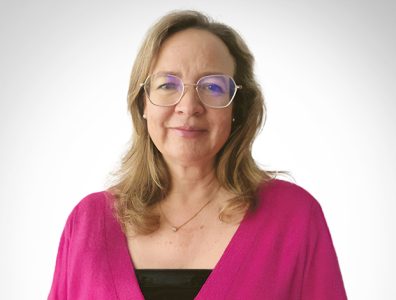
Ana María Silva, legal representative of Wattle Petroleum, talks to The Energy Year about the difficulties Colombia’s upstream sector is experiencing and the role of small and medium-sized E&P companies in the country’s upstream. Wattle Petroleum explores and produces hydrocarbons.
What difficulties is the upstream sector in Colombia experiencing, and what importance is the “B League” acquiring?
Colombia has experienced a drop in gas reserves, having only 6.1 years’ worth left. The number of exploratory wells drilled has dropped substantially. The average number of wells drilled between 2013 and 2015 was 119, but now we are down to 39 wells. This explains the complicated situation Colombia’s upstream sector faces.
Today uncertainties are a major concern among operators because investments we make are relatively high – USD 2 million per well. Uncertainties make our business a risky one, and investments shy away. This has actually led many major international companies to leave.
Despite the complex situation, a window of opportunity has opened up. The B League players – meaning local small-to-medium-sized junior E&P companies – are filling in the gaps that major international firms are leaving. Large international players do not see the benefit in investing in smaller blocks with small volumes of production, but this is very attractive for junior E&P players such as ourselves.
While 10 mcf [283,000 cubic metres] of gas may be nothing for Ecopetrol or some major operators, it is significant for us. We take these small fields and make them productive, extending their life. This at the same time translates into work, investment in the communities and development in these areas.
We now see that the ANH [National Hydrocarbons Agency] is trying to push the B League in Colombia in order for us to contribute to the overall production of the nation. Every single barrel counts.
How critical is it to work with communities to mitigate the violence and conflict that impact rich gas areas such as the Catatumbo?
We have two producing blocks: the Carbonera block and the Valle Medio del Magdalena 1 block. The former block is located in the Catatumbo area, a very complicated area in social terms, where guerrilla forces are present. It is a very dangerous area. We bought the block in 2016, and we tried to liaise with the community to make them feel they are a part of the project.
It is difficult to compete with employment coming from drug trafficking in that area. Today we have people from the community working for us on a regular basis. They work with us on nontechnical tasks, such as surveillance, but we have cases where they have been trained and now have a professional career with us. This comes to say that, despite the difficulties inherent in the area where we work, it is possible to create a change.
Moreover, we are investing socially through projects for the community, which include paving streets, building a community hall and setting up health posts. These initiatives help steer the communities away from cutting cocaine. The Catatumbo area has great potential to produce gas, and the communities are an essential part of this puzzle.
What challenges and gas potential does the Carbonera block have?
The Carbonera block is a difficult one for many reasons. The formation is complex, making it difficult to extract gas. In addition to this, security issues are permanent. Since 2016, we have made a large bet on this block, putting a special focus on the community. According to all geological studies and according to the ANH’s studies further north in the Vereda de las Mercedes, the gas potential in Catatumbo is excellent.
Sadly, no one dares to work in this area. We are the only ones. Despite the potential, illegal activity and coke plantations are rampant, making it difficult to make any progress. It is even difficult to get service companies to work with us in this area, as they do not want to take the risk.
This block currently produces about 1 mcf [28,300 cubic metres]. This comes from two of our wells. We have two more wells that we drilled in 2022. We had difficulties because there was a year when it didn’t stop raining, and we almost couldn’t install the gas pipeline that connected one of the wells. It took us almost eight months to conclude this project. We are now trying to test that well.
There is another well that we are trying to test, but we have had delays due to security issues. The production potential of all our wells will be more or less 2.5 mcf [70,750 cubic metres] by 2025, and we have contracts in this block until 2034.
This block is near Cúcuta, which has no connection to TGI’s [Transportadora de Gas Internacional] national transport system. What we are currently producing goes directly to supply the local market. We have a processing facility called La Florida, and gas is then transported in tankers to points of sale in the region. The question now is, if we produce more gas, where and how will we take it?
We have already approached TGI to propose building a 17-kilometre line that connects our blocks to their system. However, it is a significant investment exceeding USD 24 million. We need a secure environment to operate in an optimum way and recover this investment. The local and national market needs our gas.
Despite the difficulties, our intention now is to test the wells and to stabilise production at 2.5 mcf [70,750 cubic metres] by 2025. Once we have stabilised production, we will see how the market reacts. We have identified three additional points to drill, which would put us at 6-8 mcf [169,800-226,400 cubic metres] of gas. That covers the entire Cúcuta market.
What governmental support is needed to unlock the true potential of the Catatumbo region?
As a company we try to find allies in order to exploit the gas potential in the area, but it has been very difficult. We have been producing gas in the area for a while, but we would appreciate swifter processes from ANLA [National Environmental Licensing Authority] and support from institutions such as the ANH. While this support is there for the Valle Medio del Magdalena 1 block, we need more governmental support in the Catatumbo.
The reality is that we are risking our necks trying to contribute to the country and to the development of local communities. This area has incredible potential, and what we need is a strong backing from institutions such as the ANH, and the provision of security to change this reality.
What interesting prospects does the Valle Medio del Magdalena 1 block hold?
In the Valle Medio del Magdalena 1 block, we are producing around 113,200 cubic metres (4 mcf) of gas. To fulfil the ANH’s obligations, we drilled two wells. One has shown potential gas reserves and some crude oil. The other one has gas.
Right now, we are revisiting the geological studies to see if, with some kind of stimulation, we can make them productive, or if we have to change the drilling location. We have drilled a third well that represents almost half of our current production. Gas is then processed at our La Estancia Multiwell Platform. While our offtaker is Vanti, TGI is the one transporting the gas.
However, the fact that this block has yielded some crude oil is interesting. This could change the nature of the company, but it would also mean we have to build a crude-oil processing facility. We are now seeking investors that could support us with the construction of new production facilities or the actual drilling of the wells.
Read our latest insights on:
-
-

-

O&M leadership in mining and energy
INTERVIEW
More content from Colombia


Quality seismic decisions for Angola
INTERVIEW
Latest news and features



Latest Reports


The Energy Year Oman 2026
The Energy Year Kuwait 2025
The Energy Year Angola 2025
The Energy Year Nigeria 2025

The Energy Year Saudi Arabia 2025
The Energy Year UAE 2025

