
Towards a modern, resilient and inclusive financial sector in Oman
November 11, 2025 Oman
Oman 


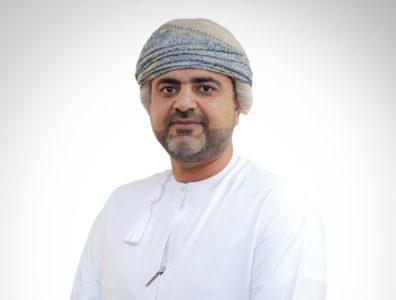
H.E. Mahmood Al Aweini, secretary-general of the Ministry of Finance, talks to The Energy Year about the Estidamah programme, its priorities for 2025 and its role in shaping Oman’s sustainable finance ecosystem. The Ministry of Finance is the Omani government body entrusted with the management of national financial resources.
This interview is featured in The Energy Year Oman 2025
Could you provide an outline of the Estidamah programme and its priorities for 2025?
Estidamah, the National Program for Fiscal Sustainability and Financial Sector Development, has two key mandates: achieving fiscal sustainability by strengthening the government’s public finances and developing the financial sector to ensure its readiness for future economic and investment shifts. This is being achieved through a comprehensive development plan for three key sectors – banking, capital markets and insurance – and four enabling elements: fintech, human capabilities, regulation and financial literacy.
One of Estidamah’s top priorities for 2025 is to foster a competitive business environment in the financial sector and improve access to financing, which we hope to achieve through a mix of incubation programmes and improved credit information, as well as by facilitating the opening of domestic accounts by foreigners. In parallel, we aim to increase the range of investment and financing products available in the market, including venture capital, credit guarantees, sustainable finance and digital banking and fintech products.
Our third priority for 2025 is to advance initiatives such as improving incentives for listing on the Muscat Stock Exchange, launching a national funding programme for SMEs and establishing the Oman Business Growth Fund to foster opportunities for growing companies.
Collaboration seems central to delivery; how are you aligning with public and private partners to obtain results, particularly as regards green finance?
Estidamah works with a wide range of stakeholders to ensure climate finance is fully integrated into Oman’s investment priorities. Key partners include the Central Bank of Oman, the Financial Services Authority, the Oman Investment Authority, alongside several ministries.
Together with these entities, Estidamah is fostering public and private partnerships to develop sustainable finance mechanisms and expand access to green investment products. Notable outcomes include the development of national legislative and regulatory frameworks that enable the financial sector to channel financing into ESG-compliant projects, and ongoing efforts to accredit the Development Bank as a national implementing entity under the Green Climate Fund.
Through these collaborations, Estidamah is strengthening the foundations of Oman’s green finance ecosystem, supporting SMEs and promoting sustainable economic growth in alignment with the sultanate’s net-zero strategy.
What are some of the steps you are taking to support Oman’s net-zero targets?
The programme plays a central role in advancing Oman’s net-zero strategy by promoting financial solutions that enable decarbonisation and by engaging key sectors of the economy. Estidamah is helping to upgrade the legislative and regulatory environment required to attract sustainable finance. The Oman Net Zero Centre, established under the programme, is leading projects to improve energy efficiency and cut emissions.
In parallel, the Ministry of Finance has launched ESG governance guidelines and the Sustainable Finance Framework, and is also developing of an emissions trading system. These and other measures are laying the groundwork for a financial ecosystem capable of supporting Oman’s long-term transition to a low-carbon economy.
Does Estidamah contemplate any specific measures to further Oman’s green financing capabilities?
Estidamah plays a central role in developing Oman’s green finance infrastructure through regulatory reforms and international collaborations. Oman was the first country in the GCC to introduce a comprehensive framework that clearly defines how green and sustainable financing should be structured. A key achievement was the Sustainable Finance Framework issued by the Ministry of Finance, which received an SQS2 Sustainability Quality Score – very good sustainability quality – from Moody’s.
The framework also supports the issuance of new financial tools, such as green bonds and sukuk (Islamic bonds), enabling both public and private sectors to raise capital for environmentally responsible projects. In addition, Estidamah has led the development of legal and regulatory frameworks to ensure the financial system is equipped to attract and channel green financing in line with ESG standards.
How are you supporting SMEs to participate in the domestic green economy?
As part of our efforts to develop Oman’s green economy, we are working with other stakeholders towards expanding the financing options available to SMEs. An example is the Emerging Companies Market, a secondary market launched within the Muscat Stock Exchange to provide equity financing options for startups, SMEs and family businesses.
Another is the restructuring of the Development Bank to increase the bank’s lending limits vis-à-vis small and medium businesses, especially in green and priority sectors. This will be achieved in part through a new sustainability department within the bank. Our broader efforts include a study on non-banking financial institutions that proposes targeted green lending and sector-specific products such as green bonds and asset-backed loans for SMEs to encourage sustainable investment.
What is your long-term vision for Estidamah and Oman’s economic growth?
Our long-term vision is to build a modern, resilient and inclusive financial sector that supports economic diversification and enhances the role of private companies in driving growth that is aligned with Oman Vision 2040 goals.
We will continue to empower SMEs, reinforce green financing mechanisms, attract domestic and international investments, and help drive digital transformation by fostering advances in fintech solutions. A clear direction and execution strategy will be announced soon through Oman’s 11th Five-Year Plan.
Read our latest insights on:
More content from Oman





Quality seismic decisions for Angola
INTERVIEW
Latest news and features




Latest Reports


The Energy Year Oman 2026
The Energy Year Kuwait 2025
The Energy Year Angola 2025
The Energy Year Nigeria 2025
The Energy Year Saudi Arabia 2025
The Energy Year UAE 2025

