

LPG’s future in Colombia
September 11, 2024


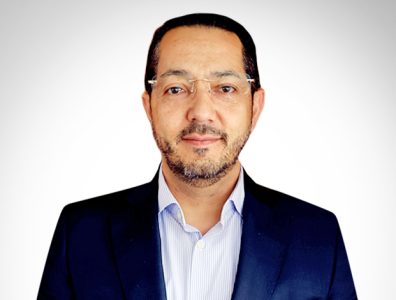
El-Laythy Safa, general manager of Montagas, talks to The Energy Year about the extent to which LPG has been neglected in Colombia, LPG regulatory schemes and the shift the company made from cylinders to stationary tanks. Montagas is a provider of low-emission fuel gas and related services.
To what extent has LPG been neglected in Colombia, and what regulatory schemes have been implemented?
Colombia has always given a special focus to natural gas, especially on the Atlantic coast. It has always been at the forefront of public policy, which is seen in the construction of different pipelines. By contrast, LPG has been lagging behind. Still today we do not have the required regulations for LPG. We are trying to assimilate some of the applicable natural gas regulations, but it has been a solitary struggle for LPG entrepreneurs.
In 2008, when the cylinders were property of the users, we witnessed a regulatory change. President Uribe’s development plan changed this scheme, and cylinders became the property of companies. This was a problem because no company could make the required investment in that number of cylinders. Three major Chilean investment companies came in: Abastible, Gasco and Lipigas. They invested not only in large firms such as Colgas but also in Montagas.
As a consequence, we replaced our fleet of cylinders – 380,000 of them were replaced. In addition, cylinders were bought directly from the users. Now, users receive them and leave a guarantee deposit to ensure that they take care of the cylinder – this is regulated under the CREG 023 regulation. This changed the whole commercialisation scheme. Today, LPG is essential for certain regions of the country, such as the south, especially in the department of Nariño, where we are based.
Despite LPG’s importance, many people still prefer to cook with firewood even though there is a subsidy. Subsidies for LPG cylinders continue in many departments. The subsidy was 19%, and we lobbied to raise it to 50%. However, people still continue to use firewood.
Tell us about Montagas’s shift from the cylinder to the stationary tank business.
Historically, our focus has always been LPG cylinders. We offer our services to five different departments and have cylinders of 7, 9, 15, 18 and 45 kilograms. We then started our stationary tank business, adopting the model that worked in Mexico City. In 2014, we closed the year with 3,900 residential users connected to stationary tanks. Today, the number has increased to 24,000, and our strategy is to reach 30,000 users by 2026. Our stationary tanks have capacities ranging from 32 gallons to 2,000 gallons [121 litres to 7,571 litres].
There is a false belief that LPG is dangerous, and it is associated with poor and rural areas. LPG suffers from a poor reputation. That is why at Montagas we make sure we comply strictly with the regulations in place.
Elements such as loading lines and fire protection networks are important when handling this type of gas. However, Colombia is much more flexible than countries such as Ecuador when it comes to these regulations. For this reason, we are setting high standards in this market, higher than the ones established by law. It is in our own interest and in the interest of the industry. We are working towards boosting the reputation of LPG for the near future.
How has Montagas successfully explored the development of LPG home networks in recent years?
As part of our growth strategy, we saw a huge opportunity in developing home networks for LPG. We entered into a PPP scheme with the government to develop projects valued at COP 93 billion [USD 22.4 million]. As a consequence, in the three years preceding August 2024 we covered 29 municipalities with our LPG networks.
In 2023, we finally started making connections. It’s a huge achievement for us. We presented the first project in 2019, and ever since, we have learned to structure projects of this nature and calibre. The first network project approved was in March 2020 in Chachagüí. You see, we understand the needs of the market, and if we do not do these projects, someone else will.
It was a huge effort. First, you have to manage public resources, meaning you have to deal with rigorous oversight. We also have to manage political will because we depend on whether the mayor of the moment wants to agree and sign or not. There are complex dynamics related to the development of such an initiative, but we succeeded.
Thanks to this, we have a projection of 2,000 tonnes in these 29 municipalities. The regional strategy is what the government has called “micro-networks.” We are growing around the existing network in place in adjacent municipalities. We currently have 22,000 users, and we hope to reach 35,000 by December 2026.
What novel initiatives are you looking at in the areas of CNG and hydrogen?
Although the networks are made for LPG and natural gas, we have an important strategy of not leaving CNG behind. We want to study CNG to understand how we can manage, in the future, to supply a mix of LPG and hydrogen or CNG and hydrogen. The overarching plan is to build solar farms. From here, the objective is to use hydrolysis to produce green hydrogen and inject it into our grids, which would reduce our CO2 impact by 15%.
What opportunity has Montagas seized in the area of autogas in Colombia?
In 2018, we saw a great opportunity with autogas. Our objective was to work with supply and demand at the same time. There were no pumps in the department of Nariño and no vehicles running on this source of energy.
We imported the first autogas pumping kit in 2019, and we opened up the first station, which was followed by another three. We are now expanding our physical presence. This year [in 2024], we hope to open a couple of autogas pumping stations.
In parallel to this, we converted a series of cars to use HD-5 LPG, which is 95% propane, imported from Okianus Terminals, which has worked well. We have also provided incentives such as giving away conversion kits at the beginning. We have given away around 70 kits.
In addition, we connected with a group of investors that opened up a brand-new conversion workshop in Nariño in April 2024. Each conversion has a cost of COP 3.8 million [USD 917].
To incentivise more clients to convert their vehicles, Montagas provides a discount voucher of COP 400,000 [USD 97], while the workshop gives another voucher of COP 100,000 [USD 24]. It’s a win-win situation for everyone. The clients we have are mainly taxis, bus fleets and inter-municipal vehicles which run on petrol and diesel.
How do you import gas from Okianus Terminals, and what challenges have you overcome?
We are stakeholders in Okianus Terminals. We looked at this opportunity in terms of supply reliability despite Okianus being in the Caribbean, far away from our base. We have many trucks to transport the LPG, and there are two more we have recently acquired.
Ownership is shared between the G5 Consortium formed by five LPG companies. The first import was relatively complex, as we had to unload a 4,000-tonne ship. We have since proceeded by unloading 700 tonnes in tanks and the rest in tankers.
In 2021, the country suffered huge road blockades following the social uproar against the Duque administration. This cut our supplies, and we consequently activated a contingency plan.
First, we have two packaging plants in Pitalito, Huila, and another one in Mocoa, Putumayo. We went to these plants to bring the bottled gas in trucks. This turned out to be impossible, so we looked at the Port of Tumaco as our best option.
At the time we took the chance of unloading a 2,400-tonne vessel at the Port of Tumaco, an operation from ship to truck. It was a highly risky and arduous 24/7 project, as the port did not have the proper conditions for such a job. We had our trucks going from Pasto to the port and back, loading, unloading and transporting the gas. Despite the extreme challenge, we succeeded and it is a true feat.
How are you exploring new business avenues via NautiLPG while expanding your current storage capacity?
NautiLPG is our new line of business, for which we managed to develop a method for replacing inefficient two-stroke engines with efficient LPG ones. Marine engines undergo a conversion procedure and are converted to LPG, which offers advantages in terms of autonomy, efficiency, the environment and the economy.
We are currently working in Tumaco and already have 59 beneficiaries. The government wants to apply this methodology throughout the Colombian Pacific, from Antioquia and Choco to Nariño, which represents a huge opportunity for us.
Read our latest insights on:
-
-

-

O&M leadership in mining and energy
INTERVIEW
More content from Colombia
Latest news and features






Latest Reports


The Energy Year Oman 2026
The Energy Year Kuwait 2025
The Energy Year Angola 2025
The Energy Year Nigeria 2025
The Energy Year Saudi Arabia 2025
The Energy Year UAE 2025


