
Pursuing growth for Mozambique’s capital markets
September 1, 2024 Mozambique


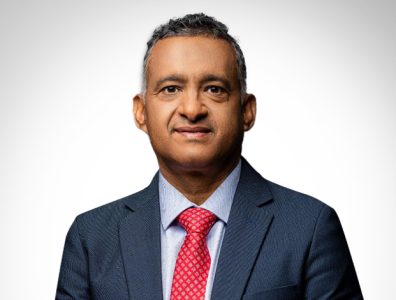
Salim Cripton Valá, chairman of Bolsa de Valores de Moçambique (BVM), talks to The Energy Year about the increasingly important role that capital markets are playing in Mozambique’s economy and the recent launch of a platform specifically for domestic tech startups. BVM is Mozambique’s stock exchange.
Can you provide a brief description of the Bolsa de Valores de Moçambique (BVM)?
BVM celebrated 25 years in the market in 2023. BVM was a public institute until 2023 when the government decided to transform it into a publicly traded company. Our role is to stand by entrepreneurs and investors, providing them with products, services and instruments.
BVM is still relatively small because the financial culture here is dominated by banks, and when people need financing, they automatically think of banks. Most do not know that since 1999, the state created a stock exchange as an alternative financing option for entrepreneurs and as a mechanism to invest savings in listed securities.
The stock exchange’s main functions are to be a finance mechanism, a platform where savers can safely and profitably invest their savings and a mechanism to promote investments. This is why we have a partnership with APIEX because we have an important role in promoting investments.
What is the current composition of the Mozambican market?
There are currently 16 companies listed on three key exchanges. The first is the official stock market for large companies and the state. The second, created in 2009, is for SMEs, while the third market, created in 2019, is an incubation market aimed at startups and SMEs.
Since 2015, the economy has been dampened due to internal and external shocks, Covid-19, undisclosed debts and the effects of extreme weather events. Another factor is the business culture. Many companies in Mozambique are named after their owners who fear that opening their capital will mean losing control of their companies. This is a cultural issue, and we have been working closely with various educational institutions to reverse this situation.
Stock market capitalisation as a percentage of GDP, one of the main indicators of stock exchanges, has grown to 28.6%. We have seen a big boom. In 2016, we had 6,495 investors with listed securities; today, we have 26,074. All numbers have increased significantly, including trading volume, market liquidity and the number of listed securities.
Can you provide details on some of your most important listings?
In 2019, we had two major operations. The public offering of HCB [Hidroeléctrica de Cahora Bassa] shares brought in over 16,000 investors and raised USD 55 million through the capital market. It was the largest we have had in terms of scope, inclusion and use of technological means.
We also had the public offering of shares in Cervejas de Moçambique, the largest in dollar terms at USD 124.5 million. In 2022, we also had a major operation with the public offering of Tropigalia. Over time, we have introduced several technology-based products and established partnerships with relevant institutions, expanding our scope and becoming more relevant.
Does BVM promote any financial education initiatives?
We promote financial education through various channels and methods. We work closely with young people at universities, where we give lectures and provide information. In 2023, we updated our website and have been translating important documents into English. We have a programme with the Ministry of Education and Human Development to incorporate content on capital markets, savings, investment and financing into school curricula, particularly into secondary school student manuals. We are working with universities to ensure sustainability and capacity building for anyone studying economics, management, accounting, auditing or law, so they have a good understanding of capital market issues, the stock exchange, savings and investment.
Does BVM plan to issue green bonds, and what impact could they have on sustainable development in Mozambique?
This is an unavoidable challenge. We have a planning, market analysis and trends department. Our team is working on this and observing global developments. We see a great opportunity to introduce sustainable bonds to our market and have received strong messages from institutions interested in doing the same.
We believe this can help energise the market, especially the secondary market. We have conducted various studies and analyses and have prepared for the introduction of these new mechanisms by making regulatory adjustments.
The main instrument guiding the functioning of the capital market is the Securities Market Code, approved in 2009. We plan to update it with the government next year to make it more dynamic and close existing gaps.
We prioritise introducing new services, products, and innovative financial instruments such as sustainable bonds. This initiative is driven not only by our belief that the products are interesting and can energise the market but also by the interest of stakeholders, such as companies, investors, sovereign and investment funds, insurers, pension funds and banks.
We cannot ignore the importance of energy, sustainability and climate change. The country has suffered from the effects of climate change. Sustainable bonds will help generate long-term financing for companies to focus on new projects, products and services that can contribute to a greener economy.
BVM targets having 30 companies listed by 2028. How do you plan to achieve this goal?
We recently approved our 2024-2028 business plan and are finalising the strategic plan for the next five years. We aim for market capitalisation to increase to 35% by 2028 and the number of investors to rise to 50,000.
We need to change our approach and intervention methods to attract clients, companies and investors, as well as to make Mozambicans and companies operating in Mozambique more familiar with the securities market.
BVM is a gateway for international investors. Besides attracting investors from other continents, we also want to leverage the agreements we already have. In Southern Africa, we are founding members of the Committee of SADC Stock Exchanges, the African Securities Exchanges Association and the Association of National Numbering Agencies. We are also members of the Community of Portuguese Language Countries stock exchange forum.
We are shifting our focus and have mapped out the SMEs that are most likely to use the capital market. The business segments of listed companies include services, the beverage industry, mineral resources and hydrocarbons, insurance, commerce and infrastructure. We also have two new tech startups. We do not yet have companies in the fishing, tourism, agribusiness or transportation sectors.
We have a highly focused and targeted strategy. We have created an investor portal and technological products, and we have automated the price bulletin. We are now working with universities and youth associations to create stock market simulators for high school students. Our goal for the near future is for people to have access to buying and selling shares through mobile devices.
Read our latest insights on:
-

Project highlight: Mozambique LNG
PROJECT HIGHLIGHT -

-

Project highlight: Mozambique’s Central Térmica de Temane
PROJECT HIGHLIGHT
More content from Mozambique


Quality seismic decisions for Angola
INTERVIEW
Latest news and features




Latest Reports


The Energy Year Oman 2026
The Energy Year Kuwait 2025
The Energy Year Angola 2025
The Energy Year Nigeria 2025
The Energy Year Saudi Arabia 2025

The Energy Year UAE 2025

