
Maximising the potential of Nigeria’s marginal fields
October 28, 2024 Nigeria


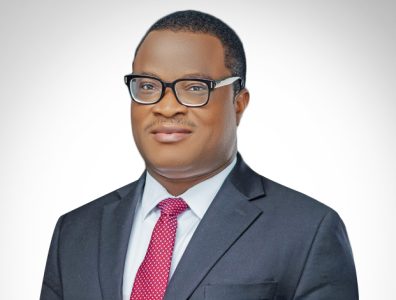
John Anim, managing director of Platform Petroleum, talks to The Energy Year about the company’s assets, its progress in the Egbaoma field and how it might increase the field’s production capacity. Platform Petroleum is a Nigerian indigenous oil and gas company involved in the exploration, development and production of oil and gas resources.
Can you give us an overview of Platform Petroleum’s journey so far and its key assets?
Platform Petroleum was established in 2001. Thereafter, we participated in the marginal fields bid round in 2002-2003 and then gained ownership of the Asuokpu/Umutu field – today known as the Egbaoma field – in 2004 from SPDC, which had drilled some wells there already. Since then, we have been operating the Egbaoma field, and it has been our flagship asset in the past 20 years.
Despite it being considered marginal due to small hydrocarbon accumulations and the location being very far from any existing assets or production facilities, we believed in its potential and the value we could create. By 2007, we were able to attain first oil production, and since then, we have been producing continuously. We have prudently recovered over 13 million barrels of oil and 122 bcf [3.45 bcm] of gas, exceeding the initially estimated reserves when we took over the asset.
Can you walk us through the progress made at the Egbaoma field, its current production and prospects for stepping up its capacity?
Currently, we are producing over 3,000 bopd and around 35 mcf [990,500 cubic metres] of gas per day, and we are not seeing the end of it. In 2023, we started exploring potential prospects and drilling more wells in the field.
The initial plan in 2023-2024 was to drill two semi-appraisal wells, but when the first one turned out to be a huge success, with the discovery of five different hydrocarbon-bearing reservoirs, we deferred the second well to 2025 to establish the optimal location for multiple wells to harness the reserves. We sampled the reservoirs, and four were oil and one was gas, so we did well completions in early August 2024 and put the well on production.
Following our well production testing, we can add about 1,000 barrels of oil and 15 mcf [424,500 cubic metres] of gas to hit total production values of 4,000 bopd and 35 mcf [990,500 cubic metres] of gas per day just from the first well.
Based on such a promising result, we will drill two more wells in Q2 2025. These activities should take us to about 6,000 bopd and 60 mcf [1.7 mcm] of gas by the end of Q2 2025. This is our immediate plan for further developing the Egbaoma field.
What is the company’s standpoint when it comes to flaring, and what are its strategies for becoming more sustainable and capitalising more on its assets’ resources?
To really maximise value from an asset, especially those that have gas, such as the Egbaoma field, it is key to commercialise the produced gas. In 2018, there was a gas flare regulation that increased the penalty for gas flaring to USD 2.50 per 1,000 cubic feet of gas flared.
So, imagine if we did not have a gas facility to commercialise the produced associated gas; producing 35 mcf [990,500 cubic metres] of gas and flaring it would inevitably mean that whatever revenue we get from oil output would mostly be used to pay gas flare penalties.
At the Egbaoma field, we have achieved 99% gas commercialisation. The only flaring we have is less than 400,000 cubic feet [11,320 cubic metres] per day and is what we call flaring for safety. However, we are taking steps to deploy a technology that can bring it to zero to fully comply with ESG requirements.
What do you think the achievements made at Egbaoma demonstrate regarding Platform Petroleum’s capabilities?
First, we have been very efficient in cost management to the extent that the value we created through optimally developing the asset has made the field self-sustaining in terms of funding. We have financed most development activities purely from our revenue streams. This Egbaoma field development also shows Platform Petroleum’s technical skills and competence in the upstream and its ability to create value from assets that were considered marginal.
In fact, when we took over Egbaoma, it was not considered economically viable, but thanks to our knowledge of the terrain, the sector, how to deal with community issues and how to be efficient in terms of cost minimisation, we made it viable. We have been drilling wells at a far lower cost than our peers and managed to make the asset profitable.
So, one of the key capabilities we have developed is very efficient planning such that, when we get to a field, we do everything within a tight timeframe and achieve significant project cost savings. It is because of our efficient resource management that we have partnered with other marginal field operators.
Can you give some details about the other assets you are currently involved in and how you are helping your upstream partners develop these fields?
In 2020-2021, there was a marginal field bid round that led to the awarding of over 50 marginal fields to different awardees. Three companies approached us because of the capability we have developed over the years. One of the fields, designated as PPL 222, was awarded to two entities, one with a 55% participating interest and the other with a 45% participating interest, and we are currently collaborating with them to bring the field to first oil before the end of 2024.
We evaluated the asset and realised that we could actually replicate what we did at Egbaoma field. We funded and acquired a 50% participating interest, with ministerial consent already granted. The operatorship of PPL 222 is a matter of pride for us since we are championing the development of the asset.
The new well drilled in the field early this year was a success. Our team is now getting ready to put the field on production before the end of the year. In terms of output, we aim for around 1,000 bopd. The field does not have significant gas, and therefore, we have planned to use the gas from production to power the facility, so we don’t flare it.
Another asset that we are currently involved in is called the Benin Estuary field in PPL 214, which was awarded to three different companies. One of these, which has a 40.02% stake in the field, approached us to partner with them to help in funding and development. We jumped on board, with Platform holding the majority 60% of their 40.02% stake, to technically support the development of the field to reach first oil.
Lastly, the third asset we are developing in partnership with other companies is the Hely Creek field, in PPL 221, which was awarded 100% to Transnational Energy Limited in February 2023. We currently have a 60% stake in the field. When the awardee approached us, we evaluated the asset, and it appeared to be similar to the Egbaoma field. It has the potential to produce over 40 mcf [1.13 mcm] of gas per day, in addition to 4,000 bopd.
This has become a priority development for us. We have concluded the planning for the drilling, and we are currently waiting for a drilling rig to arrive in December 2024. Then we will re-enter and complete the existing well and also drill a second well to put both on production in 2025.
What do you see as the main challenges in further expanding your business operations, and how important are partnerships to help you overcome them?
The largest barrier to our operations is the availability of rigs. For one of the fields, there is only one jackup rig available in-country that has a less-than-20-foot [6.1-metre] draft that can access the very shallow offshore terrain and drill in the field’s locations – given that the water depth there is only 4 metres or about 15 feet. This rig is currently working for an operator.
For over six months, we have been waiting for that rig to do our well operations. We have also been waiting for another rig for over six months for another field location. Based on the rig contractor’s current estimated timeline, the rig would be available by February 2025.
Regarding solutions to the challenges, we know that, in the E&P space, rig and drilling operations are very capital intensive, and we believe that one of the ways that one can succeed is through collaborations and partnerships with other operators. We are currently exploring a rig club model to overcome the challenge.
You can see how collaboration plays a key role in the way IOCs operate. The IOCs often enter joint venture partnerships among themselves and the host government. They try to diversify and spread risks. We have been replicating such partnership business models.
Our history shows that we are not new to collaboration. For example, we have had a partnership with Newcross Petroleum Limited since 2004, which began immediately after the awarding of the Egbaoma field.
We were awarded that field with 100% interest, but as a new company, we had limited financial resources. We therefore approached Pan Ocean Oil Corporation to support us financially. They requested 40% equity in Egbaoma, created an SPV called Newcross Petroleum Limited and provided us with part of the initial development fund for achieving first oil.
Within one year of beginning production, they recovered their initial cost, and today we can say that our collaboration has been very fruitful. For the more than 20 years that we have been together, we have never gotten into any serious dispute or conflict because we run a very open, transparent and professional business.
What are your plans, vision and objectives for the future growth of the company?
In the short term, our aim is to hit a working interest production of around 10,000 bopd and 60 mcf [1.7 mcm] per day by the end of 2025. We have been developing skills and core competencies for the management of small assets and currently have four field assets in our portfolio. Furthermore, we have recently finalised a 60% funding arrangement for the PPL 201 development, and we aim to fast-track the development of the field to quickly bring it to production in 2025.
Additionally, we see big opportunities within the Nigerian oil and gas space, and we have been going on roadshows to attract potential investors and partners to collaborate with us to take advantage of these huge opportunities in the domestic E&P landscape, including those coming from the IOCs’ divestments from onshore and shallow-water assets that started three years ago.
Our ultimate aim is to step up from funding and operating small assets as a tier-three company which produces less than 20,000 boepd to a tier-two E&P company producing over 40,000 boepd. We know that it will not be marginal fields that will get us there but rather larger acquisitions.
Most investors and financiers are not really interested in exploration development. They are interested in fields that are already in production, and when they provide funds, they want to recover them in 5-10 years. That is one of the factors we consider and a reason we focus on near-production acquisitions.
Read our latest insights on:
-

-

A new opening for African gas
INTERVIEW -

More content from Nigeria


Quality seismic decisions for Angola
INTERVIEW
Latest news and features



Latest Reports


The Energy Year Oman 2026
The Energy Year Kuwait 2025
The Energy Year Angola 2025
The Energy Year Nigeria 2025
The Energy Year Saudi Arabia 2025
The Energy Year UAE 2025

