Nigeria has set a launch timeline for its 2026 Licensing Round as it seeks to sustain upstream investment and lift crude output.
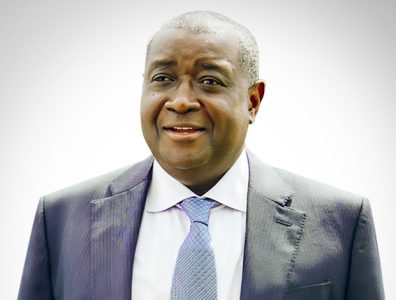
READ MORESenator Heineken LOKPOBIRI
Minister of State for Petroleum Resources (Oil)
FEDERAL REPUBLIC OF NIGERIA
2024 oil reserves:38 billion barrels
Q1 2025 oil production: 1.8 million bopd
2024 gas reserves:6 tcm
2024 gas production46.8 bcm
Nigeria’s hydrocarbons sector has come a long way since oil was discovered in the Niger Delta in 1956, with the nation now boasting the largest reserves of both oil and gas in sub-Saharan Africa. The sector is the breadwinner for the country in terms of foreign exchange earnings and represents around 80% of the nation’s budget revenues.
The oil and gas sector is dominated by NOC Nigerian National Petroleum Corporation, which participates in all areas of the value chain. While the country contains many hydrocarbons-rich basins, the majority of producing assets are crowded around the prolific Niger Delta Basin in the south of the country. The government aims to raise crude oil output by 1 million bopd by 2026 under Project 1 MMBOPD.
The country’s regulatory issues and fiscal uncertainties have long been challenges for international investors looking to participate in the market and have led to significant delays or cancellations of prospective projects. The government has continuously reformed its policies to address these issues and open the market while successfully increasing safety of its assets. Meanwhile, local-content promotion and IOC divestments are driving a shift toward indigenous operators in the upstream.
Traditionally an oil producing country, Nigeria has struggled to transition towards gas and beyond fossil fuels as the global industry moves towards reducing carbon emissions and utilising more green energy sources. To address this, the government set up the Gas Master Plan in 2008. This has propelled the country to develop gas infrastructure, including gas processing plants, pipelines and gas-to-power and petrochemicals facilities. Nigeria plans to produce 10 bcf per day by 2030, with NNPC leading USD 60 billion in related investments.
The country aims to establish itself as a refining hub for the region through several large projects, including the 650,000-bpd Dangote Refinery. However, nearby countries have also made efforts to up their refining potential and could potentially take a large share of regional refining.
François Bacci of Ponticelli Angola talks about leveraging the group’s downstream and renewables capabilities to capture…
READ MORE
Quinton Gero of Fugro talks about Africa’s deepwater exploration outlook and the rising demand for data to de-risk offshore…
READ MORE
Baker Hughes has secured a long-term service agreement for the ANOH Gas Processing Plant, one of Nigeria’s key natural gas…
READ MORE
Fabrizio Bolondi of Nigerian Agip Exploration and Agip Energy and Natural Resources talks about Eni’s deepwater growth pipeline.
READ MORE
Ibraheim Mejerissi of Wazen Oil Services talks about Libya’s opportunity to increase gas exports to Europe.
READ MORE
Julius D. Rone of UTM Offshore talks about shifts in energy security priorities and new opportunities for African energy…
READ MORE
Percy Mellar of DUG Technology talks about the appetite for imaging services in Africa’s mature and frontier basins.
READ MORE
Nigeria has set a launch timeline for its 2026 Licensing Round as it seeks to sustain upstream investment and lift crude output.
READ MORE
Weatherford has secured a deepwater completions contract offshore Nigeria from ExxonMobil affiliate Esso Exploration and Production Nigeria.
READ MORE
Babalola Adefarati of AfrikDelta Marine talks about readying the company for Nigeria’s next wave of offshore development.
READ MOREWHOSE PLATFORM IS THIS?
ASK US