

Integrated services
November 1, 2024


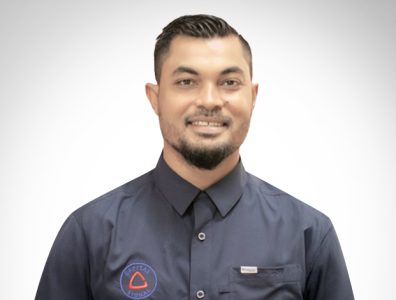
Sebastian Jagdeo, general manager of Capital Signal Company, talks to The Energy Year about the advantages of owning a port and how the company is positioning itself for upcoming projects both locally and in the region. Capital Signal is a Trinidad-based provider of marine construction, coastal engineering and port services.
What was the nature of the work you did over the past year?
Oil and gas companies were our main clients in 2023. We worked on several gas lines on the southeast coast, providing support with our marine assets. At our port facility, we have provided a one-stop shop for mobilisation of survey and environmental vessels, as well as third-party vessels used by upstream clients.
In what ways does owning and operating a port help facilitate Capital Signal’s key operations?
Our port facility complements our services, as we can mobilise our assets offsite if needed with no additional costs. Our goal is to promote our integrated services, but the main services we are engaged in are welding, fabricating and outfitting vessels for purpose. Vessels which dock at our port will have a deck plan that outlines certain structures that need to be installed strategically on the deck – for example, installing poles, davit arms, A-frames and so on. We project manage and install these for them, and we have experience doing this, particularly with offshore survey services companies, both locally and internationally owned.
What types of services do you offer locally and regionally?
Our operations from Trinidad mainly focus on coastal engineering and marine construction. Marine construction is a service that complements the field of oil and gas so we have our operations set up and certified in such a way that we are able to provide marine construction work – such as ports, jetties or coastal engineering by laying coastal protection structures – and the same assets are audited and outfitted for supporting the oil and gas sector in laying pipelines, crane barge support, driving conductor piles and so on. It can be adapted as needed.
We have an office in Mexico that focuses fully on offshore geoscience work. It is a completely different set of services from those of our Trinidadian office. We provide geophysical investigations, rig positioning and geotechnical services.
We also provided geotechnical investigations in Suriname, Guyana and Barbados, to name a few Caribbean islands. These involved soil sampling studies to assess the soil integrity, strength and foundation for positioning of drilling rigs, coastal feasibility studies and construction designs.
We have also worked in other Caribbean islands.
Global warming and the consequent sea level rise are causing the other Caribbean islands to look at how to protect their coastlines and slow down erosion in order to secure their ports and other coastal assets, as well as to sustain their tourism industry. We provide coastal engineering services that involve strategically placing revetments, groynes and any coastal protection structures. This is done in a manner that avoids impacting other areas of the coastline.
How are you positioning yourself for upcoming projects in the local and regional energy landscape?
We want to double, and perhaps even triple, our assets and our workforce. When the time is right, and there are more developments within the Caribbean to execute large-scale renewable energy projects such as wind, solar and geothermal, we would want to be well positioned for those types of projects. In order to know how we can serve them, we would still need an understanding of the types of services those projects would require and to what scope.
At this point in time, we are looking at more immediate projects and those are still more related to oil and gas, particularly projects that involve laying and repairing subsea pipelines. Our preparations at this time involve investing in improving our assets for that type of work. Overall, our aim is to increase our fleet and expand to other Caribbean islands, supporting their coastal needs.
Read our latest insights on:
More content from Trinidad and Tobago



Latest news and features






Latest Reports


The Energy Year Oman 2026
The Energy Year Kuwait 2025
The Energy Year Angola 2025
The Energy Year Nigeria 2025
The Energy Year Saudi Arabia 2025
The Energy Year UAE 2025


