
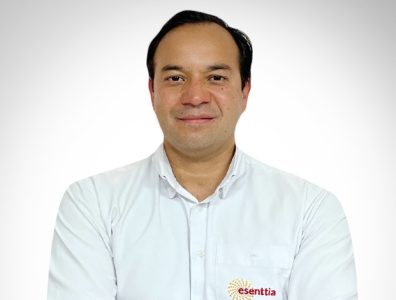
A crucial role in Colombia’s petrochemicals industry
January 20, 2025 Colombia


Ricardo Olier, circular business manager at Esenttia, talks to The Energy Year about the company’s key role in Colombia’s petrochemicals sector, as well as its capabilities and innovative products. Ecopetrol subsidiary Esenttia engages in the production and marketing of polypropylene, polyethylene and masterbatch.
What are the operational capacities of Esenttia’s different plants?
Esenttia has two state-of-the-art 100% recyclable polypropylene production plants. They are located in Cartagena and have the capacity to produce around 570,000 tonnes of polypropylene per year. In addition, our subsidiary Esenttia Masterbatch has an annual capacity of 30,000 tonnes and allows us to produce a wide variety of additives and compounds for the plastics processing industry.
In May, we inaugurated our first mechanical recycling plant in Tocancipá, Cundinamarca, the most sophisticated in Latin America and the largest in Colombia. It has the capacity to produce 15,000 tonnes per year of resins made from post-consumer plastic.
What innovative products stand out within your portfolio?
We have a wide variety of products in different lines – polypropylene, masterbatch, polyethylene, PCR [post-consumer recycled] resins, bioplastics – all of them with an outstanding track record for their performance and functionalities. However, I would like to highlight our latest developments, the result of permanent innovation to transform ourselves through sustainability:
- PCR resins that have NTC 6632:2022 certification and guarantee our customers traceability in post-consumer plastic content
- Bioplastics that meet biodegradability standards and are bio-compostable
- Virgin polypropylene resin that contributes to hygiene and health care, which has the highest standards of biocompatibility for the manufacture of low-risk medical devices, ideal for the manufacture of syringes and medical clothing
- Antioxidant additive masterbatches for the processing of PCR resins, which also prevent oxidation when subjected to various thermal cycles
- Masterbatches that neutralise and mask odours from post-consumer plastics
- Linear polyethylenes that can be used in mono-material structures and facilitate recyclability
How does Esenttia contribute to the petrochemicals industry and to Colombia’s economic development?
Esenttia plays a crucial role in the petrochemicals industry, not only because it is an important player in the national and international market, but also because it generates quality employment, contributes to the positive transformation of environments and fosters the development of a more sustainable economy through circularity.
Therefore, our role in the petrochemicals industry is to be leaders in sustainability, with a strong focus on caring for the planet, the circular economy and making significant contributions to the territories and communities.
This path of transformation towards sustainability has led us to create new lines of business, such as mechanical recycling and advanced chemical recycling, in order to take advantage of post-consumer plastic and prevent contamination in bodies of water or landfills.
We have also incorporated the circularity of materials in our corporate responsibility and social investment projects, with which we have delivered more than 250 houses and furniture made of recycled plastic in Colombia, such as bridges, parks, docks and stations of integrated transport systems, among others. In this way, we improve people’s quality of life and show that plastic is not discarded, but transformed.
What technologies is Esenttia implementing to produce products of the highest quality and in the most efficient way?
Since our inception, technology has been fundamental to the superior quality for which we are so well known in the industry. For almost 35 years, we have incorporated improvements in our plants that have allowed us to increase production capacity, increase efficiency, make more specialised and innovative products (such as terpolymer), monitor the production process, optimise resources (such as wastewater treatment plants) and contribute to decarbonisation.
Our advanced production technology and team of R&D&I people make it possible for us to have a very diverse product portfolio in different applications, even the most specialised ones. There are more than 900 references that are used in the agro-industrial, textile, mass consumption, health, automotive, flexible packaging and construction sectors, among others.
How does the company approach the national market and the main export markets?
In the national market, we serve a wide range of customers, from the smallest to the largest; our commitment to the local industry is comprehensive. To this end, we have a complete distribution and logistics network that enables us to deliver on our value promise of timely deliveries. Additionally, without being a B2C company, we are committed to an innovative B2C service scheme called “Esenttia Express,” in which customers can go and pick up the products available at the moment, according to their needs.
As for exports, being in Cartagena de Indias is a great competitive advantage for taking our products to all of the world’s continents. We export to more than 20 countries and we want to consolidate even more in the international market.
Tell us about the capabilities and operational characteristics of Esenttia’s new recycled resins plant.
Our recycled resins plant is a milestone in the country’s circular economy, as it is the most sophisticated in Latin America and the largest in Colombia in terms of mechanical recycling. We are producing polypropylene and polyethylene from post-consumer material, making available to the market a high-quality resin for common-use applications, such as containers, packaging, car parts and household utensils, among others. Products that can be in contact with food will also be developed. It is a plastic resin that is not virgin but behaves as if it were, with very similar characteristics for the various plastic applications.
For its operation, a supply network of recycled raw material was created that benefits more than 10,000 recyclers in different areas of Colombia, which contributes to the formalisation of the recycling industry and, therefore, to improving the quality of life of the people who make up this network.
This plant is an important benchmark that will have the capacity to transform more than 12% of the 120,000 tonnes of post-consumer material produced nationally. It also has Esenttia’s own engineering design, based on the most sophisticated technologies in the world in terms of mechanical recycling; its operation generates a small carbon footprint in addition to having a wastewater recovery system.
Esenttia’s recycled resins plant embodies the Ecopetrol Group’s circular economy strategy and represents the future of the plastics industry in the country and the world.
What innovation and R&D initiatives is Esenttia undertaking to remain at the forefront of the industry?
Innovation is part of Esenttia’s DNA and drives us to grow and to grow our value chain. It should be said that innovation is something that belongs not just to the R&D teams but to the entire company. Of course, our vice-president of growth is responsible for enabling Esenttia to live its innovation in every moment, process and product, but being innovative is an attribute of every employee.
In this sense, Esenttia designed and develops chemical and mechanical recycling initiatives to offer innovative solutions that transform recovered plastic waste into high-quality products, reducing their environmental impact and promoting a circular economy.
As mentioned, mechanical recycling transforms post-consumer plastic waste into high-quality resins. And as a complement, we have developed the advanced chemical recycling project, which allows us to recycle difficult-to-handle plastics through pyrolysis technology, contributing to the production of 100% circular materials from flexible plastics, some multilayered, metallised, with a high degree of contamination and even the rejects from the mechanical recycling process. By 2030, we expect to recover 30,000 tonnes through chemical recycling.
We are the first company in Latin America to achieve the production of a circular polymer and, worldwide, we are the fourth or fifth petrochemicals company to do so.
How does the company ensure operations are conducted in a sustainable manner?
Our commitment to sustainability is reflected in all of our operations, from reducing emissions to optimising water and energy resources. At Esenttia, processes are challenging energy consumption and supporting a low carbon impact, moving towards operational excellence that promotes decarbonisation for a more responsible and conscious future.
In energy management, we have managed to optimise our production processes, generating savings in energy consumption, implementing innovative actions in each part of the process to be more efficient without compromising quality and, at the same time, contributing to the sustainability of the business. It is worth mentioning that the generation of solar energy and cogeneration through steam turbines are important steps taken by Esenttia in the diversification of the company’s energy matrix. In addition, we have a wastewater treatment plant that recovers more than 80% of the wastewater from the production process.
Furthermore, Esenttia is certified as carbon neutral by Icontec and is committed to reducing its CO2 emissions by 25% by 2030. This represents a reduction of approximately 36,100 tonnes of CO2 from the base year 2019.
For Esenttia, sustainability is the strategy itself. Each action, project or initiative aims to contribute to profitability with purpose, social progress and care for the planet, all in a cross-cutting manner and generating shared value. Our overarching purpose is to “transform and transform ourselves through sustainability.”
What are Esenttia’s objectives for the next two to five years?
We hope to continue contributing to the sustainable development of the country and Latin America as a whole. I would highlight the following objectives:
- Consolidate further in the international market. We are already opening a new office in Mexico, in addition to the one we currently have in Peru.
- Strengthen and expand our circular business lines through mechanical recycling and advanced chemical recycling
- Open more markets for our recycled products and bio-based polymers
- Produce recycled plastic resins that can be in contact with food and obtain FDA certification
- Continue with the next phases of advanced chemical recycling. We hope to reach 30,000 tonnes per year by 2030, aiming to prevent this plastic waste from reaching landfills, oceans and rivers.
- Promote the technification, formalisation and industrialisation of the recycling value chain in Colombia
- Continue to develop technological innovations that allow us to offer more sustainable and efficient products
- Develop new and innovative virgin polypropylene grades that add value to the industries we serve
- Incorporate digital transformation at all levels, in production processes and in the organisation in general, in order to be more efficient
- Implement high-impact projects that contribute to decarbonisation
In short, we will continue to grow, adapting to the challenges of the global market, industry trends and the evolution of the circular economy, without neglecting the core of our business. Sustainability is not the future of Esenttia, it is the present.
Read our latest insights on:
-

-

-

O&M leadership in mining and energy
INTERVIEW
More content from Colombia


Quality seismic decisions for Angola
INTERVIEW

Latest news and features




Latest Reports


The Energy Year Oman 2026
The Energy Year Kuwait 2025
The Energy Year Angola 2025
The Energy Year Nigeria 2025
The Energy Year Saudi Arabia 2025
The Energy Year UAE 2025

