


Colombia’s LNG connector
February 12, 2025 Colombia


Alfredo Chamat Barrios, general manager of Calamari LNG, talks to The Energy Year about how the company connects the LNG market to Colombia, its importance for the domestic market and the contractual schemes it uses in purchasing LNG. Calamari LNG is the pioneer LNG import agent in Colombia.
What role does Calamari LNG have in connecting the global LNG market to Colombia?
The SPEC LNG regasification terminal started its operations in 2016. We were established on the back of this terminal as an important LNG import and marketing agent in Colombia. We have two key responsibilities.
One is purchasing gas, which includes the entire purchasing and importing process for bringing natural gas to the domestic market. Second, we have a role as the programming agent between the terminal, the natural gas transport company and the thermal plants. We started from scratch, as this was a very green market. Nobody had done this before us.
In recent years we have managed to create very good connections and relationships with players in the international LNG market. 98% of our gas supply comes from the Gulf of Mexico, the United States and Trinidad and Tobago.
This has paid off during El Niño, as we were able to supply the country with the LNG required for thermal plants. Between September 2023 and May 2024, we imported close to 3 million cubic metres of LNG, corresponding to 32% of the national gas demand, which allowed us to cover 20% of the electricity required by Colombians. We successfully maintained the supply of gas to the country, which was critical for Colombia’s energy security.
We can proudly state that Calamari LNG is well positioned in the global LNG market. We are the connection point between our country and the global gas market, and we are leading the LNG culture in Colombia.
How crucial is Calamari LNG for Colombia’s gas supply?
In the seven years of Calamari’s history, we have imported about 6 mcm (211.9 mcf) of gas. Around 50% of that amount was imported between September 2023 and April 2024, which highlights the importance we had during El Niño. Both SPEC LNG and Calamari LNG have been essential for the country’s energy security.
We were established to supply gas to the main thermal plants in this country: TEBSA, Termocandelaria and Prime Energía’s Termoflores. Now the country needs us because it will have a gas shortage, and the fastest way to supply it is with LNG. We are the piece that will solve the gas supply puzzle for the non-thermal market in Colombia as well.
Moving forward, we are going to buy gas to supply non-thermal customers who cannot contract gas from any other supplier due to the decrease of gas production and high demand for gas in Colombia. There is talk of importing gas from Venezuela, but in the short term, LNG is the most viable option.
We have already been approached by distributors, industries and customers of all kinds. However, we first must meet the essential demand, that is, households. They are the first ones we should serve with the spare capacity we have. The rest can be allocated to other users. We can serve any type of customer nowadays, but by law, the priority in the non-thermal market would be households.
What kind of contractual scheme does Calamari LNG have when purchasing and supplying LNG?
Our objective has always been to supply thermal power plants with the gas they require in a timely and secure manner. We currently purchase gas in the spot market because it is not possible to develop fixed or long-term contracts with producers, given that the dynamics of the national electricity system – comprised mainly of hydroelectric plants whose operation is controlled by the State – and the functioning of the local market represent challenges for the commercialisation of this resource.
We currently have 22 MSPAs [master sale and purchase agreements] signed with 22 suppliers. Some of our largest ones are with BP, Shell, Glencore, Vitol, Naturgy and TotalEnergies.
For the non-thermal market, we might have to change our contract dynamics to daily dispatch, which means migrating to other types of contracts, including medium- and long-term contracts. In the international LNG market, three years is short term, whereas in the domestic gas market, it is long term. However, if a distributor can give us a three- or five-year contract, we can back them up. It would be another kind of negotiation than in the spot market.
How key is Cartagena for Calamari’s activity, and how is the firm embracing technology?
Cartagena has an unquestionably privileged location, with a strategic bay accessible all year round with no tidal problems. A ship has no problem leaving the Gulf of Mexico, arriving in Cartagena, dropping off some cargo and leaving for another country, for example.
Likewise, in the near future, Cartagena might serve as a key location for green ammonia activity. Cartagena has a large terminal that can receive large tankers. That cannot happen at other points of the Caribbean such as Aruba, which cannot handle cargo ships that are 300 metres long.
We have also developed an in-house tool with a local developer. It is a digital platform where we have all our processes, helping companies monitor and trace gas volumes. We have developed this tool for ourselves, and it has worked very well.
With SPEC LNG, we are also working with this platform, by which their inventory information comes to us through a flat file. We want the process to be as automated as possible to avoid typing errors.
What further opportunities will arise in the next five years, and what role will gas have in Colombia’s energy mix?
The gas market in Colombia will experience a sort of gold rush. Many companies are looking into small- to large-scale gas projects, such as FSRUs and small-scale regasification plants. The next five years will see an uptick in these types of projects, which means that there are many opportunities. Simultaneously, offshore gas production will still take time considering that environmental licensing might slow the process, as well as the construction of infrastructure.
Gas is key to the energy transition in Colombia. Many think that the transition is exclusively about solar or wind. However, it’s more about reducing emissions, and therefore, gas is a very important source accelerating this transition. This process will not happen overnight.
Natural gas also changes people’s lives in remote and rural areas that still depend on firewood to cook, and Colombia has made laudable steps in the right direction. There are already 7 million homes in Colombia that are fed by natural gas.
Read our latest insights on:
-

-

-

O&M leadership in mining and energy
INTERVIEW
More content from Colombia


Quality seismic decisions for Angola
INTERVIEW
Latest news and features




Latest Reports



The Energy Year Oman 2026
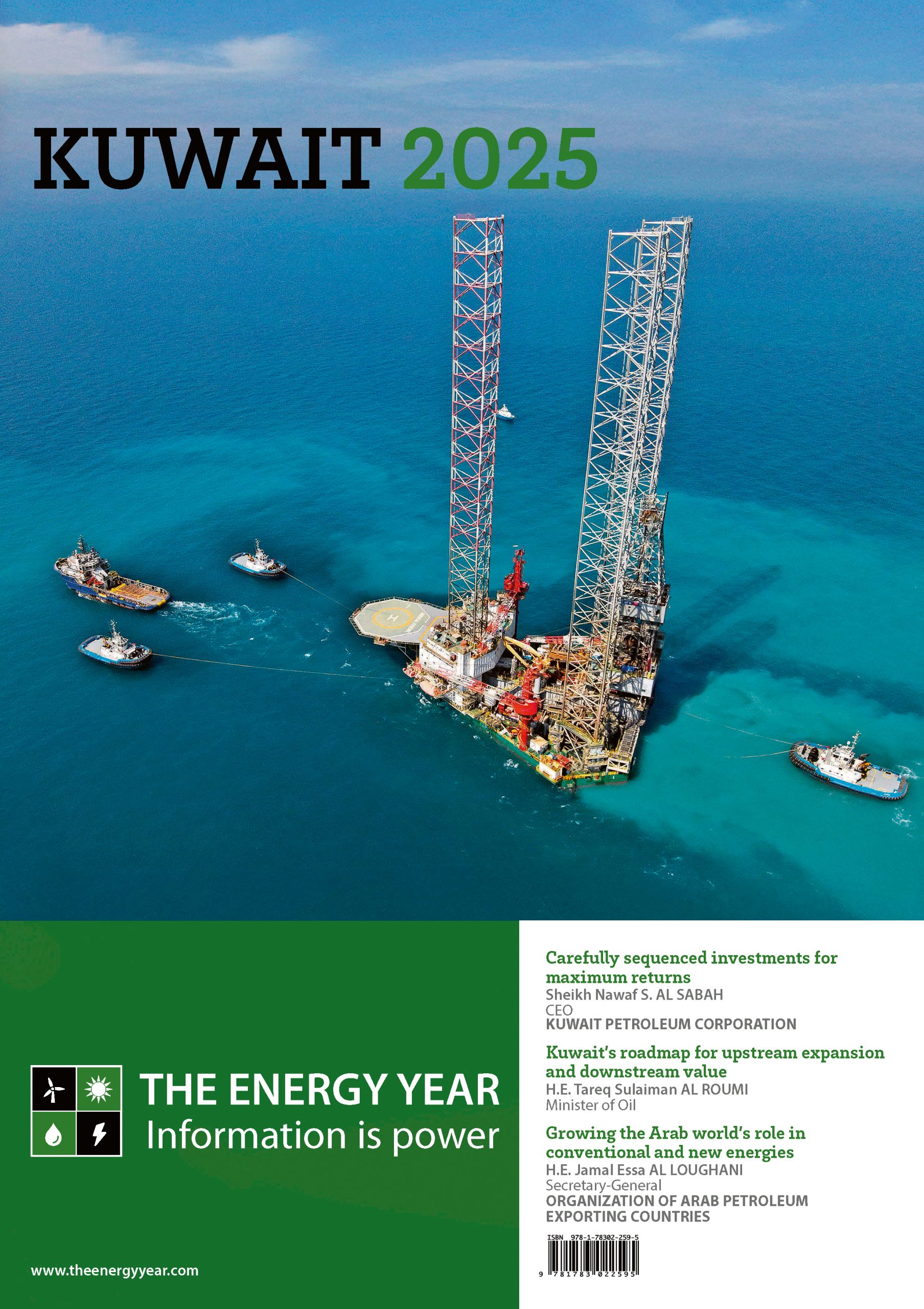
The Energy Year Kuwait 2025

The Energy Year Angola 2025

The Energy Year Nigeria 2025

The Energy Year Saudi Arabia 2025

The Energy Year UAE 2025

