


Precision tracer technology to save costs and emissions
March 19, 2025


Osama Abazeed, vice-president for the Middle East at RESMAN Energy Technology, talks to The Energy Year about the company’s industry-leading tracer technology and how it is being successfully applied to EOR, CCS and CCUS. RESMAN Energy Technology is an international company headquartered in Norway that develops tracer technologies for wireless flow monitoring.
What are the benefits of using tracer technology in a reservoir?
RESMAN is a tracer technology company. We specialise in chemical tracers that track the flow of reservoir fluids. While the word “chemicals” may raise concerns, rest assured that the chemicals we use are non-radioactive, non-hazardous, and organic – safe enough that you could even drink them.
Reservoirs typically contain three types of fluids: oil, water and gas. Our tracers allow us to distinguish among them, even within the same reservoir, providing customers with valuable data about their reservoir. We can also help quantify the production our clients can expect.
For instance, we can inject tracers at one location in the reservoir and collect samples from another. Detecting the same signals at a distance enables direct measurement, offering clear evidence that mass has travelled from point A to point B – a capability that is currently unique in the industry.
From a reservoir engineering perspective, reservoir models are often fraught with uncertainties because they include a lot of assumptions. Our tracer solutions optimise these models, reducing uncertainty and enhancing our understanding of reservoirs.
This is particularly valuable in carbonate formations, which are common in the Middle East. These formations are considered complex due to the micro-fractures they contain, which are difficult to characterise compared to sandstone formations.
How are you incorporating this technology with EOR techniques?
Our EOR portfolio helps customers evaluate residual oil in a reservoir, providing valuable data that informs the economic models for their projects.
We can apply this process to a single well or multiple wells. It involves injecting a tracer into an injector well, typically a producing well. Chemical reactions within the reservoir cause varying delays in the tracer’s arrival, depending on the type of fluid it encounters, whether water or oil. These differences in arrival times enable us to estimate the amount of residual oil in the reservoir.
What projects are you currently involved in within the GCC?
Our most recent project is a paper we published in collaboration with ADNOC and TotalEnergies during ADIPEC. It focuses on EOR single-well chemical tracer technology, which we have named RESMAN NearSat. This proprietary technology requires the use of only a fraction of the chemicals typically employed in conventional techniques.
The analysis process is also more mobile, eliminating the need for a full laboratory on-site. Of course, this helps save time, reduces infrastructure needs and lowers the overall carbon footprint of the reservoir. Importantly, it also reduces the cost for our customers.
Even before the tests were completed, ADNOC and TotalEnergies were eager to see the initial results. Looking ahead, we aim to participate in more CCS projects with ADNOC, with the first project expected to commence in 2026. Currently, ADNOC accounts for about half of our business in the Middle East. Our first injection for them took place in 2015, nearly 10 years ago.
Where do you prepare the chemicals you work with?
Most chemical analyses and testing are conducted in Norway, at a state-of-the-art facility. The preparation of these chemicals is carried out locally. RESMAN has dedicated operations teams worldwide and strong relationships with local partners in key locations across the globe.
We require all our partners to adhere to our stringent operating and safety standards. Additionally, we aim to support the national in-country value programme, as this is a key factor for us that provides a competitive edge when bidding for ADNOC projects.
Can you give us an overview of the composition of your current client portfolio?
The Middle East oil and gas sector is primarily shaped by NOCs, including ADNOC in the UAE, PDO in Oman, QatarEnergy, Saudi Aramco and KOC [Kuwait Oil Company]. To secure any significant business, you’ll need to collaborate with NOCs.
That said, as a global company, we also maintain strong relationships with IOCs, which are highly active in the Middle East. Our close ties with IOCs have often helped us secure projects with NOCs. For example, our successful collaboration with TotalEnergies in multiple African countries has made it easier for us to introduce similar technologies to NOCs – a process that can otherwise be quite lengthy.
How is RESMAN positioning itself in the CCUS value chain?
We have been involved in ADNOC’s Al Reyadah CCUS project, the world’s deepest well ever drilled into a saline aquifer. The project aims to store CO2 captured from steel and cement plants. Specifically, we have contributed to the monitoring, measurement, and verification programme for CCS.
We have also patented a shallow-hole monitoring system known as HIDS – High Integrity Detection System – which uses a specialised sampling device. We drill shallow holes near the CO2 injection site and insert our sampling devices. These are then tested for tracers that were injected alongside the CO2 into the reservoir. We detect our tracers at parts per quadrillion, a level that is unprecedented in the industry. This enables us to demonstrate to our customers that the carbon integrity of their operations is secure.
No other company offers similar monitoring technology. Our strength lies in our ability to detect the lowest possible CO2 concentrations, far beyond the capabilities of competitors who typically measure in parts per million or parts per billion.
Are you seeking any partnerships in the AI space?
We are open to partnerships, although many customers already have digital solutions in place. We launched our own digitalisation solution a few months ago, but we are mindful not to overwhelm customers with too many different systems. We are excited to demonstrate the added value of tracers within a digital platform. At the same time, we are focused on seamlessly integrating our solutions into existing systems, allowing customers to incorporate tracers into their workflows and maximise the value of their data.
That said, I am optimistic that RESMAN’s digitalisation solution will make a significant impact in the Middle East by 2025, and that our customers will come to realise we can offer much more than just tracer detection. We can provide them with a deeper understanding of their reservoir models through our digitalisation solutions.
Read our latest insights on:
-

How the UAE is building its future
INTERVIEW -

-

More content from UAE
Latest news and features








Latest Reports
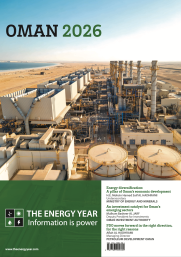


The Energy Year Oman 2026
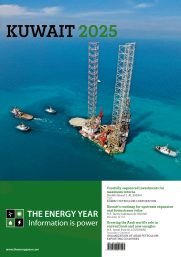
The Energy Year Kuwait 2025
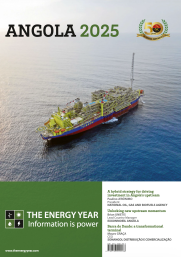
The Energy Year Angola 2025

The Energy Year Nigeria 2025
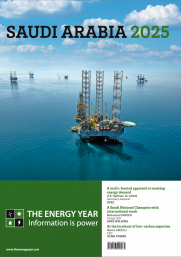
The Energy Year Saudi Arabia 2025
The Energy Year UAE 2025


