

Simple solutions for large energy savings
March 9, 2025


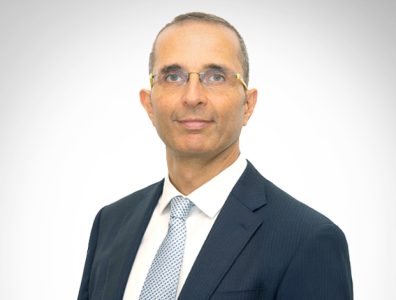
Andrea Di Gregorio, executive director of the Energy Efficiency and Renewables Office (Reem) at Ras Al Khaimah Municipality, talks to The Energy Year about the swift progress that the emirate is making towards its sustainability targets and its efforts to attract international talent to support its future initiatives. Ras Al Khaimah Municipality is a governing body that provides oversight, planning and support services for the urban development of Ras Al Khaimah.
How does Reem operate?
We function like a typical energy efficiency agency, much like those in Europe, primarily serving as a facilitator, PMO [project management office] and adviser to support entities in their sustainable energy projects. We address market gaps, sometimes with direct intervention in those areas of activity that lack an assigned government entity.
For instance, we are driving Ras Al Khaimah’s Building Retrofit programme, targeting the renovation of 3,000 buildings by 2040. And we are spearheading Ras Al Khaimah’s Green Public Procurement programme, which sets criteria for procuring products and services. This programme is among the most advanced in the region, and more than 90% of government entities already participate.
Our key success factor until now has been an orientation to tangible results, supported by the pursuit of simple, applicable solutions. For example, we have worked on simplifying tendering processes for building retrofits by using group procurement and streamlined decision making. Another example is Barjeel, our green building regulations, where the pursuit of a much lower number of requirements compared to other territories in the region has freed the capacity to delve deeper into important aspects of our energy efficiency objectives, such as insulation and equipment performance.
When did Ras Al Khaimah begin to incorporate sustainability considerations into municipal management?
We started focusing on sustainable energy in 2017 with the establishment of Reem and the approval of our Energy Efficiency and Renewables Strategy 2040, which was inspired by the vision of H.H. Sheikh Saud bin Saqr Al Qasimi, UAE Supreme Council Member and Ruler of Ras al Khaimah, for affordable, accessible and sustainable energy in Ras Al Khaimah.
The strategy targeted savings of 30% in electricity consumption and 20% in water consumption, as well as increasing the contribution of renewables in the energy mix to 20% by 2040. It included from the beginning nine programmes addressing new and existing buildings, industrial processes, transport, renewables, infrastructure and consumption behaviours.
Implementation began in 2018 with new building regulations and retrofit programmes. By the end of 2023, the strategy had resulted in energy and water savings of 2-3% and the completion of more than 3,000 green buildings. Particular progress has been made within the government, with electricity savings of 23.5% compared to 2017 and the development of enhanced capabilities, making Ras Al Khaimah the first government in the world to achieve ISO 50001 certification across all of its entities.
How has the municipality gone about implementing its sustainability strategy since then?
In recent years, several factors have prompted us to redesign and expand our strategy. First, the rapid pace of development of Ras Al Khaimah’s tourism, manufacturing and real estate sectors is offering opportunities to integrate sustainability holistically.
Second, having achieved thought leadership in certain programmes, we saw sustainability as a way to attract more businesses to Ras Al Khaimah and enhance the emirate’s economic potential. Third, the UAE’s commitment to net zero emissions by 2050 encouraged us to extend the timelines of our strategy and look more deeply at ways to support this important national goal.
We therefore launched RAK Integrated Sustainability Strategy at RAK Energy Summit in 2024, with a more complete approach to a sustainable emirate. Compared to the previous strategy, this new one introduces new programmes in various sectors, such as agriculture, industry and environment.
At the same time, the new strategy reinforces some of our existing initiatives. Towards the end of 2024, three new mandates were issued by the Ruler of Ras Al Khaimah to accelerate intervention.
Amiri Resolution No. 18 of 2024 increased the energy efficiency target for government departments and state-owned enterprises from 20% to 30% by 2030 and added a new savings target for transportation fuels of 20%. Meanwhile, Amiri Resolution No. 19 of 2024 promoted green public procurement in both government departments and state-owned enterprises.
Resolution No. 20 of 2024 requires large industries to conduct periodic energy audits, building on a voluntary programme launched in 2022. Nine major industrial companies, representing more than 50% of Ras Al Khaimah’s industrial energy consumption, have already conducted audits identifying savings of more than AED 60 million [USD 16.3 million].
Have AI and advanced technologies affected your energy strategy?
We have a keen interest in technology and we strive to automate our processes. As a government agency interacting with many stakeholders, we aim to improve our communications and digitalisation is one of our priorities. For instance, we utilise a common IT platform for our energy management programme where entities can report their consumption and action plans.
We also look with great interest at AI, and we have taken some exploratory steps. For example, we have automated data acquisition and interpretation of government-wide utility data with AI solutions developed by students from the Rochester Institute of Technology of Dubai.
AI offers extensive opportunities, and it is hard to find areas in the energy industry that AI cannot help improve, such as by suggesting behavioural changes and adaptations based on monitoring usage patterns. As we go forward, AI will increasingly serve as a lever and will gradually progress from being an exploratory instrument to a key driver of change.
What are the main challenges you encounter when trying to attract new businesses and investors to Ras Al Khaimah?
We are constantly seeking talent and ideas globally to help us achieve our targets. We have used various channels to attract people and businesses to the emirate who can assist in our programmes, and RAK Energy Summit in 2022 and 2024 helped us connect with multiple local and international players.
In collaboration with Ras Al Khaimah Economic Zone and Ras Al Khaimah Department of Economic Development, we have also targeted leading companies in specific fields with incentives. For smaller companies, we organised a global competition which brought applications from 27 countries. The winners have already started projects in Ras Al Khaimah.
We are also increasing awareness of the opportunities available in Ras Al Khaimah through publications and social media, efforts which are crucial for talent acquisition. By maintaining a presence in key forums and demonstrating intellectual leadership, we can attract capable individuals to join our teams and support our initiatives.
Read our latest insights on:
-

How the UAE is building its future
INTERVIEW -

-

More content from UAE
Latest news and features






Latest Reports


The Energy Year Oman 2026
The Energy Year Kuwait 2025
The Energy Year Angola 2025
The Energy Year Nigeria 2025
The Energy Year Saudi Arabia 2025
The Energy Year UAE 2025


