
The transformative potential of Block KON 16 in Angola
June 2, 2025 Angola


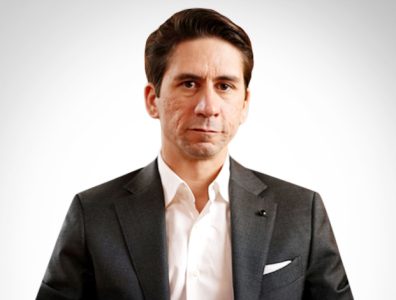
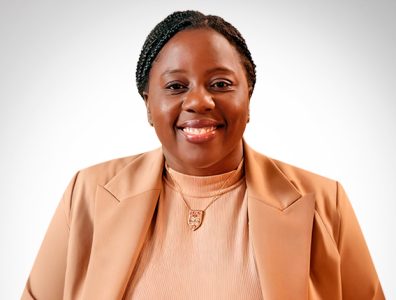
Scott Gilbert, CEO of Corcel, and Geraldine Geraldo, the company’s chief commercial and strategy officer, talk to The Energy Year about the role Angola plays in the company’s global strategy and the key operational challenges in the country. Corcel is an upstream oil and gas development company, with residual interests in battery metals.
What role does Angola play in Corcel’s global strategy?
Geraldine GERALDO: Angola is a critical part of our global strategy. In our operated block, KON 16, which is located in the onshore Kwanza Basin, the company has an opportunity to make the first pre-salt discovery in onshore Angola.
These high impact, low-cost onshore exploration opportunities are potential company makers that are not available in other jurisdictions. Corcel acquired three assets in the Kwanza Basin: KON 16 (85%), KON 12 (25%) and KON 11 (20%). KON 11 holds the historic Tobias field, which we are working to reactivate with Sonangol and other partners.
KON 16, where Corcel is the operator, is our core focus. It offers significant upside in both the post-salt and pre-salt. We completed an eFTG [enhanced full tensor gravity gradiometer] survey last year and are now preparing for a 2D seismic campaign.
This block represents a chance to be part of something transformative – drilling the first exploration well in the onshore Kwanza Basin since the 1980s – and more importantly, potentially making a significant pre-salt discovery in onshore Angola. That would be a milestone not just for Corcel but for the entire Kwanza Basin and Angola.
Internationally, we’re focused on geologically similar opportunities in onshore Brazil. We’ve secured an entry position in Brazil through an option agreement on the Irai gasfield. The goal is to diversify risk while maintaining focus on early cashflow and scalable developments.
What makes Angola an attractive market for Corcel?
GG: Angola is more open now to smaller operators than ever before. The updated fiscal regime provides legal certainty for investment in marginal-fields, creating viable paths for smaller players to develop previously uneconomic assets.
Scott GILBERT: The 2020 bid rounds were a big moment. They marked a shift from offshore-dominated operations to allowing access for junior companies to develop onshore blocks. That’s when we acquired our acreage.
We’re proud to have been the first UK-listed company to operate in the Kwanza Basin. That has given us both a responsibility and an advantage. Being an early mover allows us to build relationships, shape services and establish credibility while the basin is still developing.
What are the key operational challenges in Angola?
GG: Angola’s oil and gas sector has traditionally been built around the needs of large IOCs. Everything from the tax framework to the service infrastructure is set up for the majors and for the scale of their operations. Our operations are smaller in scale, and the cost bases and economics are significantly different. There is a need for corrections to adjust to smaller projects.
We also face a shortage of onshore service providers. Most of the supply chain is geared towards offshore development. That means we’ve had to take a more hands-on approach, working closely with local vendors to meet the needs of onshore projects.
SG: These gaps can be seen as challenges but also opportunities. Our team has strong service experience, and we’re using that to help shape a fit-for-purpose onshore ecosystem, not just for us but for other new entrants. Angola has a chance to redefine what success looks like in onshore E&P.
How do you approach Angola’s local content requirements?
GG: Traditionally, in most jurisdictions, onshore operations provide significant opportunities for local companies, both in E&P and in the services sector. Projects are smaller in scale and require less capital.
Local content is an integral part of our business not because there is a policy requiring it but because it makes business sense. We are continually working to support the development of the local supply chain for onshore services to improve our cost structure. That’s good for Angola and will be good for Corcel in the long term when our operations expand.
SG: It’s about more than meeting quotas. We’re looking to build long-term partnerships with Angolan service providers and professionals. There’s strong talent here. Our task is to create an environment where they can thrive and contribute to the growth of the industry in this new phase.
What are your current priorities in Angola?
GG: KON 16 is front and centre. We completed the eFTG survey last year and have started the environmental impact assessment to enable us to progress towards a 2D seismic campaign.
We believe KON 16 has one of the most exciting pre-salt opportunities onshore. Drilling the well planned for 2026 would be a significant marker for Angola.
SG: Our non-operated assets KON 11 and KON 12 are also important assets. However, in KON 16, where Corcel is the operator, we set the pace of progress. And in doing so, we hope to set a benchmark for what’s possible in the Kwanza Basin. We want to show that smaller companies can move fast, be efficient and deliver results.
What are Corcel’s ambitions for the next two years?
GG: We want to de-risk the Kwanza Basin’s pre-salt and deliver a successful post-salt and pre-salt well through KON 16. The potential scale of the pre-salt in KON 16 is comparable to discoveries offshore. Unlike offshore, the costs are significantly lower, which creates an enormous value proposition.
SG: A discovery would allow us to expand our footprint across the basin. However, we’re also thinking about impact – creating jobs, building local capabilities and helping attract more investment into Angola’s onshore sector.
Being listed in London gives us the platform to bring new capital into the basin. Angolans and others can invest in Corcel and own a piece of this transformation. We’re building not just a company but a story people can participate in.
Read our latest insights on:
-

-

Quality acquisitions over acreage
INTERVIEW -

More content from Angola
Latest news and features



Latest Reports


The Energy Year Oman 2026
The Energy Year Kuwait 2025
The Energy Year Angola 2025
The Energy Year Nigeria 2025
The Energy Year Saudi Arabia 2025
The Energy Year UAE 2025

