


Kuwait’s strategic developments, onshore and offshore
June 17, 2025


Ahmad Jaber Al-Eidan, CEO of Kuwait Oil Company (KOC), talks to The Energy Year about investing in production resilience and meeting the technical challenges of offshore developments. State-owned KOC undertakes exploration, drilling and production of oil and gas in Kuwait.
This interview is featured in The Energy Year Kuwait 2025
Kuwait is making major upstream investments to increase capacity. What are the key priorities at the field level, and how is KOC allocating capital to accelerate drilling, enhance recovery and deliver new production capacity over the next phase?
KOC’s field-level investment strategy focuses on enhancing production resilience while maintaining capital discipline. We are optimising mature assets, especially Burgan, through improved water handling, well interventions and surface debottlenecking.
Simultaneously, we are progressing with the phased development of new strategic growth initiatives – including Jurassic, offshore and Mutraba – while adopting integrated facility design and fast-track EPC models to reduce cycle times and costs. All investments are prioritised using our Corporate Portfolio Management System, ensuring alignment with our 2040 Strategy and sector-wide value targets.
Kuwait’s offshore discoveries represent a technical shift for KOC. What new capabilities, partnerships or technologies is KOC developing to manage offshore operations at scale?
The discovery of Al Nokhatha marked a pivotal moment in Kuwait’s upstream journey and solidified the offshore segment as a key strategic growth pillar for KOC. Our offshore expansion strategy is designed around a phased and technically rigorous approach, which includes drilling up to 15 exploratory wells across two campaign phases, supported by extensive 3D seismic data.
We are working closely with globally recognised service providers to ensure technical excellence in well delivery, offshore logistics and marine operations. At the same time, we are investing in dedicated offshore teams and building internal capabilities to manage these complex environments. This offshore programme is not only essential for diversifying Kuwait’s resource base, but also critical to achieving our long-term production and energy security targets.
How is KOC managing rig performance and availability as its fleet expands? What initiatives are underway to reduce non-productive time (NPT) across drilling campaigns?
KOC has significantly expanded its drilling footprint and now operates more than 170 drilling and workover rigs, the largest rig fleet in our history. Our performance framework is built around enhancing rig efficiency, minimising NPT and maximising well delivery effectiveness.
We have embedded real-time digital rig surveillance and predictive analytics into our operations, supported by performance dashboards and AI-assisted planning tools. Rig contractors are continuously evaluated against detailed KPIs with clear contractual incentives tied to reducing NPT, avoiding sidetracks and maintaining safe operations.
In fiscal year 2024/25, KOC drilled about 450 new wells and completed more than 2,000 workovers, demonstrating a strong alignment between field development plans and execution capacity. These efforts are supported by data-driven well planning methodologies, which continuously refine drilling parameters based on performance from previous wells.
The heavy oil programme requires a unique technical and economic model. What lessons has KOC learned from pilot operations in Ratqa, and how are those lessons being applied to optimise the next phase?
South Ratqa remains a cornerstone of Kuwait’s heavy oil ambitions and is integral to KOC’s long-term diversification strategy. With current production averaging around 60,000 bopd, our target is to scale output to approximately 120,000 bopd by 2032 through a phased and capital-efficient approach.
The initial phases of development have provided critical insights, particularly on steam-to-oil ratio optimisation, reservoir heat retention and the role of integrated water management systems. We are also refining our offtake strategy in collaboration with KIPIC and downstream partners to accommodate the unique processing needs of heavy crude.
Notably, we are localising execution through long-term drilling and operations contracts with domestic service providers, ensuring sustainability, knowledge transfer and economic value retention in Kuwait.
KOC has leveraged AI and digital transformation technologies in its E&P activities, particularly offshore. How is the company expanding the use of AI in upstream domains such as reservoir modelling, drilling optimisation and production forecasting?
KOC is advancing its upstream digital transformation through targeted, value-driven initiatives that enhance operational intelligence and asset performance. Our flagship initiative, the Kuwait Integrated Digital Field, is being implemented across KOC’s operations, integrating real-time production surveillance, automated alerting and predictive modelling.
Using platforms such as Dataiku, we have deployed AI models for water cut prediction, ESP failure forecasting and drilling optimisation, contributing to tangible reductions in downtime and non-productive activities. In the offshore domain, we are embedding AI-driven subsurface analytics and developing digital twins to support asset integrity, logistics and marine operations.
To institutionalise innovation, we have established a dedicated Innovation and Technology Group, responsible for scaling successful pilots, managing technology transformation initiatives across the organisation and building digital capabilities across our workforce.
Mutraba is one of KOC’s strategic field developments. What are the company’s main development goals for this and similar fields, and how is KOC managing the transition from the exploration phase to development?
The Mutraba cluster is emerging as a key component of KOC’s frontier development strategy and forms part of our broader vision to unlock structurally complex and pre-commercial opportunities. Our approach emphasises risk-managed, integrated development starting with early production systems and focused appraisal campaigns to validate reservoir behaviour and recovery potential.
We are exploring cost-effective surface solutions and strategic tie-in options that allow for flexible scalability while preserving capital spending discipline. Mutraba’s development model is designed to be adaptive, balancing resource uncertainty with infrastructure readiness, and is being used as a blueprint for similar early-stage clusters. As such, Mutraba plays a vital role and contributes meaningfully to our future development portfolio under the national energy strategy.
As KOC scales up its upstream operations and integrates new capabilities, what are the company’s strategic priorities? How is KOC positioning itself to remain a resilient and competitive operator in the face of shifting energy dynamics and increasing performance expectations?
KOC’s long-term strategy is built on three strategic pillars: resource development, sustainability integration and operational cost optimisation. We are targeting a crude capacity of 3.65 million bopd by 2035 and a non-associated gas capacity of 26.9 mcm (950 mcf) by 2027. These targets will be achieved through diversified investments across EOR, offshore production, heavy oil expansion and Jurassic gas development.
At the same time, we are strengthening our international competitiveness by deepening collaborations with IOCs, oilfield service providers and technology developers to accelerate access to innovation and improve development economics.
In parallel, we are aligning with KPC’s Energy Transition Strategy by integrating low-carbon practices into upstream operations – through GFR, CCUS pilots and blue hydrogen planning – while maintaining our role as a reliable and cost-effective crude supplier to global markets.
Read our latest insights on:
More content from Kuwait



Latest news and features





Latest Reports


The Energy Year Oman 2026
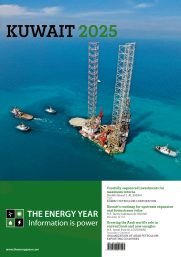
The Energy Year Kuwait 2025
The Energy Year Angola 2025
The Energy Year Nigeria 2025
The Energy Year Saudi Arabia 2025
The Energy Year UAE 2025


