
Israel strike on Iran’s giant South Pars gasfield shakes energy markets
 Iran
Iran 


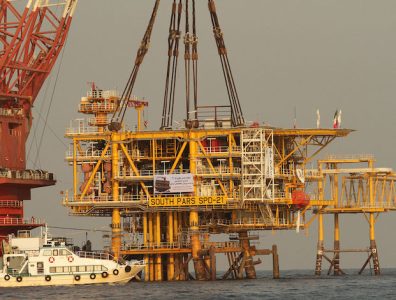
ASALUYEH, March 18, 2026 – An Israeli strike on infrastructure at Iran’s super-giant South Pars gasfield has disrupted one of the world’s largest natural gas hubs and pushed global oil and gas prices higher, The New York Times reported on Wednesday.
Airstrikes hit petrochemicals facilities in Asaluyeh linked to the offshore field, triggering fires that were later contained and sending benchmark crude prices close to USD 110 per barrel, while marking the most significant attack on Iran’s energy production since the conflict began.
South Pars underpins Iran’s domestic energy supply, and any sustained disruption risks worsening electricity and heating shortages while raising broader concerns over global energy security due to its shared development with Qatar.
The field is central to Iran’s hydrocarbons sector, supplying most of the country’s natural gas for power generation, industry and households, while also supporting a major petrochemicals hub.
Known in Qatar as the North Dome, South Pars is one of the largest gas reserves globally and plays a critical role in regional energy balances and export potential. Iran’s South Pars section alone holds an estimated 14.2–17 tcm (500–600 tcf) of recoverable gas alongside substantial condensate reserves, making it the backbone of the country’s gas production.
Discovered in 1971 and developed in multiple phases since the late 1980s and early 2000s, South Pars has been brought on stream progressively over several decades, underpinning domestic supply and industrial growth despite sanctions-related delays. Development has been led by the National Iranian Oil Company and its subsidiaries, including Pars Oil and Gas Company and Petropars, with international partners such as TotalEnergies, Eni, CNPC, Gazprom and Petronas participating at various stages before many withdrew under sanctions pressure.
Read our latest insights on:
More content from Iran




Quality seismic decisions for Angola
INTERVIEW
Latest news and features



Latest Reports


The Energy Year Oman 2026
The Energy Year Kuwait 2025
The Energy Year Angola 2025
The Energy Year Nigeria 2025
The Energy Year Saudi Arabia 2025
The Energy Year UAE 2025

