
A pragmatic approach to chemicals production
May 20, 2026 Angola


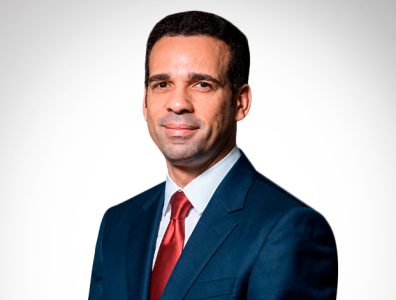
Francisco Monteiro, CEO of Brimont, talks to The Energy Year about building out the company’s business in chemicals and protective clothing and pursuing new revenue streams in Angola’s downstream sector.
Brimont is an Angolan chemicals manufacturer and a provider of consulting, procurement and asset management services.
- Angola’s downstream sector is set to create new openings for domestic firms, with confirmed investments expected to bring a considerable increase in the demand for chemicals, engineering and industrial services.
- The share represented by domestic companies in Angola’s overall chemicals supply remains limited, suggesting large growth potential for local manufacturers with adequate capabilities.
- However, international procurement flows and existing supply agreements, as well as financing constraints, are expected to continue limiting local participation in the near term.
How has Brimont approached diversification in recent years, and what achievements would you highlight?
Brimont’s diversification over the years has been very intentional. Investing in chemicals was one of our best decisions, as today we are one of Angola’s major producers of sodium hypochlorite, which is used for water treatment by oil and gas companies and public utilities, among others. Our market share is about 60%.
In parallel, we entered the protective workwear space, specifically PPE [personal protective equipment] that meets international specifications for oil and gas work. It is a smaller business – we currently have the capacity to manufacture around 1,000 garments per month – but, along with chemicals, it is already making meaningful contributions to our revenues.
We have also expanded into engineering services such as inspections, non-destructive testing and corrosion mitigation, leveraging the competencies we have built over time. Our overarching strategy is to maximise our acquisition of skills and find markets to monetise them.
Who are the main customers of your chemicals business?
The chemicals segment has become a cornerstone of our operations, and our relationship with NOCs has played a key role in that journey. Since 2020, our volumes have increased significantly. Today, we supply all operators in Angola – just two or three products in some cases, but already a full range of production chemicals in others – and our clientele also includes major EPC companies. The market offers considerable room for growth. Angolan companies were recently estimated to account for only 2% of the domestic supply of chemicals, which highlights both the opportunity and the challenges ahead.
Do you expect that share to grow?
Increasing that share will not be about growing domestic capabilities – we believe the capability is already there – but about navigating structural constraints. International agreements, global procurement frameworks, inflation and financing conditions are all barriers to local participation. Localisation is a long-term exercise, not a short-term opportunity.
In Angola, as in many emerging markets, there is always pressure to maximise returns quickly, but the reality is that sustainable growth requires long-term planning. For us, this means continuing to build capacity, deepen relationships and gradually increase our participation across the value chain.
Where do you see the strongest growth opportunities for Brimont going forward?
Most of our growth will likely come from downstream developments, given the scale of the investments that have been confirmed. Activity in this sector is expected to increase substantially, and while our operations do not yet incorporate petrochemicals, that is what we are heading towards.
Brimont already blends five speciality chemicals that are petrochemical-based. That proves our capabilities, and the next step will be to penetrate local value chains more deeply as more raw materials become available domestically. That would allow us to move from importing and manipulating inputs to fully localised production, in alignment with the national goal of reducing imports and maximising local value.
Will you need to invest in capacity expansions or new production sites?
Expansion is becoming a necessity because we are close to reaching maximum capacity at our existing facilities, which, although a positive signal, is also a growth constraint. We will be commissioning a new plant in Soyo in the second half of 2026 that will be larger than our current operations in Luanda. It will be an important step towards our long-term vision of building an integrated, strategically located industrial platform.
What are your priorities for the next few years?
The coming years will be defined by expansion outside Angola. Our sodium hypochlorite production capacity exceeds domestic demand, so one of our main priorities is growing our exports. Not utilising that capacity would effectively be a waste, so entering regional markets is both a business necessity and, in a way, a responsibility.
We are already taking steps in this direction, with engagements secured in the Democratic Republic of the Congo and Namibia, and discussions under way in Zambia and Gabon. In this context, the Lobito Corridor presents interesting opportunities to connect with mining companies.
Read our latest insights on:
-

Quality seismic decisions for Angola
INTERVIEW -

-

More content from Angola

Quality seismic decisions for Angola
INTERVIEW
Latest news and features



Latest Reports


The Energy Year Oman 2026
The Energy Year Kuwait 2025
The Energy Year Angola 2025
The Energy Year Nigeria 2025
The Energy Year Saudi Arabia 2025
The Energy Year UAE 2025

