
Local leadership drives complex project delivery
July 16, 2026 Angola


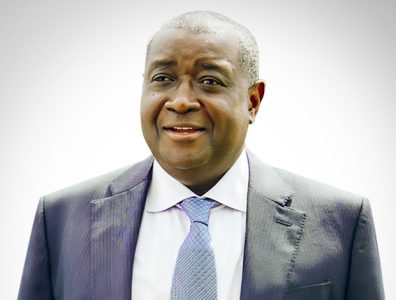
Domingos Augusto, general manager of Sonamet, talks to The Energy Year about the transformational impact of the Agogo project on the company’s capabilities to handle complex scopes and preparing for the next wave of upstream projects in Angola, Namibia and beyond.
Sonamet is a fabricator of structures for oil and gasfields.
- Angola’s local fabrication and engineering capabilities are maturing, with Sonamet’s delivery on the Agogo project indicating that Angolan firms can manage complex offshore scopes, including multi-package work.
- An upcoming decommissioning programme targeting about 20 oil and gas structures, expected to last for a minimum of three years, will generate a wave of demand for domestic yards.
- Infrastructure gaps are creating strategic opportunities for operators to invest in engineering and heavy-lift capabilities, and fabrication yards are becoming more important as international operators seek reliable support for oil and gas developments in Nigeria and the region.
What did Sonamet deliver for the Agogo project, and how would you assess the execution overall?
We were involved in four of the key packages on Agogo, so it was one of the most comprehensive scopes we have ever handled. Our work covered fabrication support for TechnipFMC, as well as transportation and installation support for Subsea7. One of the major packages, the subsea production systems, we executed with Baker Hughes. Additionally, we constructed all the boat landings, as well as other structures for the site, including for the FPSO.
It was an intense year that brought significant challenges for both sides, particularly in procurement, but through close collaboration with our clients and the operator, we managed to stay on target. We worked seven days a week, stretching our capabilities as much as possible within the legal limits to ensure we did not deviate from the delivery schedule.
Ultimately, what matters is that we delivered 100% on time, meeting all the specifications set by Azule Energy and the main contractors. The achievement was also historic for Sonamet because it was our first time managing four major projects simultaneously at Azule’s Block 15-06. It was also a significant step forward in demonstrating our operational maturity and internal capabilities.
Can you elaborate on the project’s impact on the capabilities of your teams?
Agogo was a turning point for us. For the first time, we placed our Angolan engineers as project managers across multiple packages, rather than relying on partial external leadership and support. All the project managers were trained by us to lead complex scopes, and in supporting them, the company was able to accelerate the development of the rest of its workforce, building their experience and readiness to take on challenges. It created a new level of confidence within the organisation, particularly among our engineers, who are now eager to move forward with new opportunities. The internal growth was just as important as delivering the project itself.
Of course, not everything was without difficulty. Some challenges were beyond our control, and not all plans were executed as initially envisioned. However, we maintained our standards and, overall, Agogo demonstrated that Sonamet can handle complex projects with local leadership, which is essential for long-term competitiveness.
What is your involvement in Kaminho?
We have been engaged to deliver a subsea package valued at around USD 1.1 million. While it is relatively small and does not fully utilise our infrastructure, it is strategically important as it allows us to maintain relationships with TotalEnergies and other key operators. It also positions us to capture future work, as these projects are typically structured with multiple development stages.
Do you see opportunities for Sonamet in decommissioning work?
Decommissioning is a significant opportunity for us. There is an upcoming programme to dismantle around 20 structures over an expected period of three years, and the work will be distributed across several facilities in Angola. Beyond their contract value, decommissioning projects can also bring economic gains for Angola from the recovery of materials that can be sold as scrap.
The removal, transportation, storage and destruction of the structures being decommissioned are all complex processes that require co-ordination among asset owners, operators and other stakeholders. Given our infrastructure, available yard space, superior crane capacity and logistical capabilities, Sonamet is in a good position to play a major role in the effort.
How are you preparing for the next wave of projects?
We are using the current low-activity period to reshape parts of our business and explore opportunities beyond oil and gas. We have wanted to diversify in the past, but had to deprioritise those efforts due to high workloads. Now is the time to review opportunities in adjacent industries that can benefit from our infrastructure.
One key objective is expanding into Namibia, and we are exploring the possibility of building a small facility there for light infrastructure. We are in discussions for potential partnerships and locations, and we expect to reach decisions soon.
An important consideration is that, without the tax exemptions and incentives we receive in Angola, it will be challenging to compete against companies from overseas. We are discussing this point with government stakeholders, as it is critical for our ability to expand internationally.
We must also manage our workforce carefully and make every effort to retain our highest-quality engineers to ensure we are ready when activity resumes. We expect activity to pick up towards the end of 2026, after the pause that will follow the Kaminho project, which is expected to run until August.
We intend to keep our spool base active as a strategic asset because there are very few alternatives to it in the region after the spooling facility in Luanda closed. Maintaining it without projects comes at a cost, but when our shareholders decided to build the facility, the idea was to recover the investment across several projects over time. Although we cannot impose the use of our spool base on clients, it is a strategic asset for the African oil and gas industry, and the fact that it is there and ready gives us a competitive advantage.
Read our latest insights on:
-

Quality seismic decisions for Angola
INTERVIEW -

-

More content from Angola

Quality seismic decisions for Angola
INTERVIEW
Latest news and features



Latest Reports


The Energy Year Oman 2026
The Energy Year Kuwait 2025
The Energy Year Angola 2025
The Energy Year Nigeria 2025
The Energy Year Saudi Arabia 2025
The Energy Year UAE 2025

