

Angola’s integrated logistics opportunity
July 17, 2026 Angola


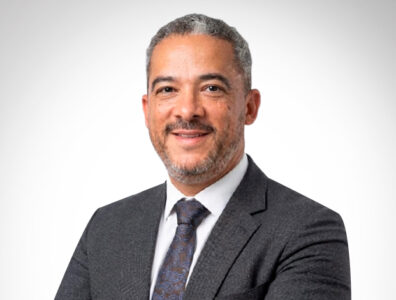
Jean-Yves Lunot, country manager of Africa Global Logistics (AGL) Angola, talks to The Energy Year about how the terminal concession in Lobito has reshaped the company’s profile and ongoing investments in logistics assets across the country.
Africa Global Logistics Angola provides integrated logistics and port and freight forwarding services in Angola and worldwide.
- Angola’s logistics sector is becoming more integrated, with operators expected to manage cargo movement from origin to final destination rather than providing isolated freight forwarding services.
- The Lobito Corridor is gaining strategic importance as terminal operations, port access and logistics platforms become more closely linked to regional trade and supply chain development.
- Demand for logistics services is broadening beyond energy, as Angola’s economic diversification policies support growth in mining, chemicals, IT and agriculture, among other sectors.
What have been the main developments for AGL Angola over the past year?
The past year has been significant for us. On the terminal side, everything is now fully operational with a new entity, management structure and operating framework. 2025 was our first full year of operations, and results have exceeded expectations. The volumes we anticipated are ramping up, and we can see momentum building.
On the logistics side, our focus has been on strengthening our market position. Returning to the market has been a long journey, and one of the clearest demonstrations of our commitment is our capital spend. In 2026, AGL will invest USD 5 million in logistics equipment, refurbishment projects and infrastructure improvements.
The MSC Group has been very supportive. Since the acquisition, we have together reinforced our commitment to Africa by investing heavily. Angola is one of the countries benefiting from that strategy. We see ourselves as a company that connects African regions while leveraging a worldwide network. The objective is to build and grow together, and over the past few years, we have continuously improved our capabilities and service offerings. The trajectory is extremely positive and unlike anything we had experienced before.
How has Angola’s importance within the AGL network evolved?
Angola has become much more visible within the global AGL network, particularly since we took over the concession of Lobito Terminal. That concession has transformed the perception of AGL domestically and internationally. In the past, AGL had a stronger profile in Senegal, Cameroon, Côte d’Ivoire, Congo and Gabon, where the group has long held a significant market share. Angola was different. We operated here, but many people primarily saw us as a freight forwarding and logistics company competing with international players.
The terminal at Lobito demonstrated that AGL is far more than a freight forwarder. We manage terminal operations, logistics platforms and integrated supply chains across Africa. Since taking over the concession in March 2024, the terminal has gained visibility and reinforced our broader capabilities. It has shown customers and stakeholders that we can manage every stage of the logistics chain.
Today, when people talk about AGL Angola, the AGL Lobito Terminal is often one of the first things they mention. As the leading integrated logistics provider in Africa – we have operations in 51 countries – our international network can move cargo between any point in the world and Angola.
What distinguishes our model is its level of integration. Many competitors cover only certain segments of the chain, but we provide services throughout with our own equipment and infrastructure, giving customers greater flexibility and control.
What steps are you taking to develop local talent as your footprint grows?
Talent development is central to our strategy. Across Angola, our operations employ almost 1,000 people. As new trucks and other equipment are delivered, we expect recruitment to continue. Growth brings responsibility, and we believe that responsibility includes creating opportunities for Angolans to develop their skills and careers.
In partnership with the Embassy of France, we sent two young Angolans to France for specialised logistics and technical training. This and other programmes are designed to build expertise that will benefit both the individuals and the broader industry. Training, local content and skills development are not separate initiatives for us; they are part of the company’s identity.
We also emphasise diversity and internal mobility. Employees are encouraged to pursue career opportunities across the country and throughout Africa. We have seen individuals progress from operational roles into management positions, and we continue to promote opportunities regardless of gender.
From a geographic perspective, we are already present in all of Angola’s ports, with offices in Cabinda, Soyo, Luanda and Lobito. We have also recently opened in Namibe and are evaluating additional locations to support key trade corridors and major logistics routes serving the region. The objective is to be present wherever customers need us and wherever economic activity is growing.
What message would you send to energy and mining companies looking for logistics partners in Angola?
AGL offers integrated logistics solutions that very few companies can match. We manage every step of the logistics chain, from origin to final destination. Whether customers are importing equipment, exporting products or moving cargo through complex energy and mining supply chains, AGL can co-ordinate the entire process.
We are adapting to the growth of Angola’s economy. While energy remains at the core of our business, we are seeing growing activity in sectors that are benefiting from the country’s diversification policies, such as FMCG [fast-moving consumer goods], chemicals, IT and agriculture. As Angola evolves, logistics providers must evolve as well.
For energy and mining companies in particular, our value proposition is clear: integrated services, strong local assets, continental reach and a long-term commitment to investing in Angola. That combination allows us to support customers at every stage of their growth.
Read our latest insights on:
-

Quality seismic decisions for Angola
INTERVIEW -

-

More content from Angola

Quality seismic decisions for Angola
INTERVIEW
Latest news and features



Latest Reports


The Energy Year Oman 2026
The Energy Year Kuwait 2025
The Energy Year Angola 2025
The Energy Year Nigeria 2025
The Energy Year Saudi Arabia 2025
The Energy Year UAE 2025

