
Strong fundamentals across continents
 Canada


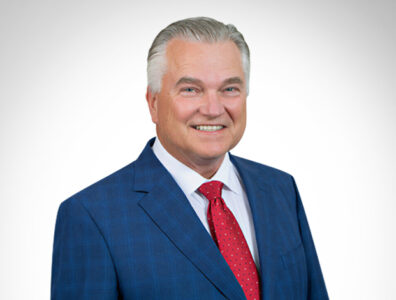
Gary Guidry, president and CEO of Gran Tierra Energy, talks to The Energy Year about making the right capital allocation decisions in Colombia and Ecuador, and the strong fundamentals that brought the company to invest in Azerbaijan.
Gran Tierra Energy is an oil and gas E&P company, with assets in Canada, Colombia, Ecuador and Azerbaijan.
- Gran Tierra separates its footprint by basin and technology, using approaches proven in Canada, such as long horizontal wells and multilateral drilling, across other basins.
- Gas prices in Canada are expected to continue rising due to long-term demand growth from LNG facilities, data centres and industrial consumption.
- Capital is flowing towards oil-weighted opportunities as strong oil price fundamentals support investment in large waterflood fields in Colombia and Ecuador.
How should investors understand Gran Tierra’s operating footprint today?
Our Q1 2026 production was about 45,000 boepd, with 47% coming from Colombia and 34% from Canada. The way to look at the portfolio is to separate the basins and technologies. Our operations in South America are in the Putumayo-Oriente system of southern Colombia and northern Ecuador. It is a very large basin that runs all the way into Peru.
In Colombia, our assets in the Putumayo-Oriente and Middle Magdalena basins are 100% oil – the natural gas we produce there is used to generate electricity for our own operations. In Canada, by contrast, our production is roughly 50% liquids and 50% natural gas. Gas prices in Canada have been quite low, but with demand from LNG facilities and data centres coming on line, and with consumption rising over the long term, we believe gas will gain considerable value.
Canada also carries option value. Our positions there let us pioneer new development approaches, such as the long horizontal wells with multistage fracking at Simonette and multilateral development at Clearwater. These techniques can now be applied in other parts of the global portfolio.
What are your priority locations for allocating capital in Colombia and Ecuador?
Oil has been strong, so we have allocated capital to develop the big waterflood fields. In Ecuador, the government offered contracts in 2019 similar to those we were used to in Canada or Colombia, so we made a large commitment of 14 wells. They cost between USD 8 million-10 million each, and we were confident because it is the same basin that has brought us success in Colombia.
Gran Tierra has had great success in Ecuador so far, with 13 discoveries. Today, we produce about 8,000 bopd from long-term testing, and we believe we can grow production to a plateau of up to 30,000 bopd as we start developing these discoveries in the medium term.
In Ecuador, we are expecting approval of our field development plans, and in Colombia, we are finishing the Suroriente capital investment programme with Ecopetrol in the Putumayo Basin. We operate the Suroriente block with a 52% interest, with Ecopetrol holding the other 48%. In 2023, we extended the contract by 20 years and committed to a USD 123-million carry program, and in March 2026, we entered into another agreement with Ecopetrol to jointly develop the Tisquirama and San Roque fields.
We are excited about the agreement as it lets the company apply its proven Acordionero waterflood expertise to a large, underdeveloped oil resource right next door. The adjacency creates meaningful synergies, allowing Gran Tierra to manage the area as a single operating hub, improving efficiency and maximising long-term value.
How does Azerbaijan fit into your portfolio, and what are your expectations there?
Azerbaijan is a new location for us. The country is selling oil and natural gas to Europe, so it faces a huge and growing demand. ExxonMobil, Hungary’s MOL Group and BP have all been recently awarded acreage, as was Gran Tierra, because we are a nimble, full-cycle company that knows how to explore, develop and optimise the value of each discovered resource. Our full-cycle ability and focused portfolio are attractive to many governments because we don’t take on projects unless they are potentially material and therefore a high priority.
We signed an exploration, development and production sharing agreement with SOCAR early in 2026, securing a 65% working interest and operatorship. The onshore contract area includes five years for exploration and appraisal, plus 25 years for development once we declare commerciality. That is important because in Canada, Colombia or Ecuador, royalties or income taxes may change, but in Azerbaijan, our PSA is ratified into law and cannot be changed by them or us, which is perfect for a large capital-intensive, long-term project.
It is also exciting because the Caspian region is very rich in hydrocarbons. A lot of oil and gas has been extracted onshore Azerbaijan over the past 80 years, but not a lot of effort has been made towards deep exploration or applying the enhanced recovery techniques we use in Canada and Colombia. We spent almost two years finding and analysing geological data, and were excited by the potential. With the fiscal terms agreed and the demand and access to markets in place, we are confident in proceeding with exploration activities.
What factors would you say give Gran Tierra a competitive edge as a mid-cap operator?
A few things set us apart. The first is technical and operational expertise, especially in remote locations. We have a proven model for finding oil, developing it efficiently, and optimising recovery, and we apply it repeatedly across our portfolio. Our waterflood work at Acordionero is a good example, and it is the same playbook we will bring to the adjacent Tisquirama fields. We develop low-cost, quick-payout projects, which let modest capital go a long way.
The second is financial robustness. We aim to finance our risk activity from cashflow. To de-risk development, we have tapped debt and equity markets and have secured financing on favourable terms. We financed our infrastructure in Colombia with debt. Taking on debt requires clear visibility of a path to repayment in any oil price environment, and the quality of our assets makes us very comfortable on that front.
The third is our track record, which speaks for itself. Ecuador is a great example. We spent significant capital on exploration in the country, drilling 13 wells. Shortly after each discovery, we began producing oil and gas in long-term tests to acquire the essential reservoir information required for development. We sold the product and reinvested the proceeds. As a mid-cap operator, it is essential to capture the information required to minimise development risks early to optimise and fast-track developments.
Read our latest insights on:
-

Savvy asset management to up production
INTERVIEW -
-

Canadian natural gas flows west
INTERVIEW
More content from Canada


Quality seismic decisions for Angola
INTERVIEW
Latest news and features


Latest Reports


The Energy Year Oman 2026
The Energy Year Kuwait 2025
The Energy Year Angola 2025
The Energy Year Nigeria 2025
The Energy Year Saudi Arabia 2025
The Energy Year UAE 2025

