

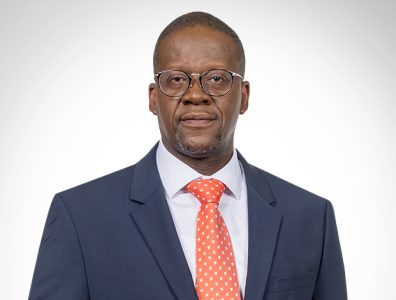
A greater role for local banks in Angolan oil and gas
July 29, 2025 Angola


José Alves Nascimento, executive director of Banco de Fomento Angola (BFA), talks to The Energy Year about how the bank stands out among Angola’s leading banks and the importance of its upcoming IPO. BFA is a universal credit bank providing services in Angola to both corporate and individual clients.
What makes BFA stand out among Angola’s leading banks?
At BFA, what sets us apart is the strength of our people. We have an exceptional team who understand the banking sector deeply and are focused on delivering results. Our competitive edge lies in our continuous monitoring of market trends. We are constantly evaluating what others are doing and how we can do it better. This commitment to excellence runs throughout the bank.
Another cornerstone of our differentiation is our technological investment. We understand that, while human errors are inevitable, technology helps us reduce them significantly. We’re investing heavily in becoming faster, more agile and more responsive to client needs.
Whether serving corporate or personal clients, we aim to offer an excellent level of service to keep them loyal to our bank. Even though there’s room for improvement, the quality we deliver makes a tangible difference in the market.
Tell us about how you are advancing the bank’s digitalisation agenda.
Digitalisation is a top priority. Our IT department is proactive, constantly proposing tech-based improvements to the board. Although we don’t have the budget to do everything at once, we are making steady progress. We’re adopting fast, efficient technologies that improve how we deliver banking services.
For instance, account openings at our branches are now fully digital. The manual, paper-heavy process is being replaced with tablet-based onboarding. Documents are scanned and sent directly to back-office teams who verify everything. This has streamlined operations and improved customer experience, even if internet access and tech literacy are still challenges across Angola.
Despite those hurdles, we’re committed to digital transformation. Our technology budget is one of the largest in the bank, and we are also investing in cybersecurity to guard against the increasing threat of hacking.
How does BFA tailor its financial services to the oil and gas sector?
15 to 20 years ago, Angolan banks weren’t involved in large-scale oil industry financing. These deals went to international first-class banks. Recently that has changed. Angolan banks are now being called upon to finance the sector. Oil prices are lower now, and the global energy transition is underway, so Angolan banks must also step up and support local players.
We created an oil and mining desk staffed with professionals from the bank and the oil industry. These specialists understand the technicalities and financial requirements of the sector, making internal analysis much faster and more accurate. That’s why our financing offers are becoming quicker and more competitive.
Apart from Sonangol, we’re working with several local oil operators, such as Etu Energias and Acrep. We’ve financed Etu Energias and are preparing a new round of financing for their Galp acquisition in offshore blocks. For Acrep, we are in the phase of completing our feasibility study and working on a support plan. Even for companies such as Poliedro, which aren’t sole operators yet, we assess their financing eligibility carefully.
Meanwhile, we maintain strong relationships with major IOCs such as Chevron, TotalEnergies and SLB, ensuring our services are aligned with their evolving needs.
What is BFA doing to support downstream activities such as refinery projects?
We are already involved in two major refinery projects. The first is the Cabinda Refinery, where we have a financial stake. The second is the Lobito Refinery, which is a mega-project for Angola. This is still under negotiation with owner Sonangol, and it may include big Angolan banks taking a stake. This may also be in the format of structured syndicated loan projects that allow Angolan major banks to participate as MLAs [mandated lead arrangers].
These downstream investments are critical for national energy independence and industrial development. While we’re not currently involved in smaller refineries, the two major projects are enough to keep us fully occupied at this stage.
What role does BFA aim to play in Angola’s renewable energy push?
Renewables are absolutely part of our long-term strategy. We haven’t financed any green energy projects yet, but we’re ready. In today’s banking world, there is no way to avoid ESG compliance. We’ve established an internal department to manage these aspects and are open to evaluating hydrogen, solar and wind projects.
Some initiatives are already happening in Angola with external financing. However, if any project comes to us looking for support, we’re prepared to step in. Renewable energy is the future, and BFA intends to be part of that transformation.
What are your thoughts on the development of Angola’s banking sector?
The central bank is pushing hard for reform and wants to mirror the standards of the European Central Bank. That means strict compliance and better risk controls. Here at BFA, we’re serious about anti-money laundering and counter-terrorism financing compliance, as is the entire sector.
The industry is growing, and profitability is strong. Last year was one of our best years.
However, there’s room for improvement, particularly in hiring people with sector-specific knowledge. For example, if you want to finance a USD 500-million car manufacturing plant, you need people inside the bank who understand that industry. That’s where international banks are ahead, and it’s a gap we must close in Angola.
Where is BFA headed in the next five years, especially with its IPO on the horizon?
The IPO is the next big chapter for BFA. It will bring new perspectives and greater transparency. Right now, we’re privately owned by just two shareholders. Going public means, we’ll be held accountable by a broader base of stakeholders, and that’s a good thing.
Scrutiny pushes us to operate more efficiently and transparently. It also means our procedures and service delivery will need to be faster and reliable. It’s a challenge we welcome. Banks such as BAI and Banco Caixa Angola have already gone public, and we’re following suit. Over the next five years, we aim to become a more agile, transparent and customer-driven institution.
Read our latest insights on:
-

Quality seismic decisions for Angola
INTERVIEW -

-

More content from Angola

Quality seismic decisions for Angola
INTERVIEW
Latest news and features




Latest Reports


The Energy Year Oman 2026
The Energy Year Kuwait 2025
The Energy Year Angola 2025
The Energy Year Nigeria 2025
The Energy Year Saudi Arabia 2025
The Energy Year UAE 2025

