
A growing EPC company for the UAE’s new energy segments
March 21, 2025 UAE
UAE 


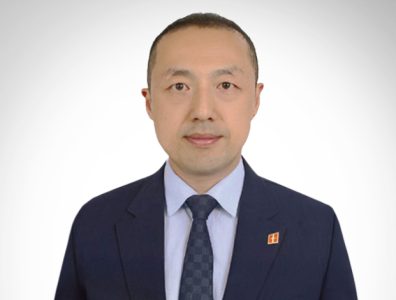
Weibin Li, executive vice-president of Jereh Group, talks to The Energy Year about building a solid reputation in the Middle East through strong performance on key EPC projects and the Group’s shift to new energy solutions while keeping a strong focus on the UAE. Jereh Group is an oilfield services provider specialising in oil and gas engineering, equipment manufacturing and field development services.
What steps has Jereh followed to penetrate markets in the Middle East as a Chinese EPC company?
In 2014, Jereh was primarily recognised as a manufacturer rather than an EPC company, making it challenging for us to get our first project in the region. Our plan started by developing our business in Pakistan and Iraq, moving up from mid-level contractors to becoming partners in consortiums.
Our first project in the UAE was in 2021 with Al Mansoori Petroleum Services, which was later acquired by TAQA [Abu Dhabi National Energy Company]. It was a build-own-operate (BOO) project for ADNOC Onshore and in which we acted as the EPC subcontractor, leveraging our strengths alongside Al Mansoori. ADNOC was very satisfied with our team and our services through this project, so we are now qualified with ADNOC directly as EPC and BOO contractors.
After the project with Al Mansoori, we were awarded a BOO contract by KOC [Kuwait Oil Company] for the Jurassic Production Facility 5 project, which was worth about USD 450 million. KOC has very high qualifying standards. That was our first major project with them, and we delivered it 10 days early. KOC was very pleasantly surprised, and that boosted our reputation, which is very important in the region.
In October 2024, we signed a USD 300-million contract for seven compression stations with Bapco. Before awarding the contract, Bapco’s senior management consulted with KOC, and KOC’s positive feedback on our performance played a key role in their decision.
How important is reputation for doing business in the GCC?
Reputation is paramount in this region. Strong performance is widely recognised, and any shortcomings are equally visible. Satisfying companies such as ADNOC and KOC with good performance is crucial. Take our AI-driven well digitalisation project for ADNOC, for example. When it was awarded to us, people were shocked, as Jereh was relatively unknown in this market at the time.
Winning was challenging yet simple because the tendering procedure was clear. We had ADNOC Onshore’s recommendation from our project with TAQA. ADNOC fosters a dynamic and inclusive market, providing opportunities for qualified new entrants. They asked if we were interested, and before having all the details, we knew it was a large project. We studied it, formed a proposal team, followed the procedures and ensured we met all the technical requirements. Once we were on track, nothing could stop us.
How have you leveraged your projects in the region to showcase Jereh’s digitalisation capabilities?
The well digitalisation project with ADNOC was a good opportunity to show our capabilities, but we need to continue investing in R&D for oilfield digitalisation. Following the ADNOC award, we directed our manufacturing business line to conduct dedicated R&D to support the project.
Additionally, we have a digitalisation subsidiary that is responsible for our Intelligent Command Center solution. Before, AVEVA was ADNOC’s main supplier of command centre software, but some of our subsidiaries have similar capabilities. We aim to introduce our software solutions into the UAE market as part of our broader digitalisation strategy.
In this market, being an EPC lump-sum player isn’t profitable because ADNOC’s standards are strict, and margins are tight. That is why we need to have our own manufacturing capabilities, software capabilities and so on. This ability to diversify within the supply chain provides us with a great advantage in the region.
What is Jereh’s growth strategy for the next five years?
We are shifting our positioning. Five years ago, we were an oil and gas services company. Today, nearly 30% of our business is in new energies outside the oil and gas sector. For example, we have a manufacturing facility in China to produce anode material and a lithium battery recycling business that generates good margins.
We are also pioneering wind and solar equipment recycling solutions, targeting end-of-life turbine blades, solar panels and energy storage systems. Our full lifecycle approach includes material regeneration and repurposing.
For our oil and gas business, the MENA region, and especially the Gulf, is where our most important markets are, and the UAE is number one. We have been growing our overseas business since 2006 and now around 60% of our business is outside China.
The UAE is an important market for us due to its tolerant culture, good infrastructure and openness to Chinese companies. Also, ADNOC’s management is open to new technology applications. In 2025, we opened a workshop in the Jebel Ali Free Zone and will soon have manufacturing capabilities there.
Read our latest insights on:
-

How the UAE is building its future
INTERVIEW -

-

More content from UAE


Quality seismic decisions for Angola
INTERVIEW
Latest news and features


Latest Reports


The Energy Year Oman 2026
The Energy Year Kuwait 2025
The Energy Year Angola 2025
The Energy Year Nigeria 2025
The Energy Year Saudi Arabia 2025
The Energy Year UAE 2025

