


A key player in GCC capital mobilisation
June 19, 2025 Kuwait


Elham Yousry Mahfouz, CEO of the Commercial Bank of Kuwait (Al-Tijari), talks to The Energy Year about the bank’s role in advancing PPPs for Kuwait’s energy development and integrating ESG principles across operations. Al-Tijari is a Kuwaiti financial institution providing banking, investment and retail services to corporate and retail clients.
How has Kuwait’s economic diversification and reform agenda shaped the financial landscape, and how is Al-Tijari evolving within this transformation?
Kuwait’s economic diversification efforts have energised the domestic banking sector, driving the development of advanced debt instruments, PPP financing models and structured financial solutions. With a strong financial foundation, Al-Tijari has emerged as one of the key players in capital mobilisation without compromising risk factors, broadening our project finance capabilities in response to increasing demand.
We have deployed structured finance and sustainability-linked instruments to support upstream and infrastructure ventures. Our specialised team customises financing structures for each project, ensuring effective risk mitigation and financial optimisation.
Can you highlight recent project finance achievements?
We led the USD 650-million PPP financing of the Umm Al Hayman Wastewater Treatment Project, a significant milestone in our project finance track record. We are also working with international developers on Phases 2 and 3 of the Az Zour IWPP, which are expected to deliver 2.7 GW of electricity and more than 450,000 cubic metres of desalinated water daily. Additionally, we are supporting a bid for Kuwait’s next-generation fibre-optic telecom network.
Regionally, Al-Tijari has strengthened its footprint through syndicated lending with major GCC banks, contributing to the advancement of trade and infrastructure across the region.
What are the key challenges and opportunities in financing Kuwait’s energy and infrastructure push?
Kuwait’s multi-sector development strategy offers substantial opportunities for the banking industry, as well as complex challenges. In addition to the Az Zour initiative, major projects include the new airport terminal, deep-water ports, solar energy infrastructure and the national rail system.
Al-Tijari is actively engaged in PPP financing efforts. We financed the Shadadiya Industrial Zone and are in advanced discussions to support the Shagaya Renewable Energy Project. To date, Al-Tijari has issued approximately USD 1.5 billion in guarantees for government-backed initiatives, reinforcing our leading role in energy and infrastructure finance.
What is your ESG roadmap, and how is Al-Tijari enabling sustainable finance?
In 2024, Al-Tijari introduced its ESG and Climate Risk Management Framework, integrating ESG considerations into capital allocation, credit risk evaluations and corporate strategy. We are also working with external consultants to build a comprehensive sustainable finance and funding framework to support projects in renewable energy, energy efficiency, low-carbon transport and related areas.
We have identified major barriers to ESG adoption within Kuwait’s banking sector. Chief among them is the absence of standardised ESG guidelines and the lack of consistent disclosures, as national ESG regulations remain under development. The coexistence of multiple global frameworks – including TCFD [Task Force on Climate-Related Financial Disclosures], the Equator Principles, GRI [Global Reporting Initiative], and PRB [Principles for Responsible Banking] – without alignment, as well as limited environmental data in Kuwait, makes impact measurement across sectors challenging.
Nevertheless, we are actively developing a green asset portfolio centred on clean energy, waste management and soil remediation, while also investing in green bonds. These efforts support Kuwait Vision 2035 and align with international sustainability goals.
How are you leveraging digital transformation in the pursuit of your business goals?
Al-Tijari is driving digital transformation through advanced auto-segmentation and a master-user platform that delivers tailored solutions to corporate clients. Our AI-powered WhatsApp Banking service chatbot enhances user engagement and streamlines operations.
Corporate clients can onboard digitally, issue virtual cards and process cheque clearing automatically via our online and mobile platforms. These digital services reduce reliance on physical infrastructure, supporting ESG objectives by cutting paper and plastic usage. By digitising our operations, we are building a more sustainable and efficient banking ecosystem.
What are the key macroeconomic risks for Kuwait’s financial sector, and how is Al-Tijari navigating them?
Apart from the geo-political uncertainties in the region, which negatively impact the financial and economic landscape, ongoing trade tensions between the US and China pose risks through heightened commodity prices and foreign exchange volatility. Although the GCC benefits from strong ties with both economies, we apply a selective approach to transaction financing to mitigate geopolitical exposure.
To navigate economic volatility, Al-Tijari has implemented dynamic forecasting, scenario modelling, counterparty exposure limits and robust capital buffers. These tools help us evaluate risk and model potential impacts from global, regional and local developments. We also provide clients with comprehensive financial instruments – including interest rate swaps, FX hedging solutions, structured products, supply chain finance and revolving credit facilities – to manage market fluctuations.
Our dedicated team closely monitors global trends to safeguard our asset base through geographic diversification, conservative capital ratios and strong legal documentation. These measures enabled Al-Tijari to achieve a 24% stock return in 2024, outperforming sector peers.
Read our latest insights on:
More content from Kuwait





Quality seismic decisions for Angola
INTERVIEW
Latest news and features




Latest Reports


The Energy Year Oman 2026
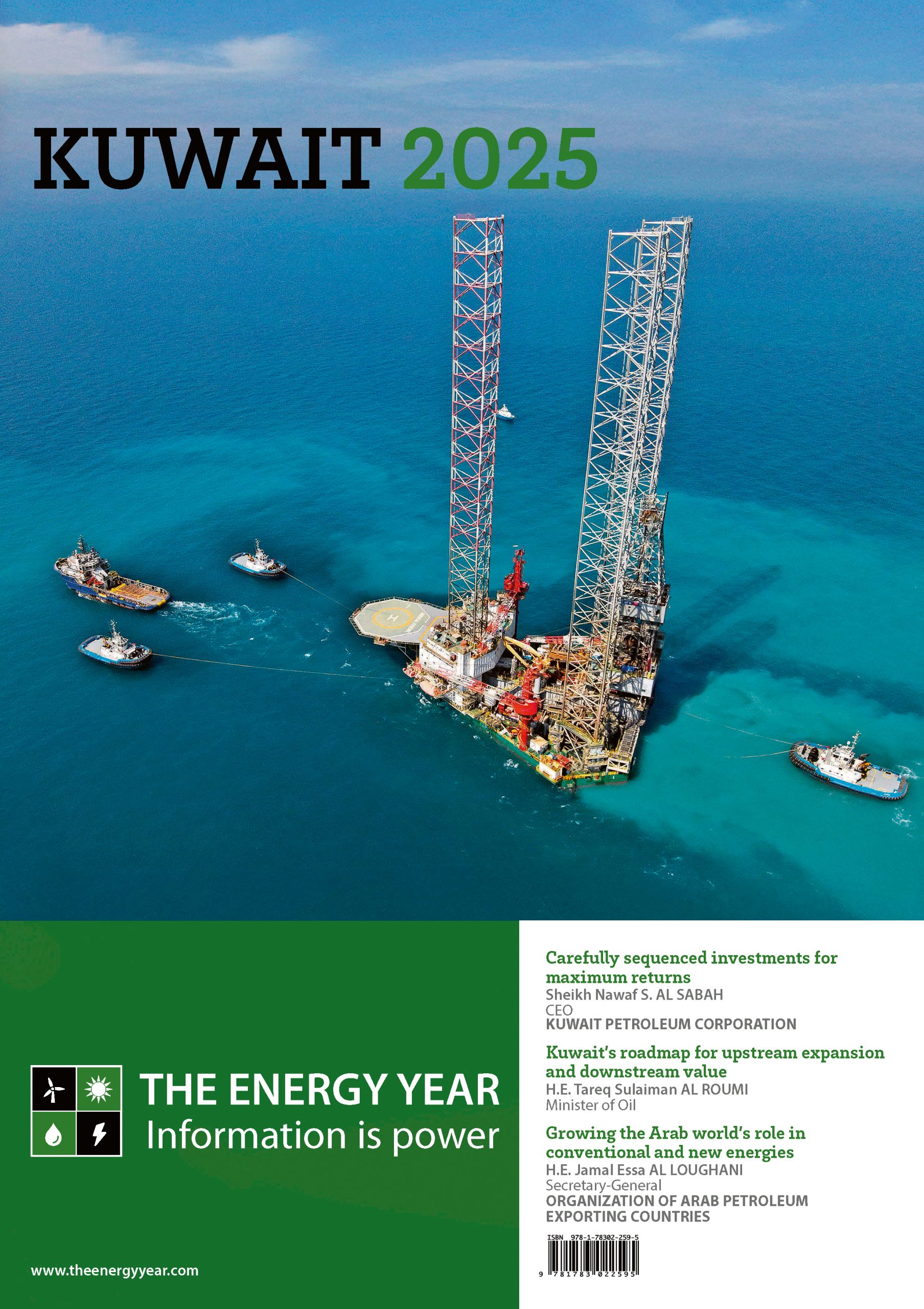
The Energy Year Kuwait 2025
The Energy Year Angola 2025
The Energy Year Nigeria 2025
The Energy Year Saudi Arabia 2025
The Energy Year UAE 2025

