
A key role in Colombia’s gas future
January 20, 2025 Colombia


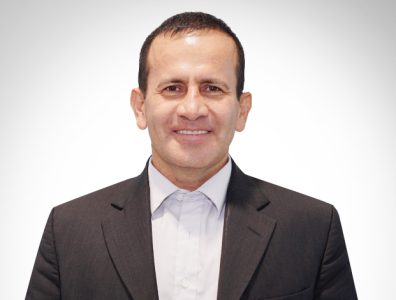
Luis Enrique Rojas Cuellar, then-president and CEO of Hocol, talks to The Energy Year about the company’s central role in Colombia’s gas future and the latest updates from its key developments. Ecopetrol subsidiary Hocol is an exploration and production company with activities in Valle Superior del Magdalena, Los Llanos and Colombia Norte.
Tell us about Hocol’s portfolio and the company’s central role in Colombia’s gas future.
Hocol is working to maintain its position as one the leading gas producers in Colombia. At the moment, according to data from the Colombian Chamber of Oil, Gas, and Energy, we are among the top three gas producers in Colombia, holding a market share of around 10-11%. Natural gas has become an axis in Ecopetrol’s energy transition strategy, and it will gain further importance in the years to come.
We are aware of the country’s challenges to maintain and increase natural gas production, and we expect to be one of the companies called upon to contribute to maintaining the energy supply in the country. We believe we are an important player in Colombia’s energy security and self-sufficiency.
In our portfolio, we have 30 producing fields and 20 exploration blocks. We have three areas of operation: Colombia Norte, where we have a ratio of 96% gas production to 4% oil; Valle Superior del Magdalena, with 98% oil and 2% gas; and Llanos, with 100% oil. Among these, we have prolific fields such as Chuchupa and Ballena, and we also have important assets in the Colombia Norte region.
In the coming years, we want our production matrix to be at least 50-50 gas versus crude. We would even like to see our gas production exceed that of crude. Our aim in the next couple of years is to produce 50,000-55,000 boepd.
Our energy production in the northern region of the country is a clear example of our commitment to supplying gas to Colombia’s Caribbean region. In recent years, we have ramped up our efforts to materialise our growth strategy, seeking to increase the country’s natural gas reserves while strengthening hydrocarbons exploration. Hocol is historically one of Colombia’s leading investors in exploration, as we believe that this is the basis of future production.
What efforts is Hocol making to address depletion in fields such as Chuchupa and Ballena?
One of the greatest issues we are now facing is depletion. Chuchupa and Ballena have been producing gas for the past 50 years – 5.6 tcf [158.6 bcm] of gas total – and we are now facing a large water input. This is affecting gas production, which has decreased substantially.
In 2009-2010, we had a total combined production in both fields of 700 mcf [19.8 mcm] per day, but today our production stands at only 90 mcf [2.55 mcm]. Our objective now is to extend the life of this asset while maintaining and even increasing its production by applying the latest available technologies. Apart from this, we are looking to drill a few more wells in these fields.
We are now trying to address the water volumes, deploying different technologies including dewatering. With dewatering, a jet pumping system is used to remove the water to relieve the gas column and enhance production. This technique has not previously been tested in Colombia. We are looking to refine this technique to obtain better results. So far, the production increase from using this technique has been 5-10%, but we are aiming higher.
We are also pioneers in drilling methods. In Colombia, we have been drilling horizontally for many years, but Hocol is now using cutting-edge technologies given the complexity of our terrain. With them, we are much more profitable, optimise costs and produce more.
What are the latest updates from the Arrecife block?
In Q1 2024, we achieved the successful spudding of the Arrecife Norte-1 exploration well, which was clear evidence of the presence of gas in the VIM’s Ciénaga de Oro formation. In April, we declared the commerciality of the Arrecife-1, Arrecife-3, Arrecife Norte-1 and Coralino-1 production wells, which during testing have had a combined production of 3,700 mcf [104.8 mcm]. The initial production from the Arrecife field will hover around 5-10 mcf [141,600-283,000 cubic metres] of gas per day.
For now, we are pumping 6.5 mcf [184,060 cubic metres] per day from this field and expect to increase production by 3.5 mcf [99,110 cubic metres] per day to keep addressing the needs of the domestic market. The production capacity now is 10 mcf [283,000 cubic metres] per day, yet our facilities can treat around 12 mcf [339,800 cubic metres] per day.
The Arrecife block is home to several fields, but only one has been tapped: the Arrecife field. This means that there is plenty of additional potential moving forwards. In any case, we plan to drill two to four wells in the next 12-18 months. We have the potential to increase production by 30 mcf [849,500 cubic metres] per day. However, we will first need to solve the infrastructure bottlenecks that are limiting this production.
By Q4 2025, we will have a new pipeline as part of our infrastructure plan. This will allow us to place these new gas volumes on the market. The total production potential of the Arrecife block is estimated at between 20 [566,340 cubic metres] and 30 mcf per day, which will be reached in 2026.
What are the recent activities carried out by Hocol in Valle Superior del Magdalena and Llanos?
Our star field for the last 10 years has been Ocelote, located in Puerto Gaitán, Meta. We drilled two wells in H2 2024 – Ocelote 191 and 192 – and had good results. We are looking at drilling at better costs in this region. We have drilled nearly 300 operational wells in Ocelote, which makes it one of our most important fields.
Adjacent to Ocelote we have the Llanos 100 block, where we are going to conduct a seismic survey at the beginning of 2025. With the information we have so far, we believe that this block is the continuation of the Ocelote field. The potential is significant.
In Valle Superior del Magdalena we are also drilling the Arbolito-Norte exploration well as part of our commitment to keep our operations active in the province of Huila. From this exploration well and the corresponding seismic and geological information we already have, we see very high potential in this area.
We are deploying all our expertise and technical capacity to obtain the best results. If the Arbolito-Norte well proves successful, it will mark the beginning of a new chapter for Hocol.
We are also conducting a seismic survey in the COR 9 block in Tolima. We finished a 3D-seismic survey of 83 square kilometres at the end of August 2024. We are processing that seismic data, and we hope that, with that information, we will be able to define where to drill an exploratory well by the end of 2025.
This block does present certain technical challenges, especially in terms of logistics and civil work, as it is found in a mountainous area. But we have high expectations for COR 9.
What synergies do we find between Hocol and its partner in the Llanos blocks, GeoPark?
We are developing four blocks in collaboration with GeoPark, all located in Llanos. Of those, we have production in two blocks, both of which are split with a 50-50 participating interest.
In mid-2023, the Saltador-1 well was drilled in Llanos 123, obtaining crude oil of 16 degrees API from the Barco formation (Guadalupe) with a water cut of 3%. In Q4 of 2023, the Toritos-1 exploration well was also drilled, confirming the presence of oil of 14 degrees API with a water cut of 1%. We have just completed the Toritos Sur well and have also started to drill the Bisbita East-1 well, which we expect will have good results.
We find very good synergies with GeoPark as they work with strong operational standards. We have had great results working with them, and the wells drilled this year have all been successful.
Tell us about Hocol’s advances on the ESG front.
In terms of environmental sustainability, Hocol has made laudable efforts in recent years to reduce CO2 and greenhouse gas emissions. Moreover, we have also focused on reducing flaring and gas leakages such as methane venting from our assets by 35-40%.
We have also promoted the Eco-Reserve Ocelote in Puerto Gaitán. With 1,254 hectares [12.54 square kilometres] protected and more than 1.5 million trees planted, this reserve is a refuge of biodiversity in the Guarrojo River Basin.
On the social front, we have made significant strides. In mid-2024, Hocol was recognised as the second-leading company in Colombia for private social investment, according to the Social Private Investment Index conducted by Jaime Arteaga y Asociados. Our different social initiatives have impacted over 1.3 million people in 2023, and we invested more than COP 107.2 billion [USD 25.1 million].
We also inaugurated the first integrated energy community in Colombia, called the Canutal Energy Community, located in Ovejas, Sucre. We started a social investment programme 10 years ago and we are now impacting more than 1,600 people. We have made investments in schools, a health centre and an aqueduct to provide access to water, and we also established a solar plant that supplies 297 kWh per day.
We have invested a total of COP 11 billion [USD 2.58 million] in the Canutal Energy Community since 2006, which now stands as a true example of an integrated energy community which we would like to replicate in other regions of the country. In La Guajira, we also launched an innovation and entrepreneurship centre in Riohacha, which seeks to empower community members.
Read our latest insights on:
-
-

-

O&M leadership in mining and energy
INTERVIEW
More content from Colombia


Quality seismic decisions for Angola
INTERVIEW
Latest news and features



Latest Reports


The Energy Year Oman 2026
The Energy Year Kuwait 2025
The Energy Year Angola 2025
The Energy Year Nigeria 2025
The Energy Year Saudi Arabia 2025
The Energy Year UAE 2025

